
The complete guide
How to Choose an Outdoor Sofa Cover That Actually Survives the Weather
The problem with leaving outdoor furniture uncovered
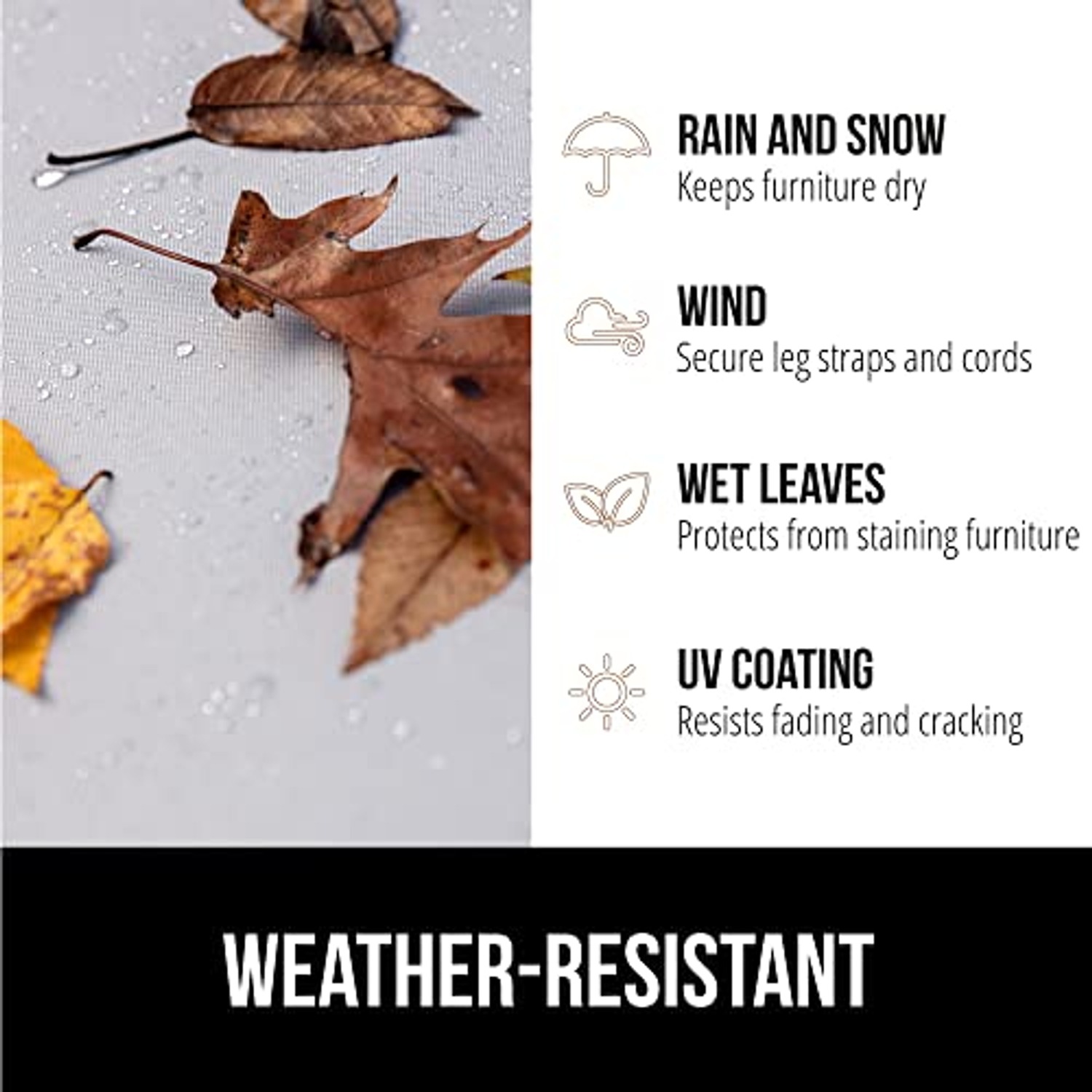
Outdoor sofas look great in the catalog photo and rough after one season outside. The damage happens quietly. Rain soaks into the cushion foam and takes three sunny days to dry out, so by the time it is dry it rains again. Sun bleaches the color out of the fabric in uneven patches. Wind drops leaves, pollen and grit into every crease. Birds do what birds do.
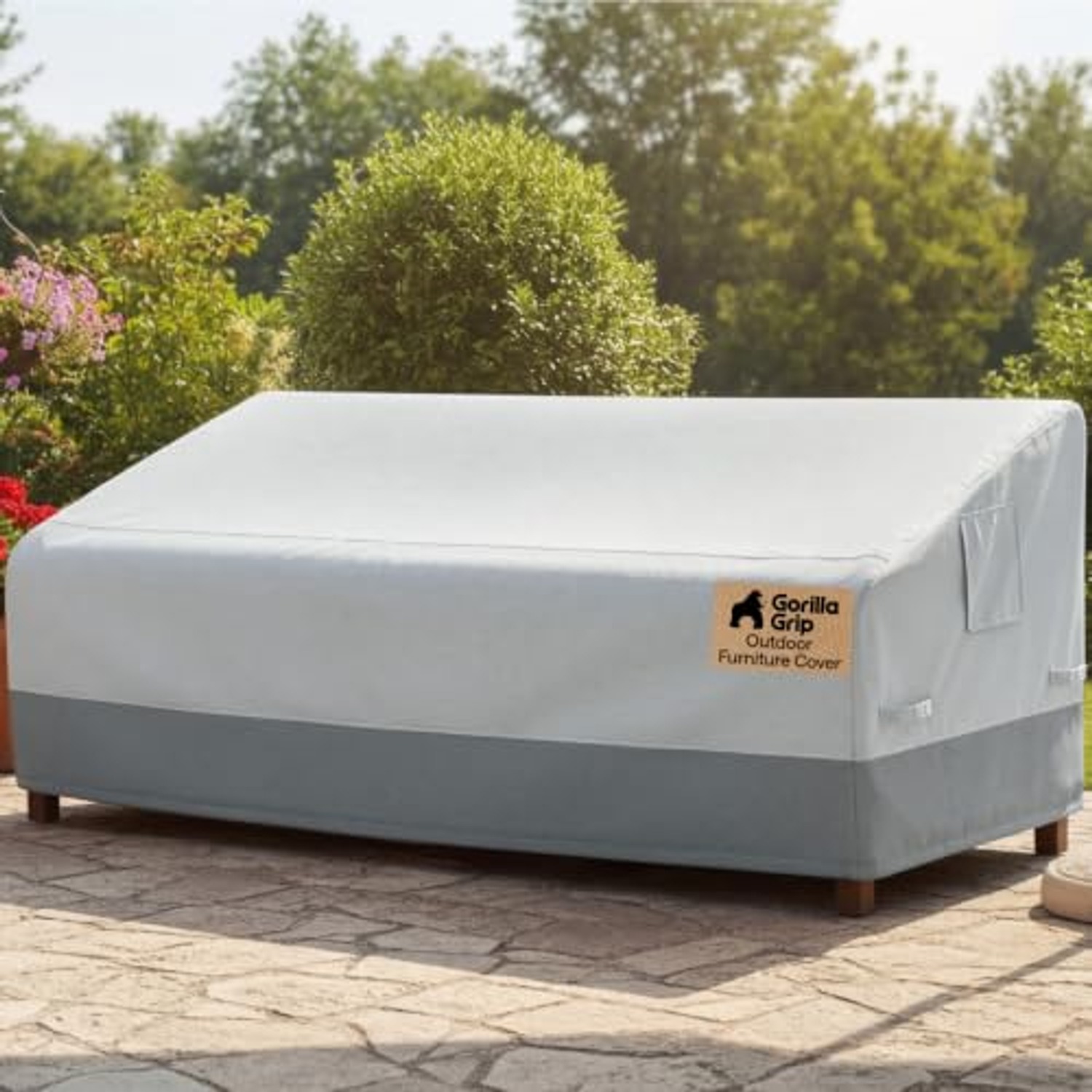
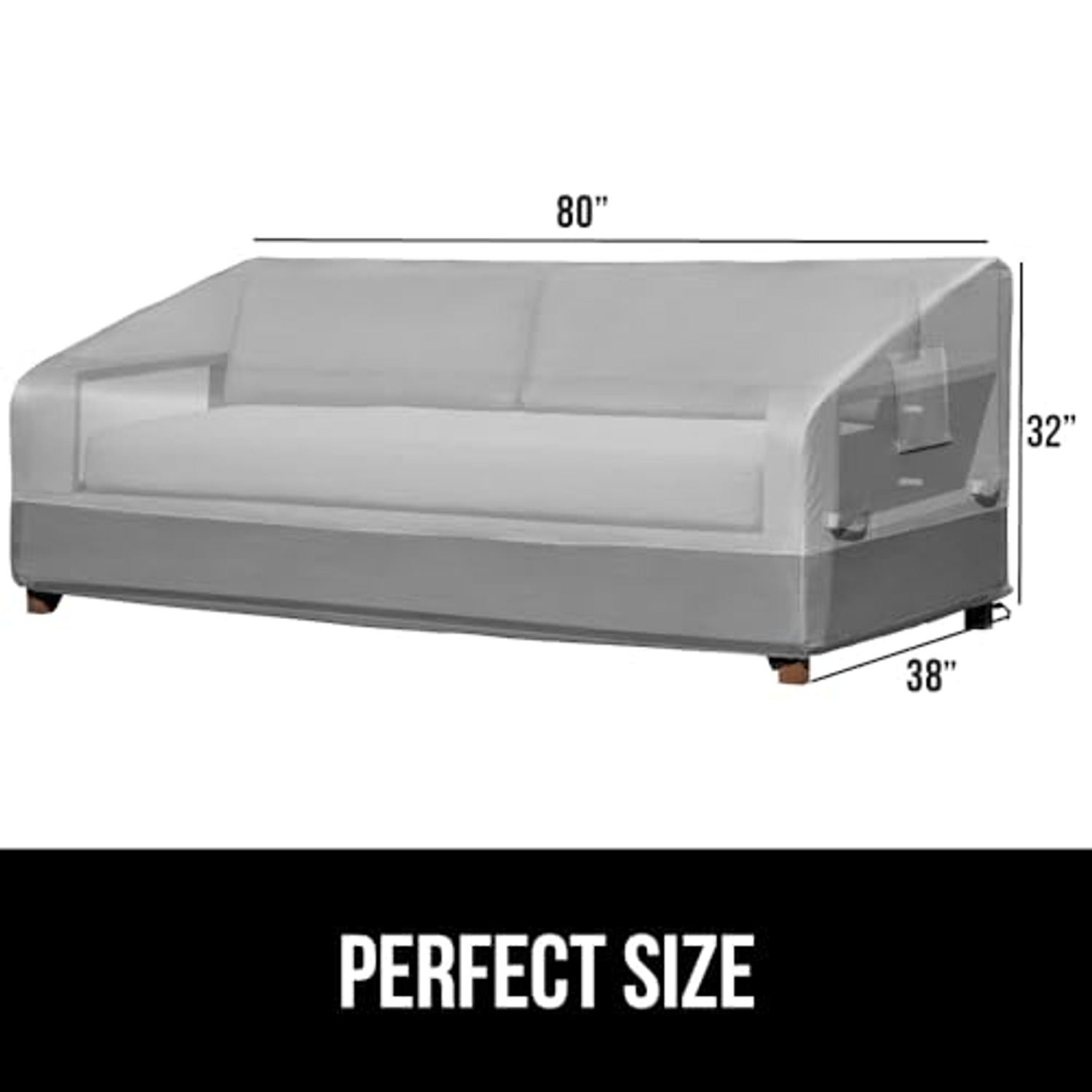
None of this ruins furniture overnight. It just slowly turns a nice lounge into something you do not really want to sit on, and then you buy a new one three years early. A cover is the cheapest insurance you can put on outdoor furniture, and an 80 inch patio sofa cover like this one handles the full-size three seater that most people own.
How a proper cover works
There are three jobs a cover has to do at once, and cheap covers only manage one.
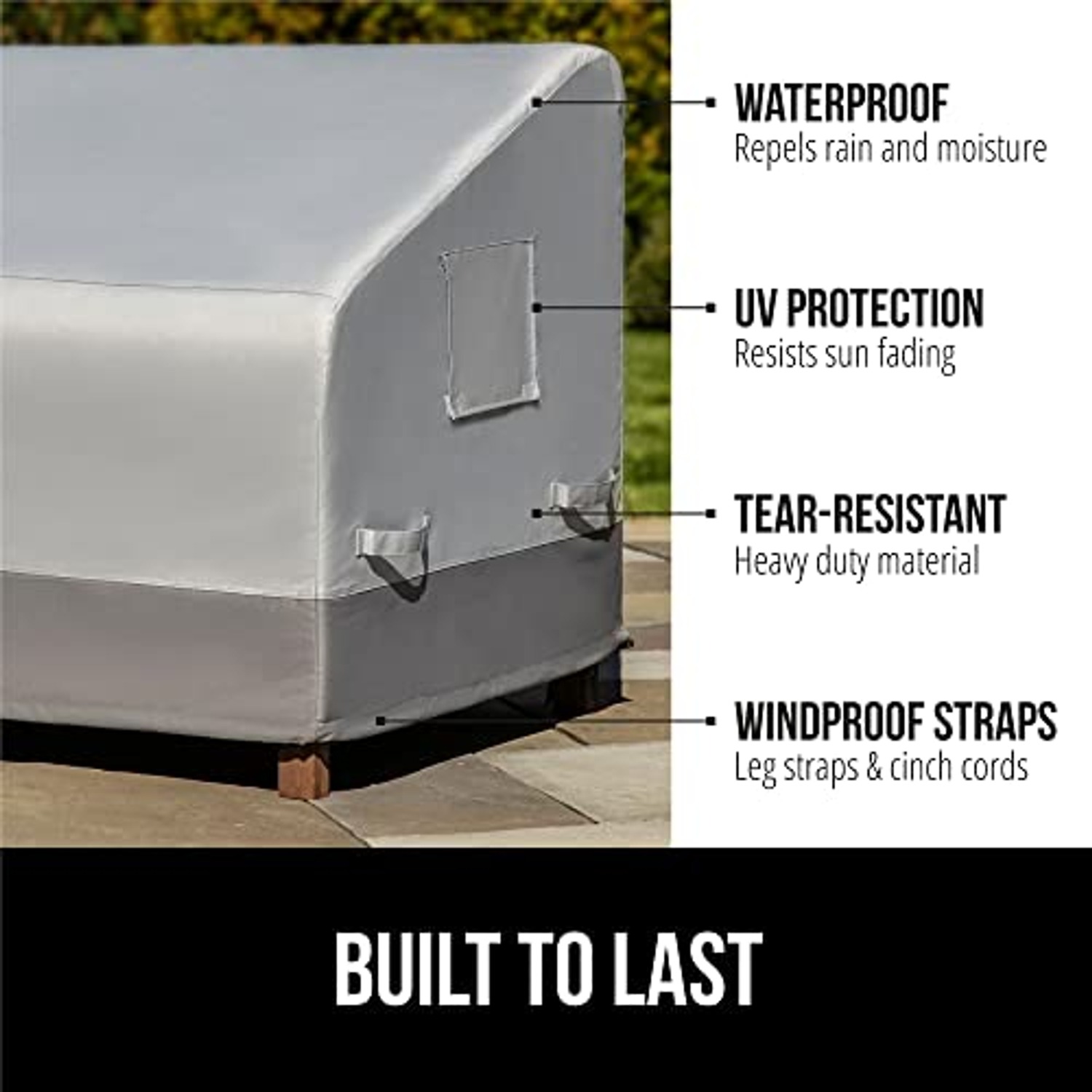
The first job is keeping water out. That is down to the fabric and the seams. This cover uses 600D polyester, which is a fairly heavy weave, and the panels are double stitched with interlocking seams rather than simple butted joins. Seams are where water finds its way through on budget covers, so that construction matters more than the headline waterproof claim.
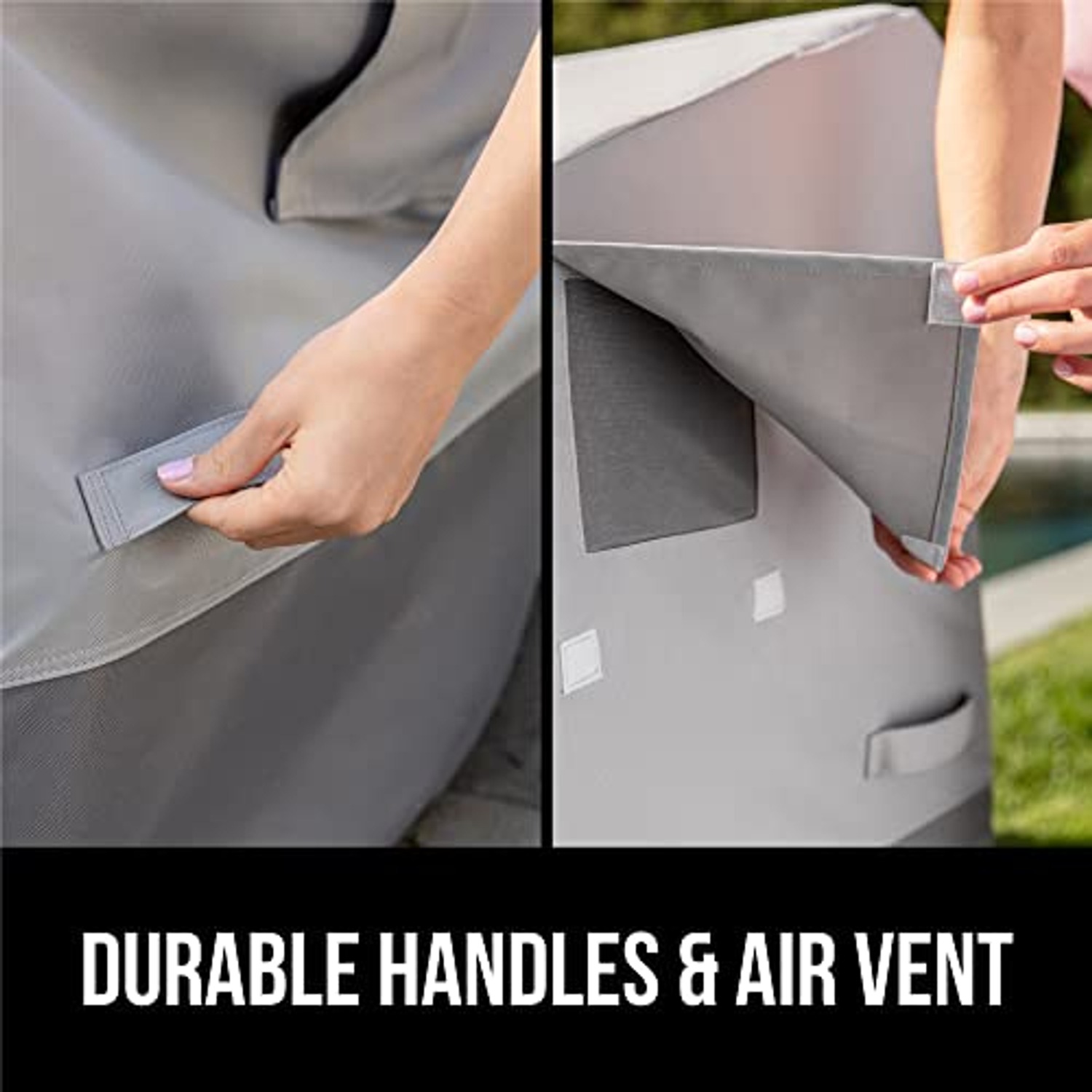
The second job is letting damp out. This is the part people miss. If you seal furniture under something completely airtight, moisture from humidity, dew or a slightly damp cushion gets trapped underneath and has nowhere to go. That is how you get that musty smell and, eventually, mildew spots. This cover has a hidden air vent that lets air move through, so damp escapes instead of sitting against the fabric. It is the reason a dedicated cover beats a tarp every single time.
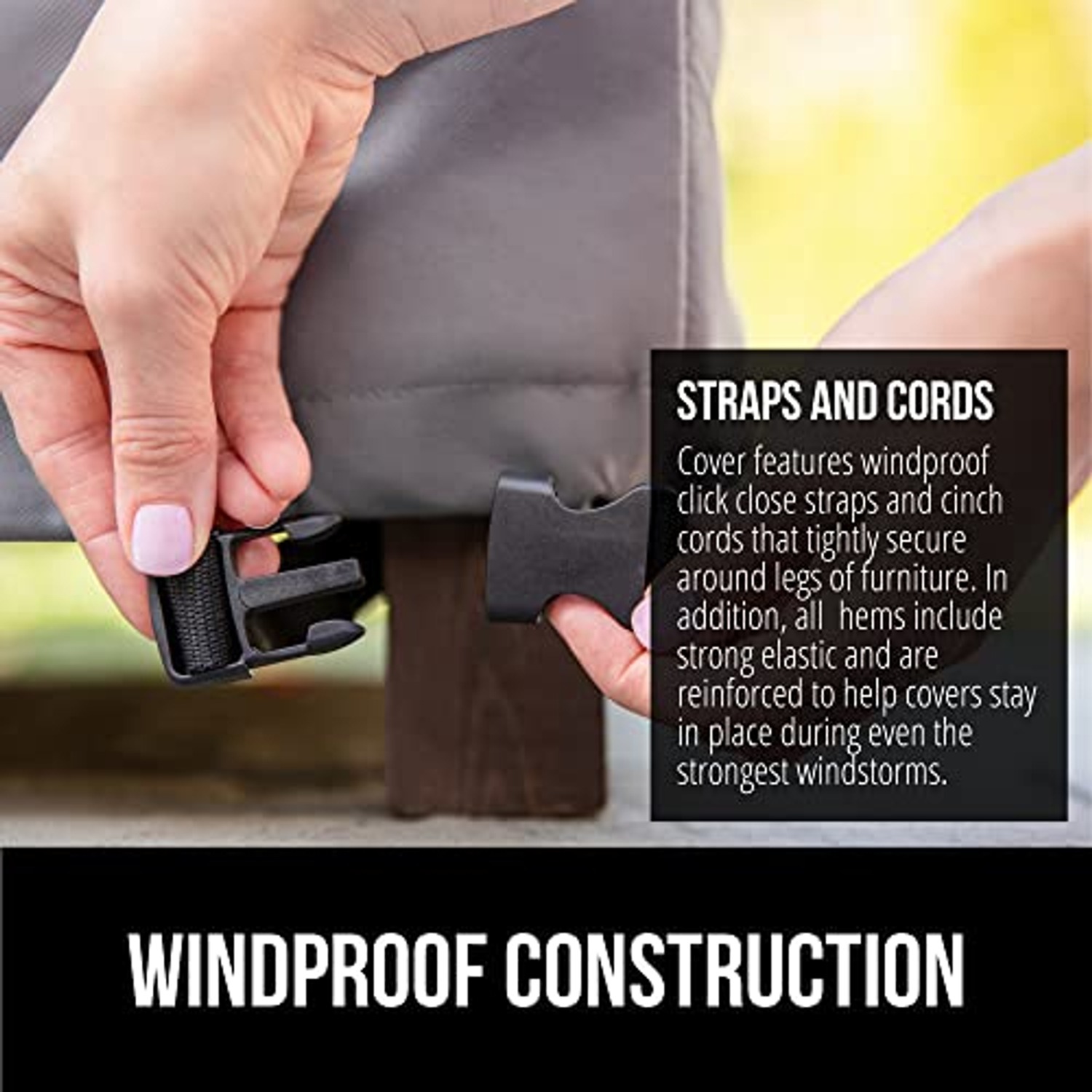
The third job is staying on the furniture. A cover lying in the garden on Monday morning protected nothing. Click-close buckle straps fasten around the sofa legs and adjustable cinch cords pull the hem tight at the base. Together they stop the cover acting like a sail. If you live somewhere exposed, this is the feature to care about most, and it is what separates the best windproof outdoor cover from the ones that end up in a neighbor's hedge.
Sun damage is slower but just as real
People buy covers because of rain, but sun does more long-term damage in a lot of climates. UV breaks down fabric fibers, fades dye, and makes plastic components brittle. The UV coating on this cover is there to slow that process down on the cover itself, which in turn keeps protecting what is underneath for longer.
The silver color helps too. Lighter covers reflect more heat than dark ones, so the space under the cover does not become an oven on a hot afternoon. If you are weighing up the best UV resistant patio cover options, pay attention to both the coating and the color, not just one.
Measuring before you buy
This is where most returns come from, and it takes two minutes to avoid.
This cover is 80 inches long, 32 inches deep and 38 inches tall. Measure your sofa at its widest point, which is usually arm to arm, not seat to seat. Then measure the depth from the front edge of the seat to the back of the backrest, including any cushion overhang. Finally measure from the ground to the highest point of the backrest.
Aim for a cover that is equal to or slightly larger than your furniture in every direction. Too small and it will not reach the base, so the drawstring has nothing to grip. Too large and you get loose fabric that catches wind and collects water in sagging pockets. Slightly roomy is fine because the cinch cords take up the slack. Dramatically oversized is not.
If you have an L-shaped sectional, measure the longest straight run. A straight sofa cover will not wrap a corner properly, and you are usually better off with a sectional-specific shape or two covers.
Who this suits
This cover makes sense if you have a full-size outdoor three seater sitting on a deck, patio, balcony or lawn and you leave it out year round. It is also a good choice if you pack furniture away for winter but want it protected in the garage or under a carport, where dust and damp still get at it.
It is less of a fit if you have a small bistro setting, a single armchair, or a large wraparound sectional. Those need their own sizes. It is also worth noting that this is a cover, not a shelter. It protects the furniture, not the person sitting on it.
Getting the best out of it day to day
A few habits make a big difference to how long any cover lasts.
Cover dry furniture whenever possible. If the cushions are soaked, let them dry first, or at least leave the cover slightly open at the base for a few hours. The air vent handles normal humidity, but it is not a dryer.
Shape the cover so water runs off. If your sofa has a flat top, water will sit there and the weight slowly stretches the fabric. An upturned plant pot or a small cushion under the cover creates a peak so rain drains to the sides. In snowy areas, knock heavy build-up off rather than letting it pile up.
Clean it when it needs it, not on a schedule. Wipe with a damp cloth and mild soap, rinse lightly, then let it dry fully before folding. Never put it through a washing machine, because that strips the waterproof treatment and stresses the stitching. If you are storing it over summer, store it dry and folded somewhere out of direct sun.
Check the straps a couple of times a season. Buckles loosen with repeated use and temperature swings. Ten seconds of tightening is better than finding the cover in the garden.
Cover or no cover, the maths is simple
An outdoor sofa is one of the more expensive things in a garden. Replacing cushions alone often costs more than a good cover. If a cover adds even two seasons to the life of the furniture, it has paid for itself several times over, and you get the day-to-day benefit of a sofa you can sit on without wiping it down first.
The other benefit is less obvious. When furniture stays clean and dry, you actually use it. Nobody drags out damp cushions on a nice evening. Covered furniture is ready when you are.
The short version
Look for heavy fabric, properly finished seams, a vent for airflow, UV protection and real straps. This 80 inch patio sofa cover ticks all of those, in 600D polyester with double stitching, interlocking seams, a hidden air vent, UV coating and click-close buckle straps with adjustable cords.
Measure your sofa first, fit the cover so water runs off rather than pooling, strap it down properly, and wipe it clean with mild soap when it needs it. Do that and your outdoor lounge stays usable a lot longer than it otherwise would.