
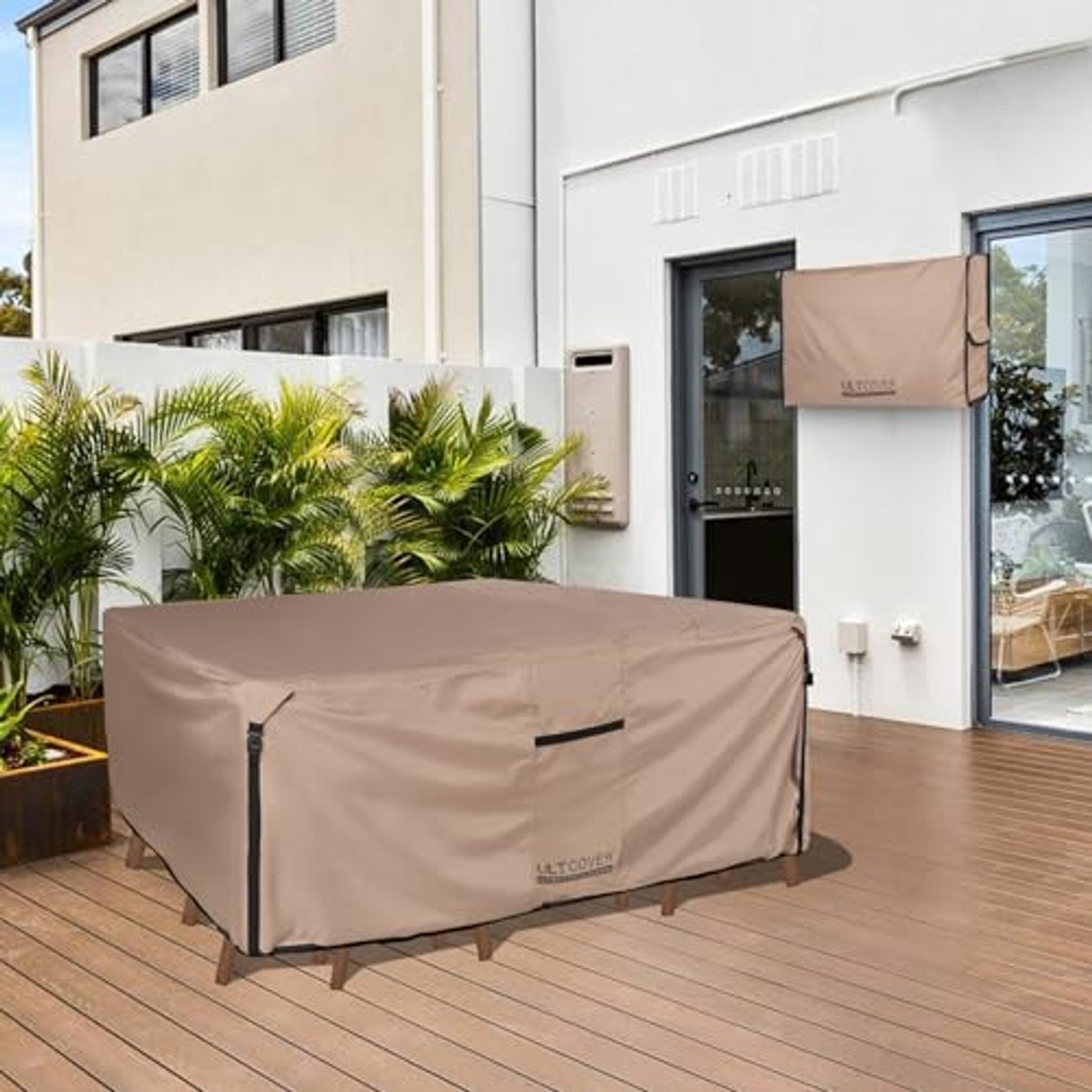
The complete guide
How To Choose An Extra Large Patio Set Cover That Actually Lasts
The real problem with uncovered outdoor furniture
Nobody buys a patio dining set planning to scrub it every weekend. Yet that is what happens. You walk outside on a nice morning and the table has a film of pollen on it, there are leaf stains near the legs, and one chair has a bird mark right in the middle of the seat. Lunch outside turns into twenty minutes of cleaning first.
Weather does the slower damage. Rain seeps into timber joints and lifts the grain. UV bleaches color out of cushion fabric and makes resin wicker brittle. Metal frames pick up rust where the coating has chipped. None of it happens overnight, which is exactly why people put off dealing with it. Two or three seasons in, a set that cost real money looks tired and nothing you do brings it back.
A proper cover solves both problems in one move. The everyday mess never lands on the furniture, and the slow weathering is held off. You lift the cover and the table is dry. That is the whole pitch.
What makes a cover heavy duty
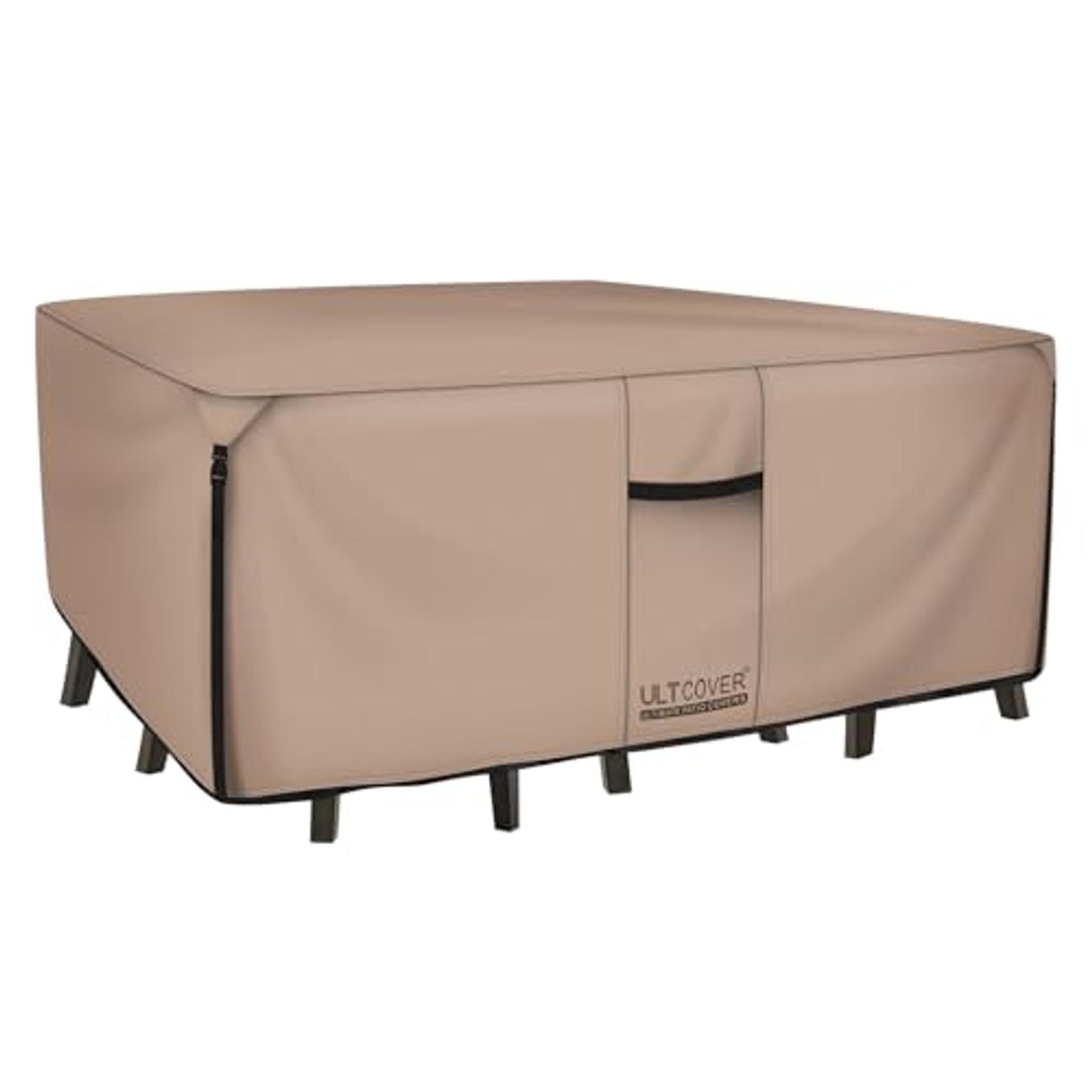
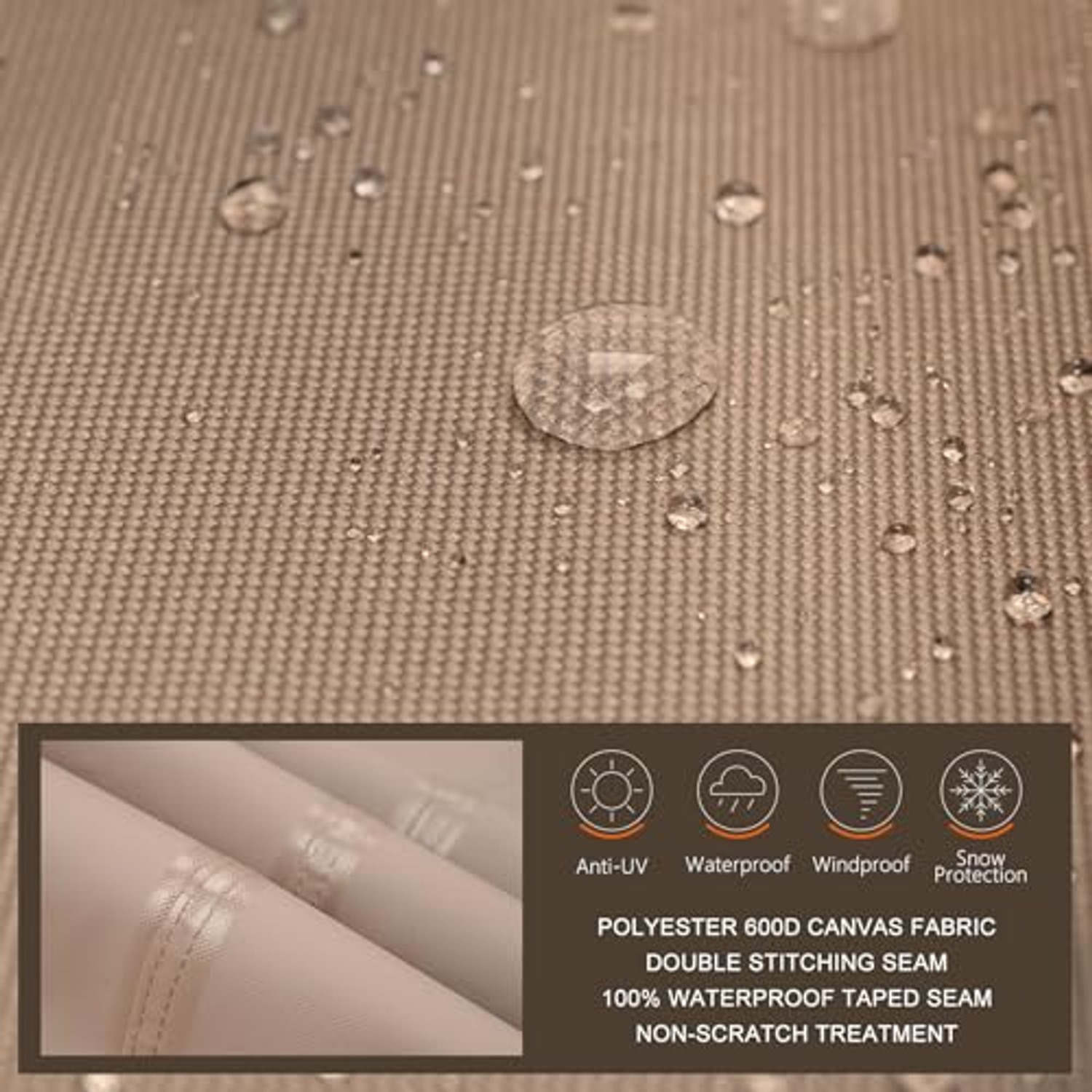
Fabric weight is the first number worth knowing. Outdoor covers are usually described in denier, written as a D number, which measures how thick the yarn is. A thin 210D cover is light and cheap and tends to tear at the stress points within a season or two. This cover uses 600D polyester canvas, which sits in the heavier range for garden covers and resists scuffing where it rubs against chair corners and table edges.
Then there is the backing. Polyester on its own is not waterproof. What stops water getting through is a coating bonded to the underside, and here that is PVC. The listed blend is 70% polyester and 30% PVC. Water sits on the surface in beads and runs off the edge rather than wicking into the weave and dripping onto your cushions.
Sun protection is the third piece and it is often overlooked. A cover that holds water out but cooks in the sun becomes brittle and starts shedding flakes of coating. This one is listed as UV and fade resistant, which is what lets it hold up across long summers instead of just one.
Venting matters more than people expect
Here is a thing that catches a lot of buyers out. A fully sealed cover is worse than a vented one. Ground moisture and overnight condensation still get under there, and with nowhere to go that damp sits against your furniture for weeks. You end up with mildew spots on cushions and dark patches on timber, caused by the cover that was supposed to protect them.
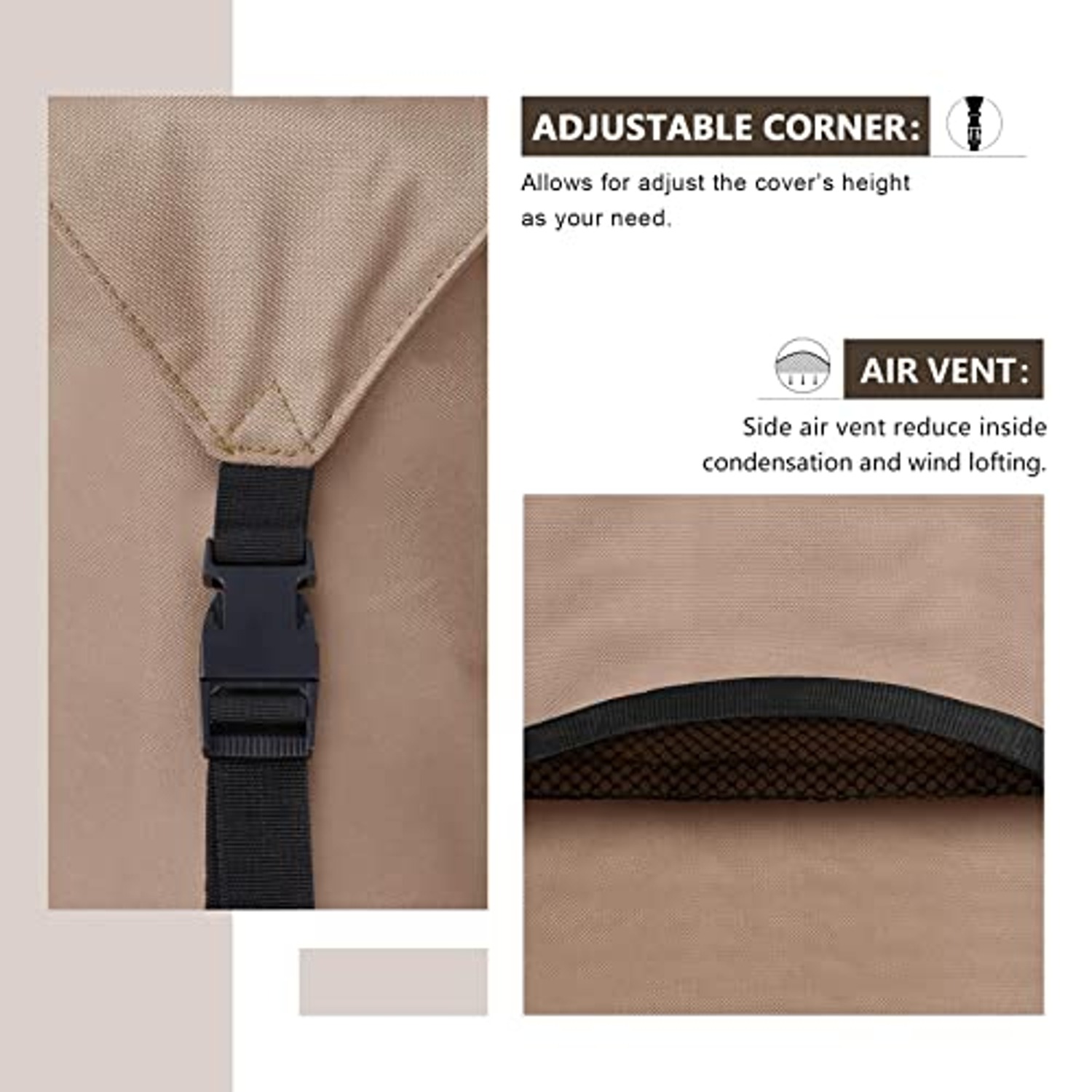
This design has structured air vents on two sides. Air moves through gently, carrying moisture with it, and the space underneath stays closer to the outside humidity rather than turning into a warm damp box.
The vents also handle wind. When a gust hits a sealed cover it has nowhere to escape, so the cover balloons up and lifts at the edges. Vents bleed that pressure off. Combined with the clips and cords, it means the cover stays where you put it instead of sailing across the lawn.
Getting the fit right
This is the step that determines whether you are happy with your purchase, so take the extra five minutes.
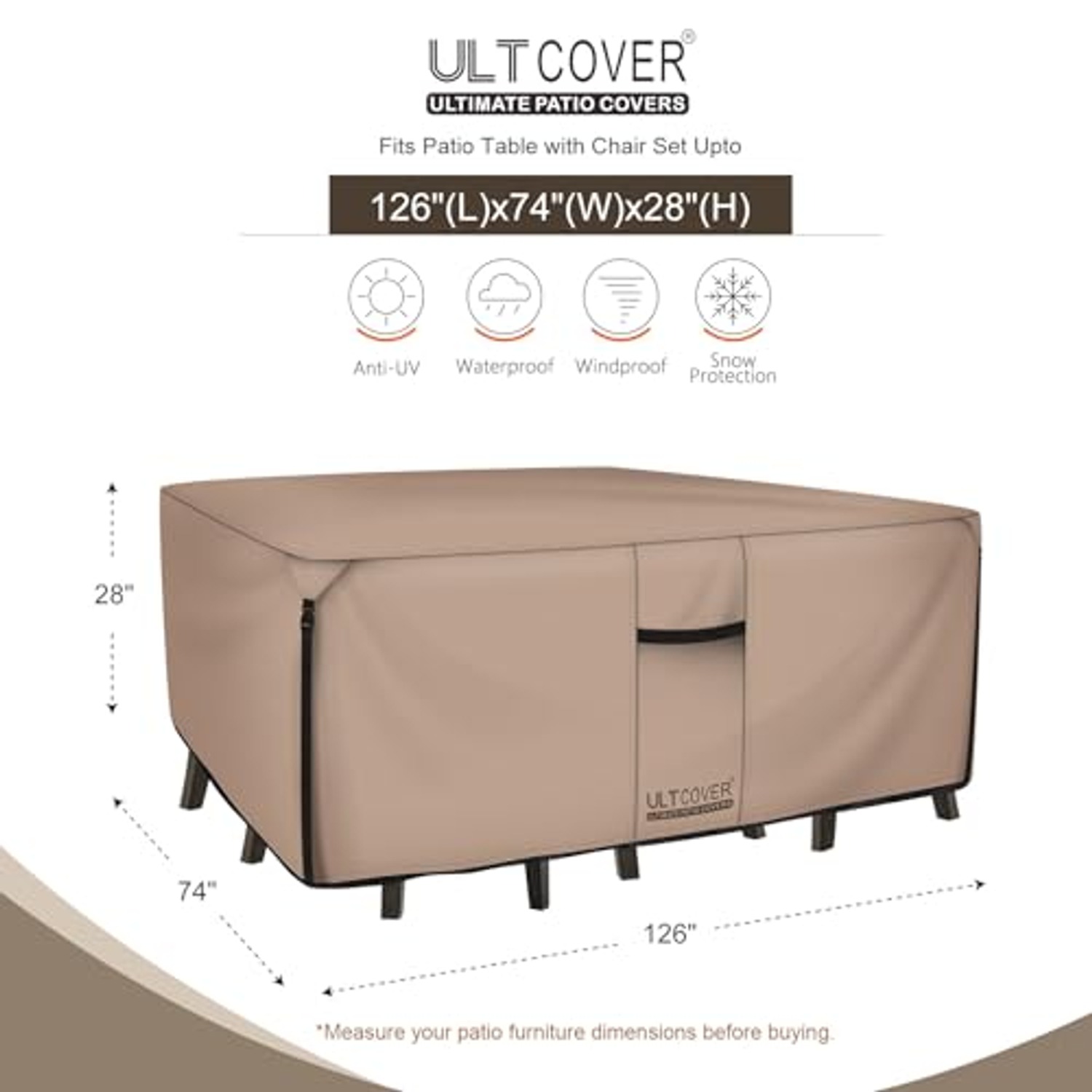
Push every chair in to where it normally sits when the table is not in use. Now measure the full footprint of the whole arrangement, not just the table top. Chair backs and armrests usually stick out further than you think. Take the longest dimension, then the widest. Finally measure from the ground up to the highest point, which is almost always the top of a chair back.
Compare those three numbers against the cover: 126 inches wide, 74 inches deep, 28 inches high. It is made to suit a rectangular or oval table with six to eight standard chairs.
A little slack is fine and actually helps, because the draw cords pull in the excess. A lot of slack is not. Loose fabric flaps in wind, wears faster at the fold lines and creates dips where rain collects. If your set is a good deal smaller, a smaller cover will serve you better.
Shape matters too. This one is cut rectangular. Rectangular and oval tables both work well. A round set leaves big loose corners, which is the kind of thing that looks fine on day one and annoys you by week three.
Fitting and securing it
Start at one end and walk the cover along the length of the table rather than trying to throw the whole thing at once. With a set this size, a second person makes it much easier the first few times. After that you will have a routine.
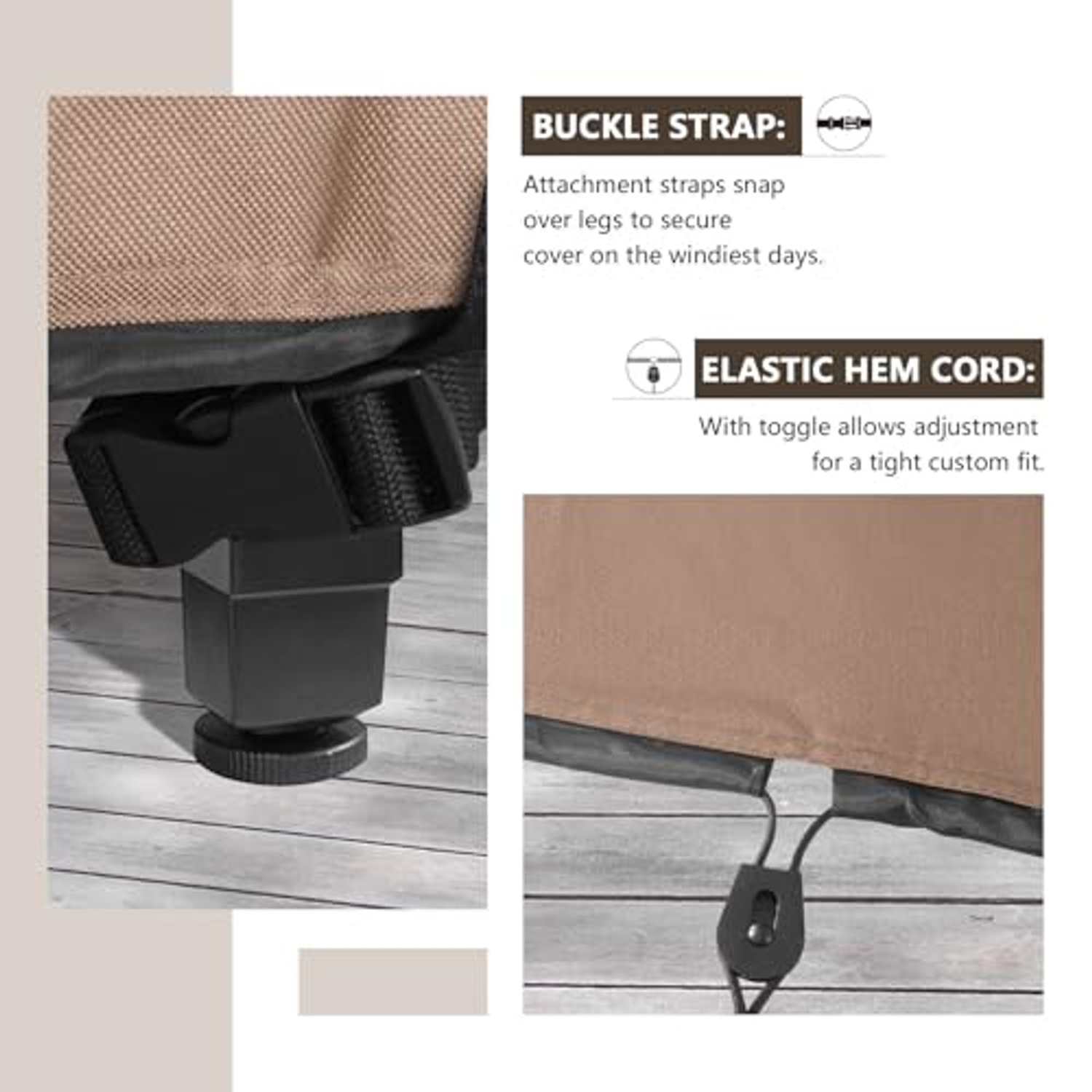
Once it is sitting evenly, pull the elastic draw cords at the hem to bring the lower edge in against the furniture. Then use the plastic clips and cords around the table legs. That anchoring is what keeps the cover on through a rough night. Skipping it is the most common reason people say a cover blew away.
Check the drape before you walk off. You want the fabric sloping slightly so water runs to the edges. If there is a flat dip in the middle, nudge a chair or lift the fabric so the water has somewhere to go. Pooled water is the single biggest cause of premature cover failure.
Looking after it
Care here is simple. Hand wash only. A garden hose rinse clears most of what builds up, and for marks a soft cloth with mild soapy water does the job. Rinse again afterwards so no soap residue is left to attract dirt.
Avoid the machine, bleach, the tumble dryer and the iron. All four damage the PVC backing, and once that layer is compromised the cover is no longer waterproof.
Through the season, give it a glance every few weeks. Brush leaves off the top before they break down and stain. Clear snow rather than letting it pile up. Push off any standing water. Have a quick look at the cords and clips to see nothing has frayed or come loose.
If you take it off for part of the year, make sure it is completely dry before folding. Damp fabric folded into a bag for months comes out smelling bad and sometimes spotted. Spread it out in the sun or over a rail for a day first. The best winter patio furniture cover is still only as good as the way it gets stored.
Who this suits
This is for people with a large outdoor dining area. Six to eight chairs, a long rectangular or oval table, somewhere that lives outside permanently rather than getting carried into a shed. If you have a big deck, a courtyard set or a garden table that seats the whole family, this is the size bracket you are in.
It is also worth it if your set was expensive or if it includes cushions. Cushion fabric is the first thing to show sun damage and the first thing to grow mildew. Keeping it dry and shaded pays for itself.
If your furniture lives under a solid roof year round, or if you have a small two-seater bistro set, you do not need this much cover.
The short version
Measure your set properly, including chairs and height. Check it fits inside 126 by 74 by 28 inches and that your table is rectangular or oval. Look for heavy fabric with a real waterproof backing, which here is 600D polyester with PVC, plus vents so damp can escape and cords so wind cannot lift it.
Then use it. Fit it snugly, tie it to the legs, clear debris off the top now and then, and hand wash it when it needs it. Do that and your outdoor set stays usable on short notice, looks better for longer, and you spend your time sitting at the table instead of cleaning it.