
The complete guide
How to Choose a Cantilever Umbrella Cover That Actually Fits
The problem with leaving a big umbrella uncovered
A cantilever umbrella is designed to live outside, but that does not mean it enjoys it. Over a season the canopy collects dust, pollen, bird mess and tree sap. Rain soaks into the folds and sits there. Sun bleaches the color out of one side faster than the other. By year two the fabric that looked crisp in the shop has gone patchy and stiff.
None of that happens because the umbrella is badly made. It happens because closing an umbrella does not protect it. A closed canopy is still a column of fabric sitting in the weather, with gaps where water and grit can work their way in. A proper cover is the cheapest insurance you can buy for something that cost a lot more.
How a cantilever umbrella cover works
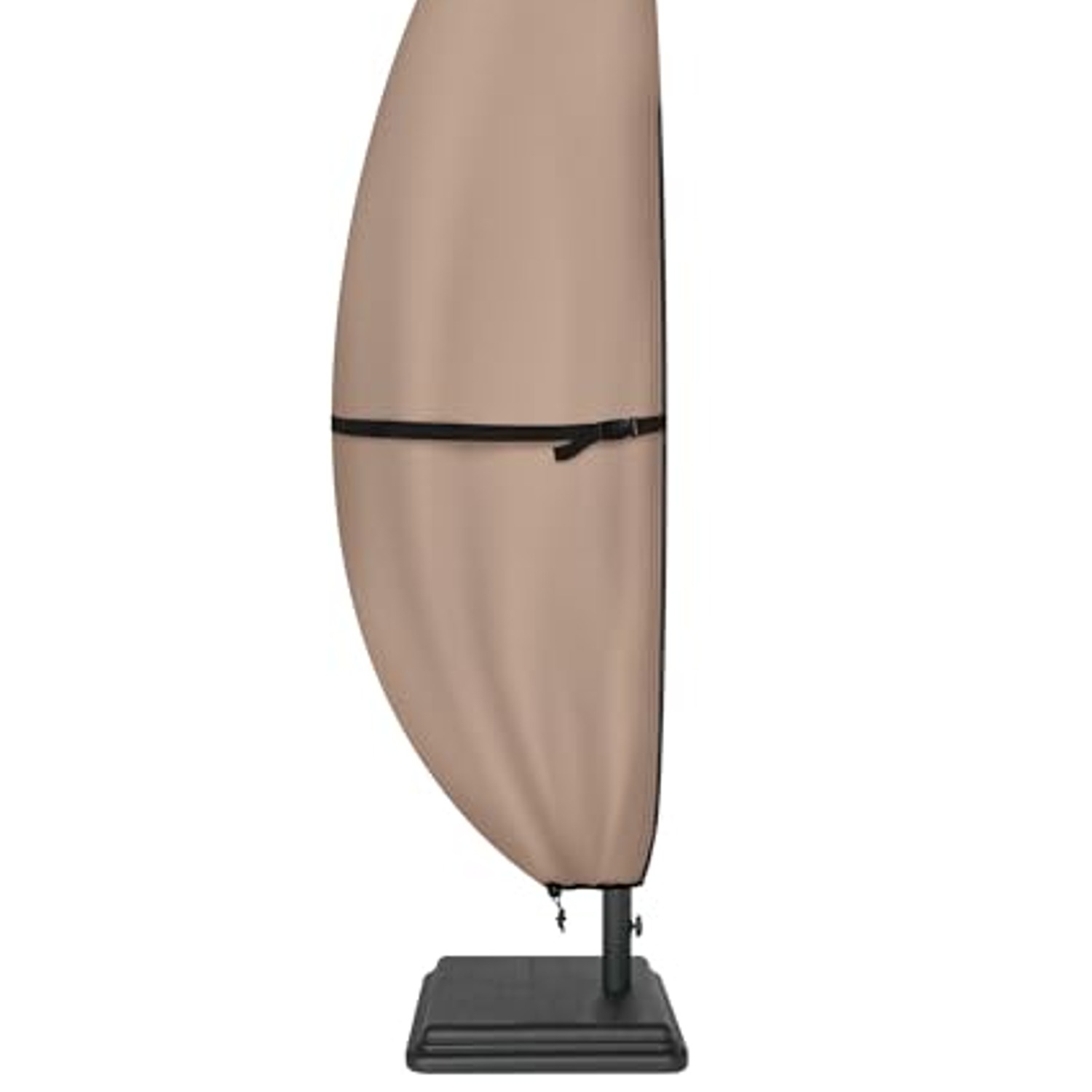
The idea is simple. A long sleeve of weather-resistant fabric goes over the closed canopy and down the frame, sealing the vulnerable fabric away from rain and sun. The details are what separate a good cover from a frustrating one.
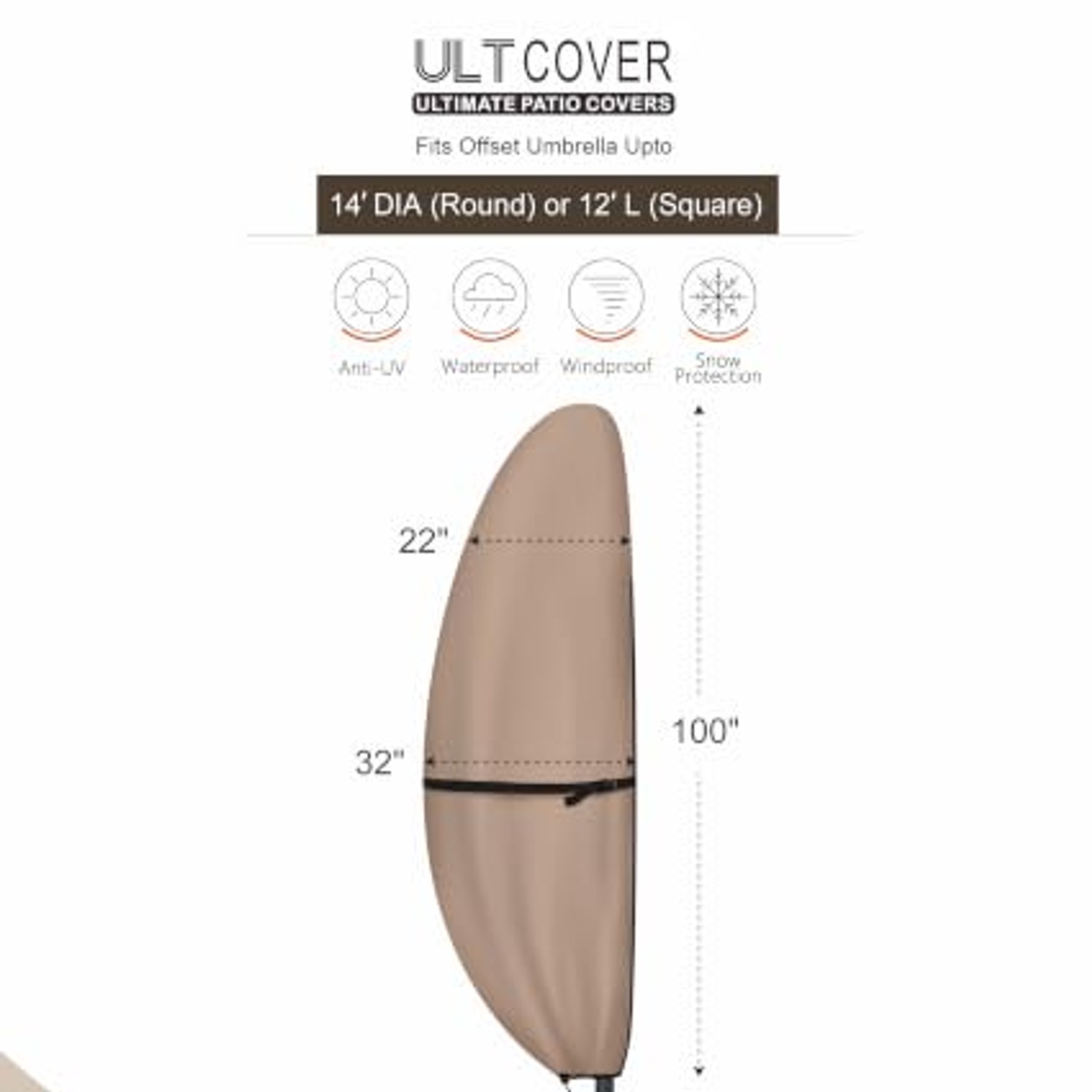
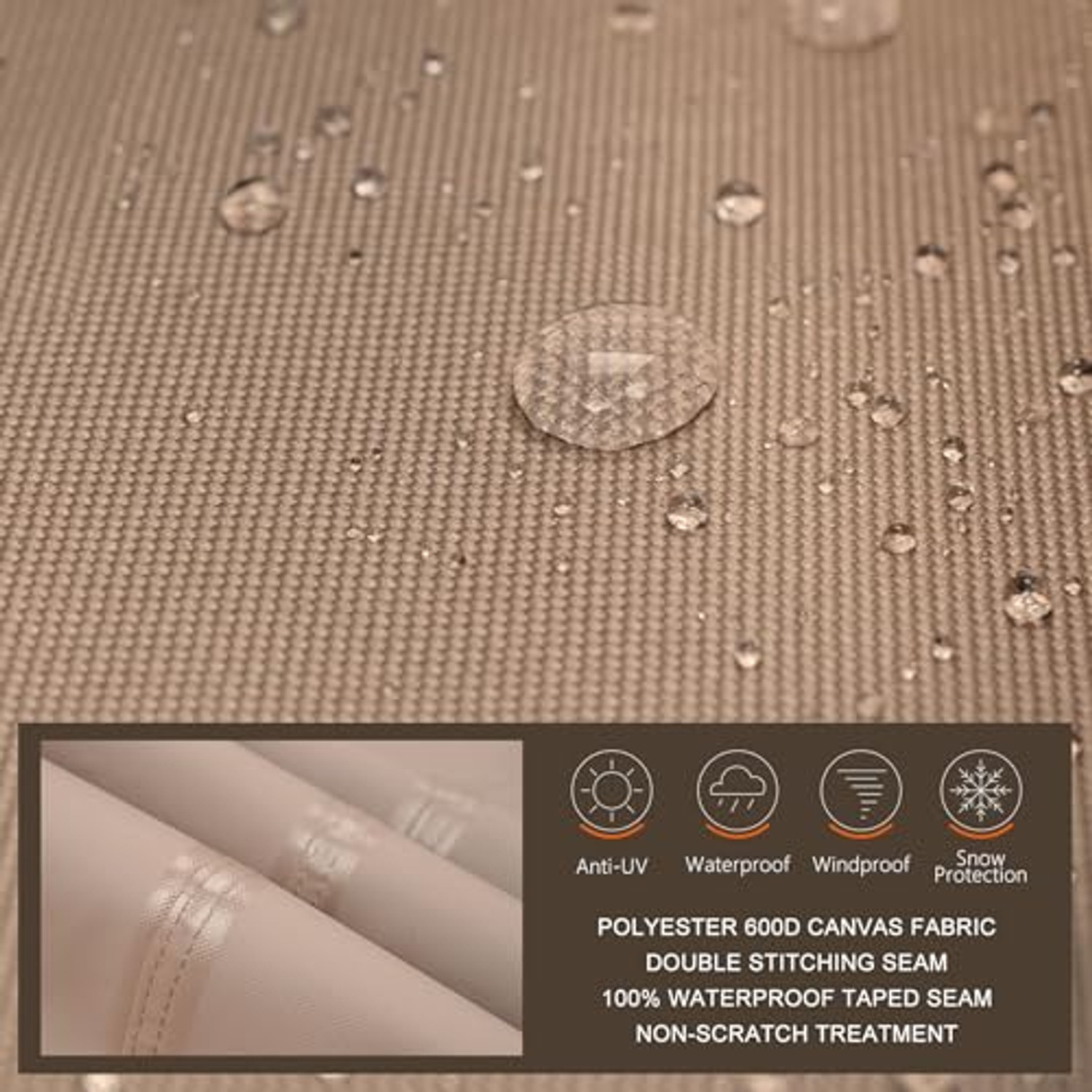
This one is built from 600D polyester canvas with a waterproof backing. The 600D figure refers to the thickness of the yarn in the weave. Lower numbers, say 150D or 210D, feel thin and tend to flap, tear at the seams and go brittle after a summer of UV. A 600D polyester umbrella cover has enough body to resist that, and the backing layer is what stops water passing through the weave rather than just beading on the surface.
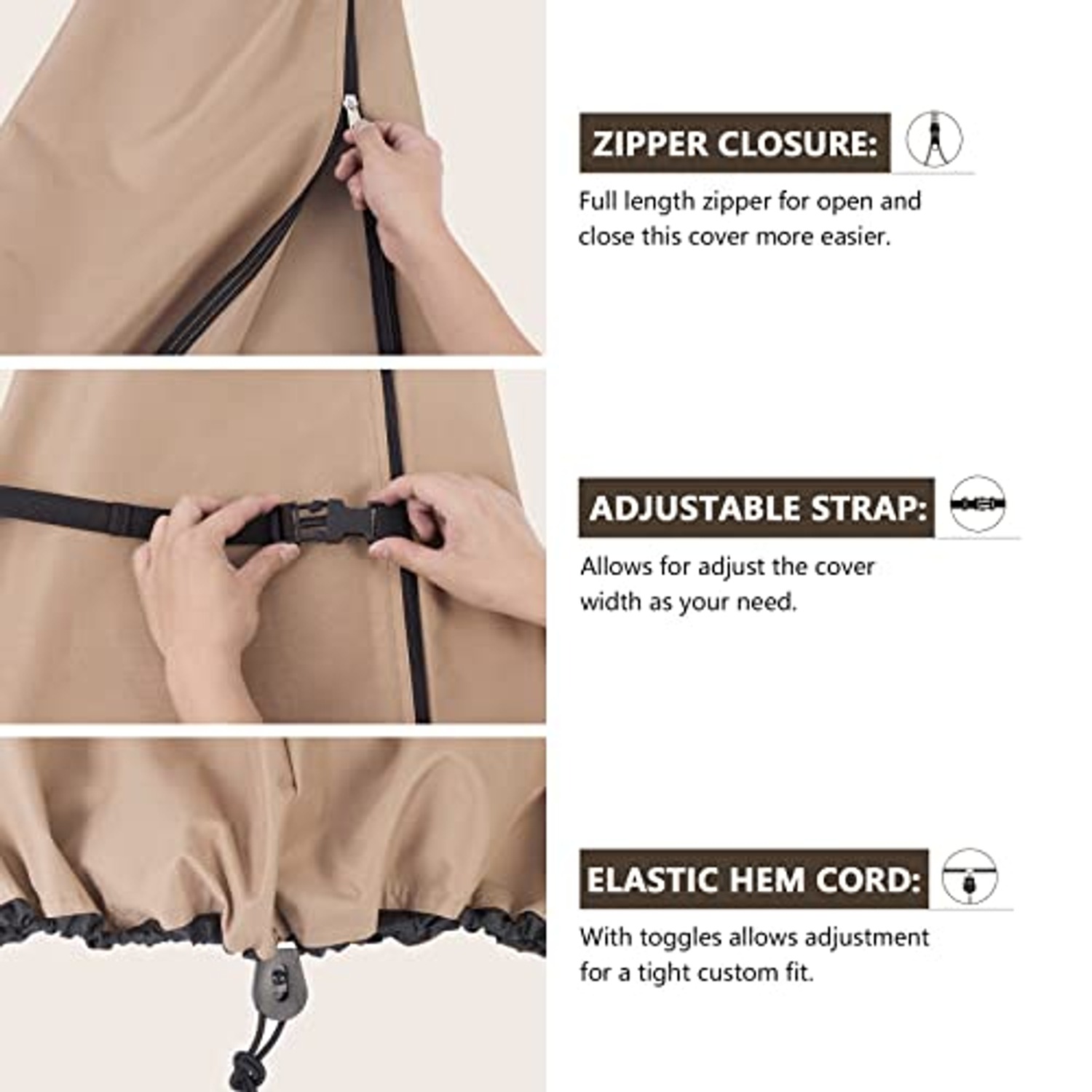
Then there is the fit. A cover that hangs loose is nearly useless in wind. It balloons, rubs the canopy, works its way up the frame and ends up in the neighbor's garden. This one tackles that from two directions. Heavy duty plastic clips and buckle straps sit around the middle and pull the cover in against the canopy. At the bottom, an elastic hem cord with an adjustable toggle plus hook and loop lets you cinch the opening down. Tighten both and the cover becomes part of the umbrella rather than something draped over it.
The lifting rod matters more than you expect
Most people who have given up on umbrella covers gave up because of the fitting. An offset umbrella can stand close to three meters tall. Trying to drop a long fabric sleeve over the top of that while balancing on a chair gets old fast, and it only takes one awkward evening in the rain before the cover lives permanently in the shed.
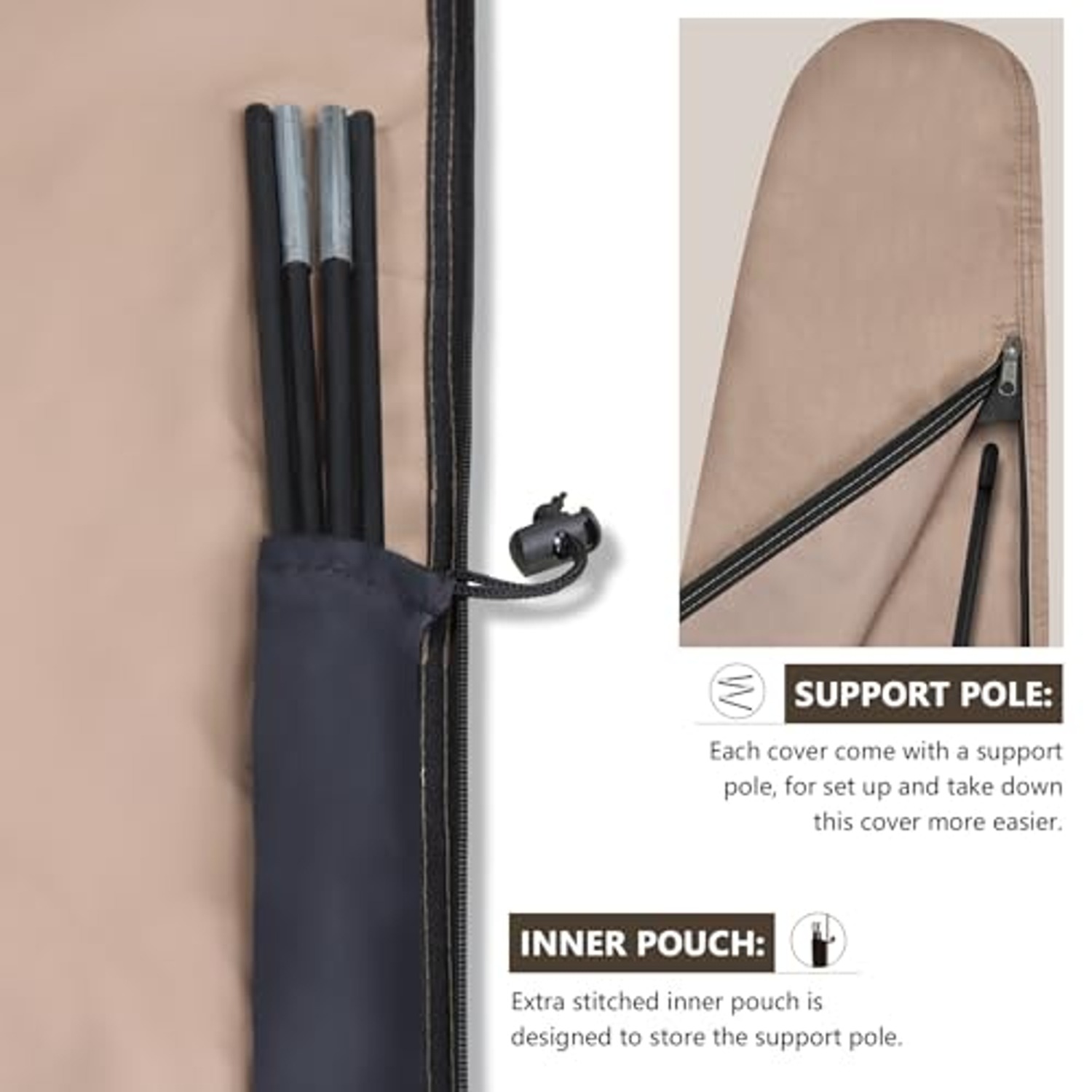
The collapsible fiberglass pole in this pack solves that. You push it up into the top of the cover, which gives you the reach to lift the whole thing above the canopy and guide it down from ground level. No ladder, no second person, no stretching. An outdoor umbrella cover with rod is genuinely a different product to one without, because it is the one you will actually use.
The full zipper helps too. Rather than wrestling a closed tube over a wide canopy, you unzip, wrap, and zip back up. For a square cantilever umbrella cover, where the corners add bulk, that zip makes a noticeable difference.
Getting the size right
Sizing is where most cover purchases go wrong, so measure before you buy.
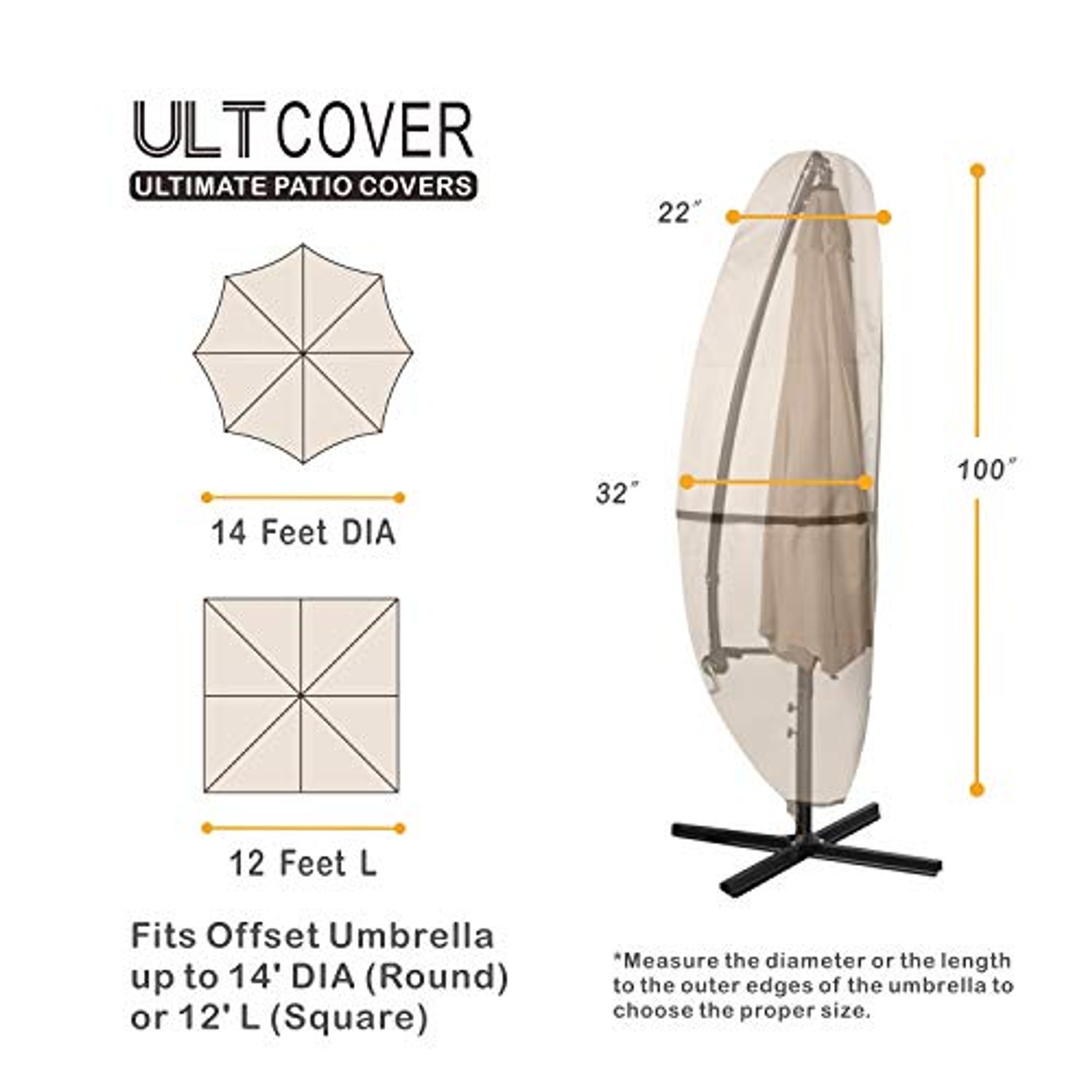
For a round canopy, open the umbrella and measure straight across the widest point, from rib tip to rib tip. That is your diameter. This cover suits round offset umbrellas up to 14 ft across.
For a square canopy, measure one side from edge to edge. This cover handles square frames up to 12 ft. Square canopies need extra fabric at the corners, which is why the number is smaller than the round figure even though the two sizes look similar on paper.
Also take note of the height from the ground to the top of the closed canopy. A cover sized correctly for width will still look odd if your frame is unusually tall or short, and the hem needs to reach past the canopy to do its job.
If your measurements come in well under the maximum, the cover will still work, you will just have more slack to take up with the straps and toggle. If you are over the maximum, do not force it. A stretched cover tears at the seams and the zip takes the strain.
Who this suits
This is aimed at anyone with a banana-style offset umbrella on a deck, patio or poolside, particularly if the umbrella stays up through a full year. It is a good match for coastal properties where salt spray and grit do the damage, for gardens under trees where sap and leaves are the issue, and for anywhere with a real winter.
It also makes sense for holiday homes and rentals, where the umbrella might sit unused for weeks at a time with nobody around to close it in a storm. A waterproof patio umbrella cover with proper straps means you can walk away without thinking about it.
Where it is less essential is on a covered balcony or under a solid pergola, where the umbrella already gets most of the shelter it needs. Even then, dust and pollen still settle, so a cover is not wasted.
Fitting and living with it
The first fit takes a bit of fiddling. Let the cover relax out of the pack for an hour so the folding creases settle. Close the umbrella fully and strap the canopy in if your frame has its own tie. Push the rod into the cover, raise it, and bring it down over the canopy. Zip it closed, do up the mid-cover buckle straps, then pull the hem toggle tight and secure the hook and loop.
Two habits make a cover last. First, put it on dry. Covering a wet canopy traps moisture, and trapped moisture is how mildew starts. If rain is coming and the umbrella is still damp, cover it anyway but open it up on the next dry day to air out. Second, clear the top occasionally. Leaves, pine needles and snow sit in the hollow at the top and hold water. A quick push with the rod takes care of it.
Cleaning is easy enough. Brush off the loose stuff, wipe with mild soapy water, rinse and let it dry fully in the air. Keep it away from the washing machine, bleach and the tumble dryer, all of which will wreck the waterproof backing.
What to compare before you decide
If you are weighing up options, three things tell you most of what you need to know. Fabric weight, because 600D and above will outlast the thin stuff by years. Closure and strap design, because a cover that cannot be cinched will not stay on. And whether a lifting rod is included, because that determines whether the cover gets used or ignored.
Price per season is a fairer way to think about it than price on the day. A cheap cover that splits after eight months costs more than a heavier one that lasts several years, especially once you factor in the faded canopy it failed to protect.
The short version
A cantilever umbrella cover earns its keep by keeping rain, sun, dust and snow off a canopy that would otherwise weather fast. This one uses 600D polyester canvas with a waterproof backing, closes with a full zip and hook and loop, and holds its shape with mid-cover buckle straps plus an elastic hem toggle. The included collapsible fiberglass rod means you can fit it alone, from the ground, in about a minute.
It suits round offset umbrellas up to 14 ft across and square ones up to 12 ft. Measure your canopy, check the height, and if you are close to the limits, ask us before ordering. Get the size right and this is a cover you will fit without complaint for years.