
The complete guide
How To Choose Chaise Lounge Covers That Actually Stay On
The problem with leaving loungers uncovered
A chaise lounge lives a hard life. It sits outside through summer sun, autumn leaf drop, winter damp and spring pollen, and it rarely gets moved. Within a season or two you start to notice things. The sling fabric goes chalky. Powder coating on the frame develops little rust freckles where it got chipped. Cushions feel slightly damp even on a dry day, because moisture soaked in during a storm and never properly left. Bird droppings leave stains that will not wipe away.
None of that happens overnight, which is exactly why people put off doing anything about it. The damage is slow. Then one afternoon you go to use the lounger before guests arrive and realize it looks tired in a way no amount of wiping will fix.
A cover is the cheapest intervention there is. It costs a fraction of replacing the furniture, and it takes about thirty seconds to put on. The only real question is which cover, and that comes down to fabric, fit and how well it handles wind.
How a waterproof chaise lounge cover works
Outdoor covers do three separate jobs, and it helps to think about them separately.
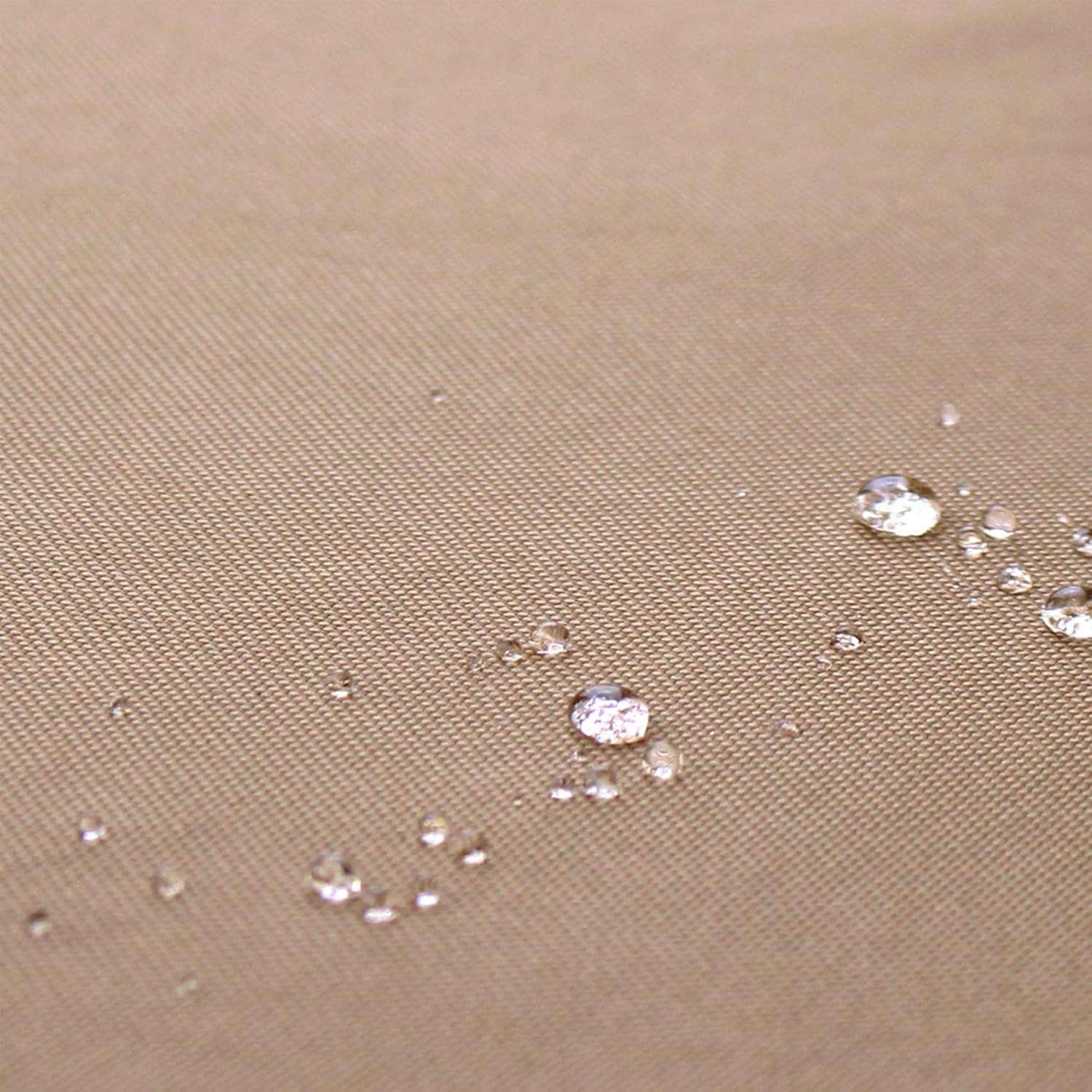
The first is shedding water. This cover uses 600D polyester canvas with a waterproof backing. The D stands for denier, a measure of yarn thickness. A 600D weave is substantially heavier than the thin material used on cheap seasonal covers, which tends to tear at stress points after one windy winter. The waterproof backing is what actually stops water passing through the weave, so rain runs off the surface instead of wicking down into your cushions.
The second job is blocking sun. UV light is what fades sling fabric, cracks plastic and chalks paint. A full coverage design shades the whole chair rather than just the seat, which is why loungers that live under covers keep their color for years longer than ones left exposed.
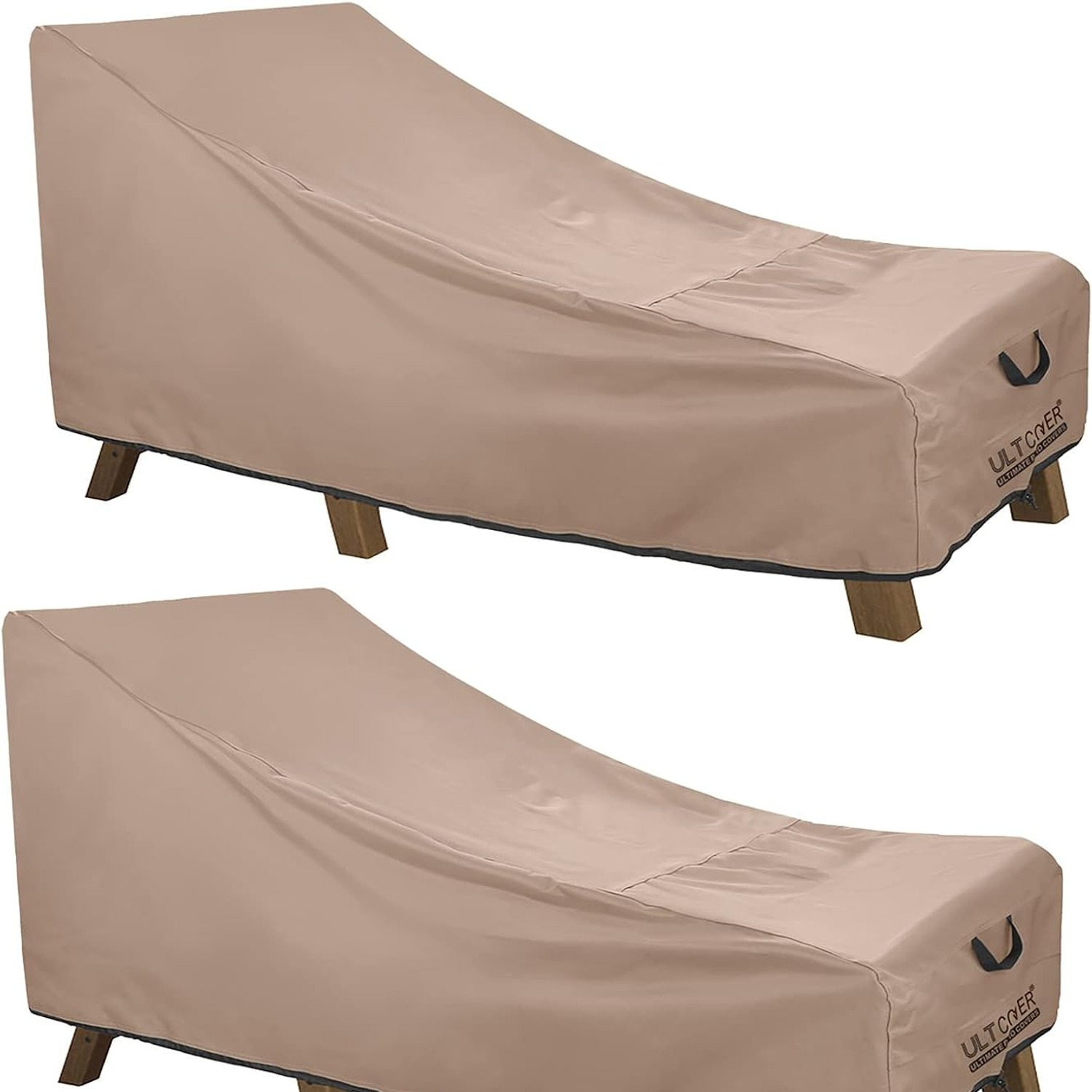
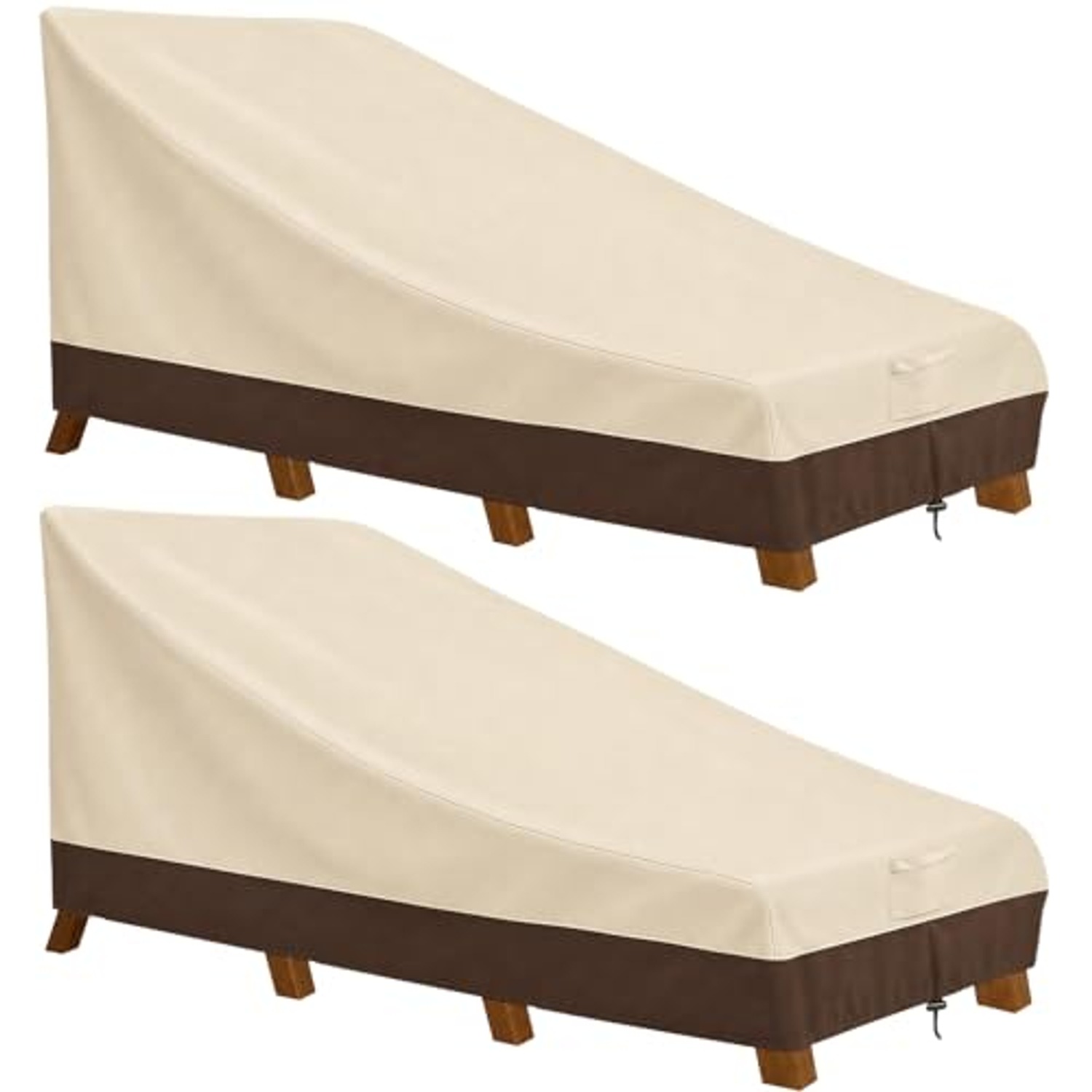
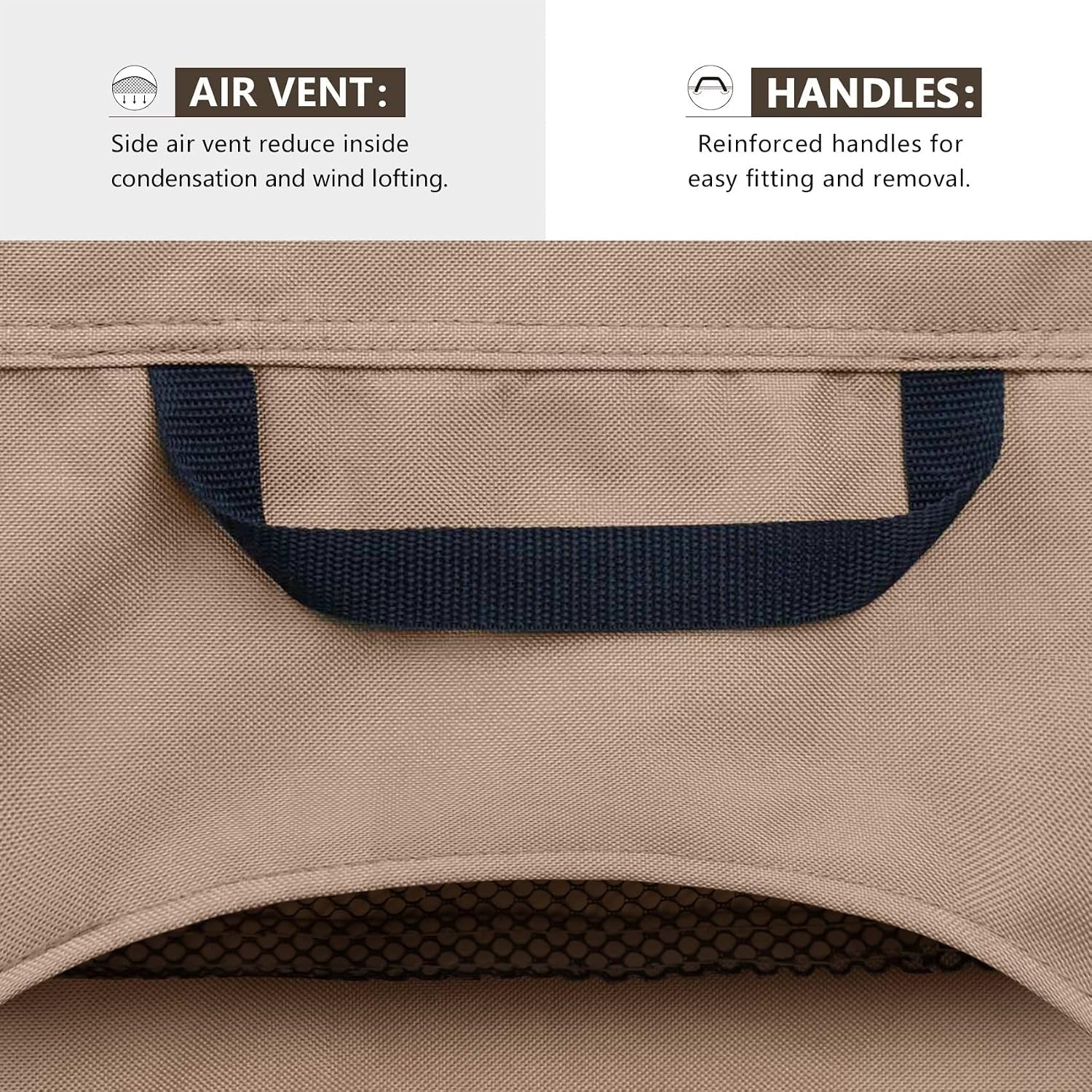
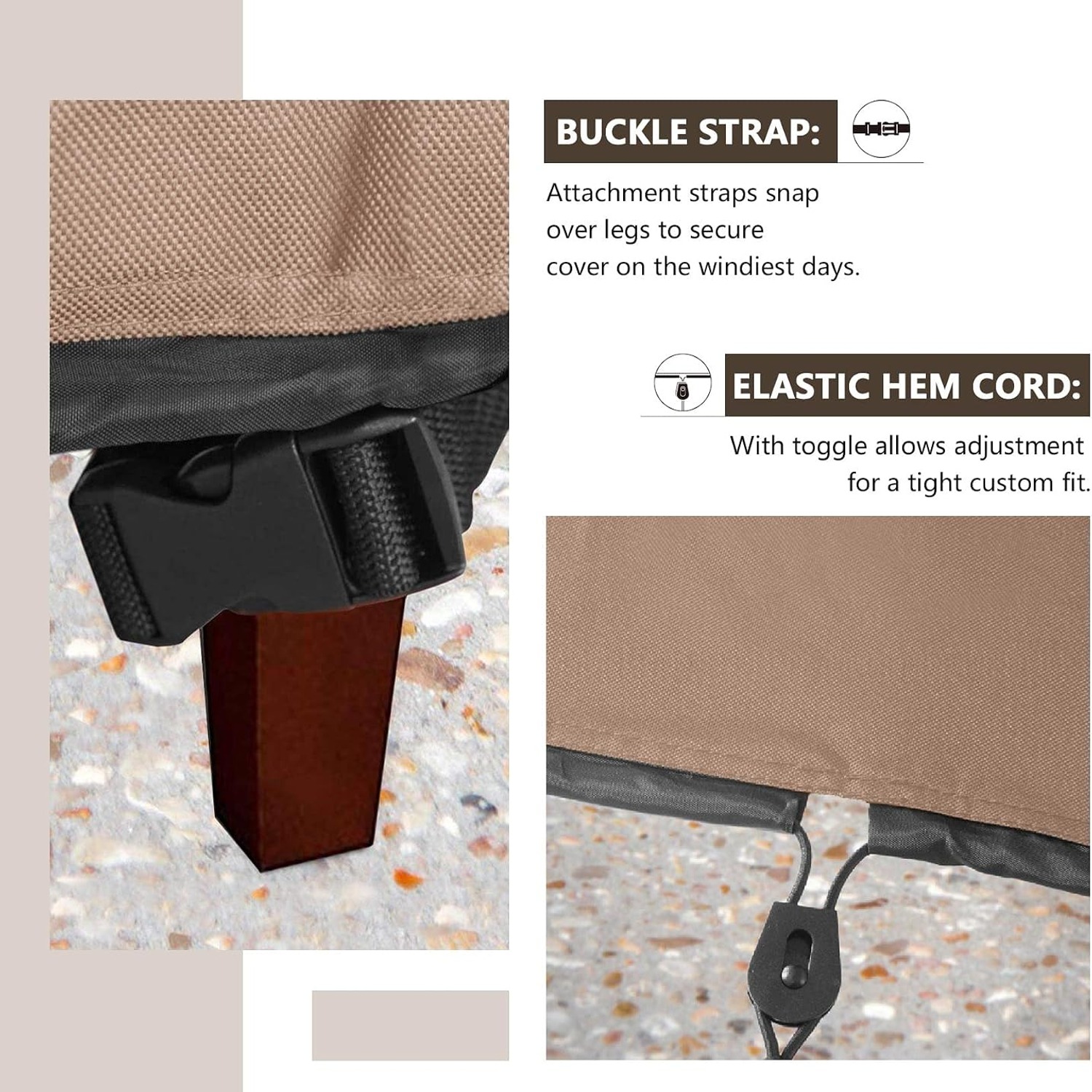
The third job is the one most covers fail at, which is staying on the chair. This is where the vents matter. Two structured air vents sit on the sides and stay open. When wind hits the cover, air moves through instead of pushing up underneath and turning the whole thing into a kite. Combined with that, heavy duty elastic draw cords with toggles pull the hem tight, and plastic clip buckles fasten around the chaise legs. A cover that is cinched at the hem and anchored at the legs has very little to grab.
Getting the size right
This is the step that trips people up most often, and it is worth five minutes of your time.
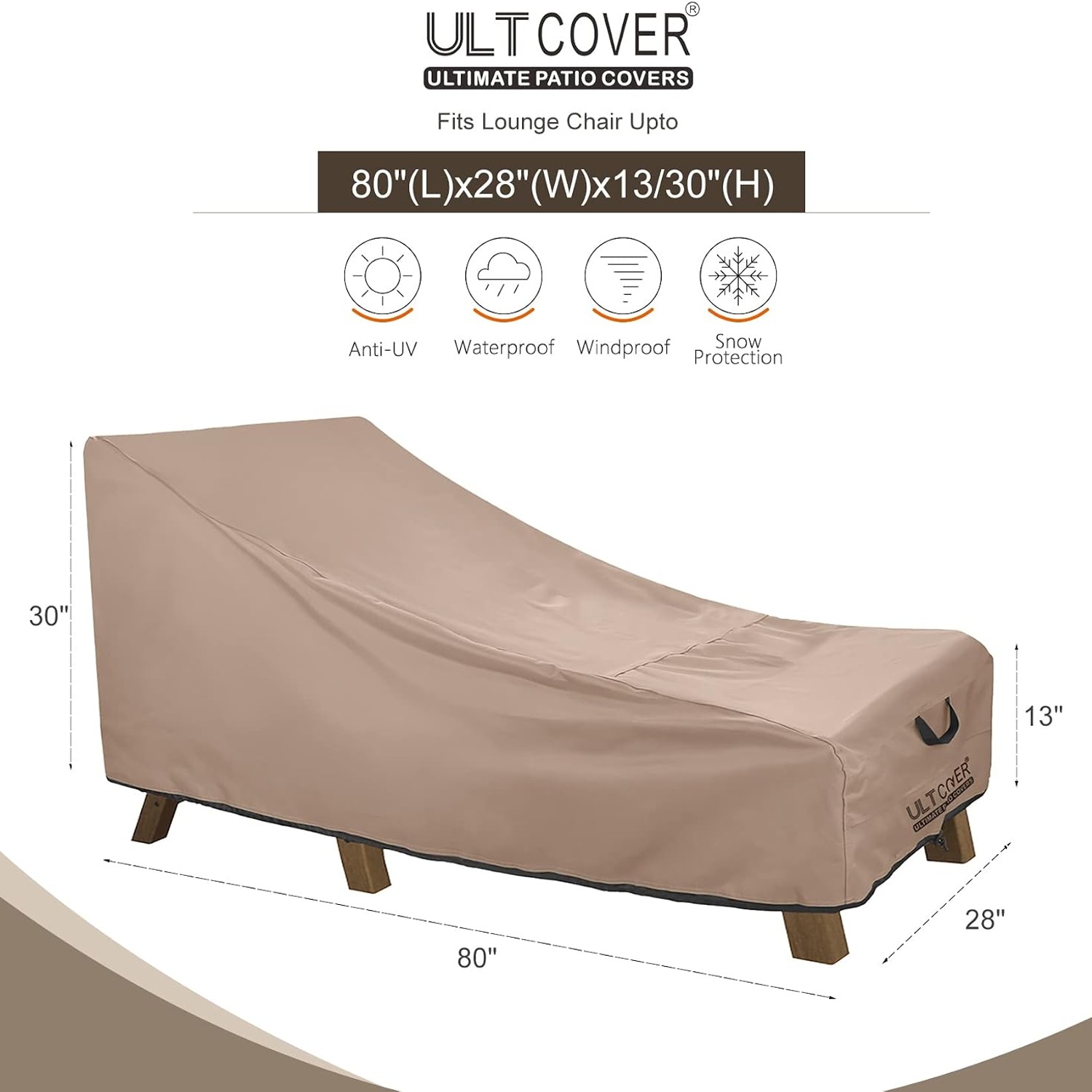
These covers fit patio lounge chairs up to 80 inches long and 28 inches wide. Measure your chair in the position you plan to store it. If you always leave it flat, measure it flat. If you fold the backrest up, measure that way instead, because the footprint changes.
For length, run the tape from the top of the backrest to the very end of the footrest. For width, measure the widest point, which usually means armrest to armrest rather than across the seat. Note both numbers down.
If your lounger comes in at 78 by 27 inches, this size is a good match. If it measures 84 inches long, it is not, and forcing it will leave the foot end exposed and the hem cord unable to grip. Slightly roomy is fine because the draw cord takes up slack. Too small is a problem you cannot solve.
Height matters too if you leave thick cushions in place. Pile height adds inches. If the cushions sit high, either take them inside or accept that the cover will sit higher and looser than it would on a bare frame.
Who these suit
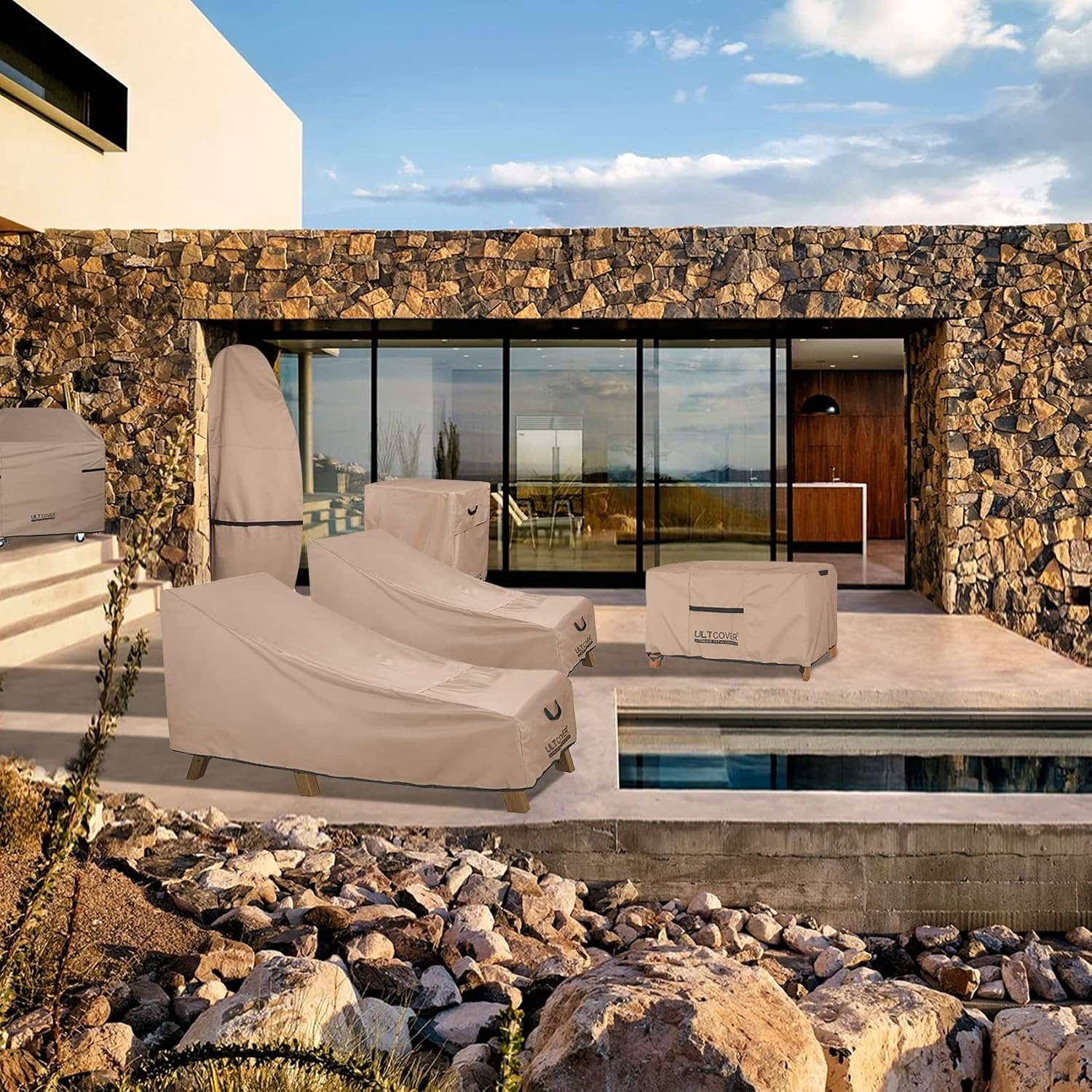
Anyone with a pair of matching loungers is the obvious fit, since this is a two count pack. Poolside setups benefit most, because those chairs get splashed constantly, sit in direct sun and collect everything the breeze carries. A set of pool lounge chair covers means you are not wiping down seats before every swim.
They also work well for holiday homes and rentals where furniture sits unused for weeks. Covering loungers between visits means you arrive to clean, dry seating instead of a cleanup job.
People in coastal or exposed spots will appreciate the vent and buckle combination. Salt air and strong gusts are hard on both furniture and covers, and a design built around wind management is the sensible choice there.
They are less suited to very large or oddly shaped loungers. Wide daybeds, double sun beds and deep sectional pieces need their own shape of cover. If your furniture is outside the 80 by 28 inch range, look for a size that matches rather than compromising.
Living with them day to day
The practical test of any cover is whether you actually bother to use it. Light weight helps here, and these are listed as lightweight, so one person can lift and fit a cover without a struggle.
The routine is simple. Brush loose leaves and grit off the chair, slide the cover down over the frame, square it up, pull the hem cord tight and clip the leg buckles. Removing it is just the reverse, and you can leave the cover folded over the end of the chair while you use the lounger.
One habit worth building is covering dry furniture. If the lounger is wet from rain or someone has just climbed off it dripping, give it a few minutes in the air first. Sealing moisture under any waterproof cover is how mildew starts. The side vents help air move through, but they are not a substitute for letting things dry.
Keeping the covers in good shape
Care is undemanding. Wipe them with a damp cloth and mild soapy water when they look grubby, rinse with clean water and let them dry fully in the open air. Skip the washing machine, the tumble dryer, bleach and the iron. Harsh treatment is what breaks down the waterproof backing.
After a heavy storm, shake off pooled water and any pile of leaves. Standing water adds weight and keeps the fabric saturated, which no fabric enjoys long term. In snow country, brushing off accumulation does the same favour.
If you pack the covers away for a season, dry them completely first and store them somewhere sheltered with a bit of airflow. A damp cover folded into a sealed bag in autumn will greet you with mold in spring.
The short version
If you own two patio or pool loungers that measure 80 inches long or less and 28 inches wide or less, this pack covers both. The 600D polyester canvas with waterproof backing handles rain, the full coverage cut blocks sun, and the side vents plus buckle straps and elastic draw cords are there specifically to stop the covers taking off in wind.
Measure your chairs first. Cover them dry. Wipe them down occasionally. Do those three things and your loungers will still look presentable several summers from now, which is the entire point.