
The complete guide
How to Choose an Outdoor Sofa Cover That Actually Lasts
Why outdoor furniture ages so fast
Buy a patio lounge and it looks sharp for one season. By the second, the cushions have faded unevenly, there is a chalky film on the frame, and something has grown in the gap where the seat meets the back. None of that happens because the furniture was cheap. It happens because outdoor furniture lives outdoors, and outdoors is relentless.
Four things do the damage. Ultraviolet light breaks down dyes and makes plastics brittle. Water soaks into cushion foam and stays there, which is how mold starts. Dust, pollen and leaf litter settle into every crease and turn into a grimy paste the first time it rains. And in colder places, freeze and thaw cycles work moisture into joints and finishes until they split.
A cover deals with all four at once. It is the least glamorous thing you can buy for a patio and usually the one that saves you the most money.
What makes one cover better than the next
Walk through any garden center and the covers all look similar on the shelf. The differences show up after about four months.
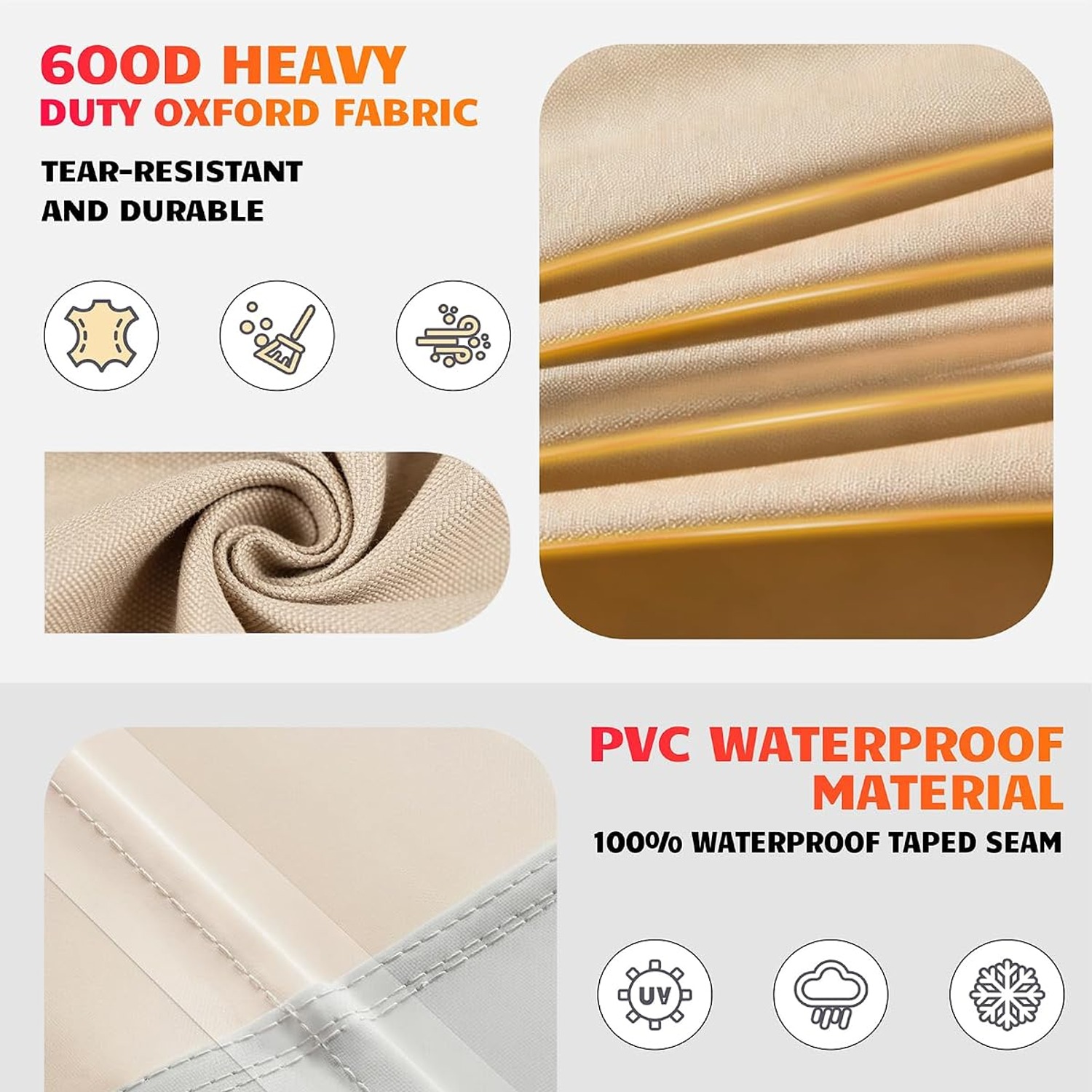
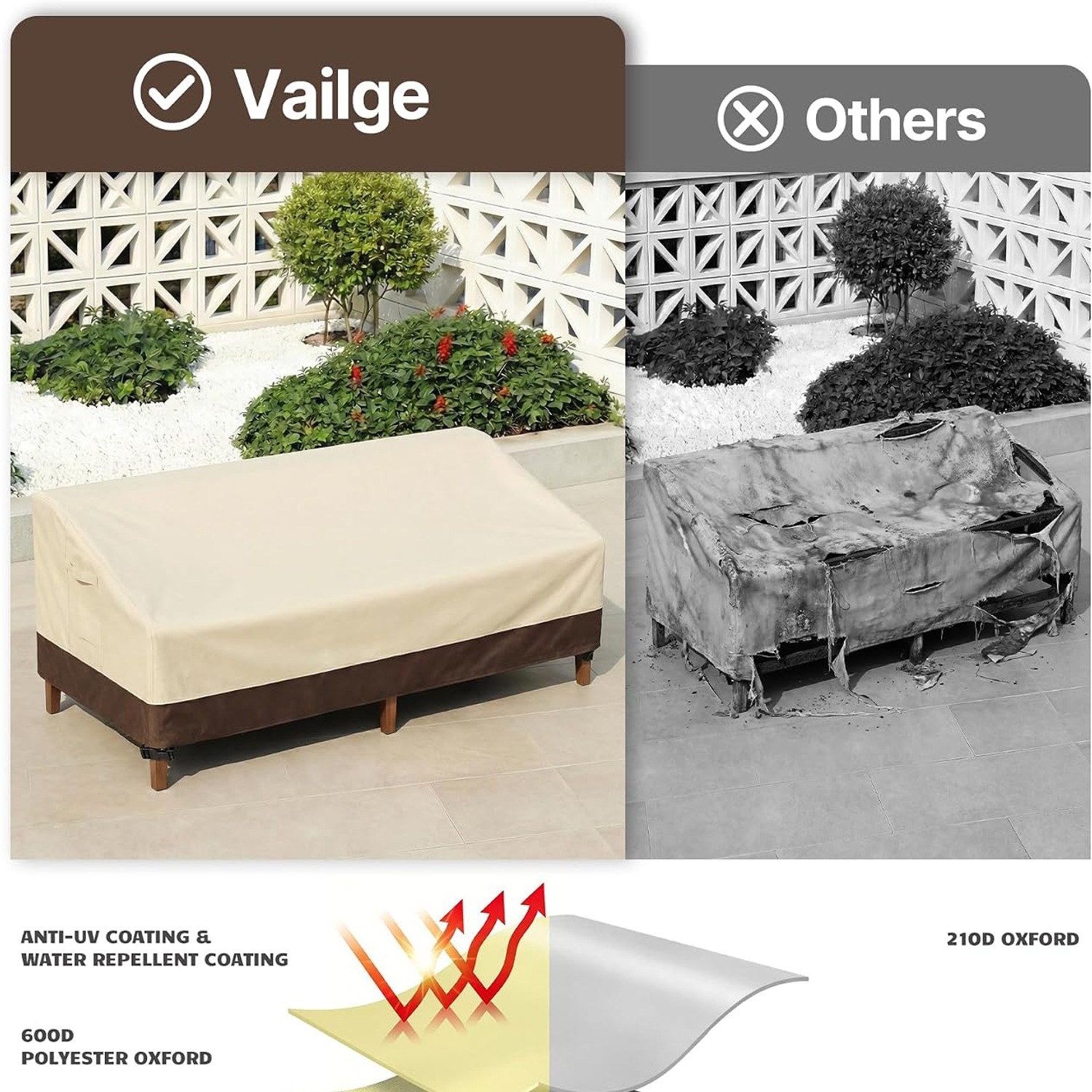
Fabric weight. Look for a denier rating. This cover uses 600D Oxford polyester, which is a genuinely heavy weave rather than the thin, crinkly material used on bargain covers. Thin fabric tears at the corners first, usually where it stretches over an armrest.
Seam construction. This is the one most people miss. Every seam is a line of needle holes. Water finds holes. Taped interior seams put a barrier over the stitching so rain cannot wick through during a long, steady downpour. A cover can be made from perfectly good waterproof fabric and still let water in through untaped seams.
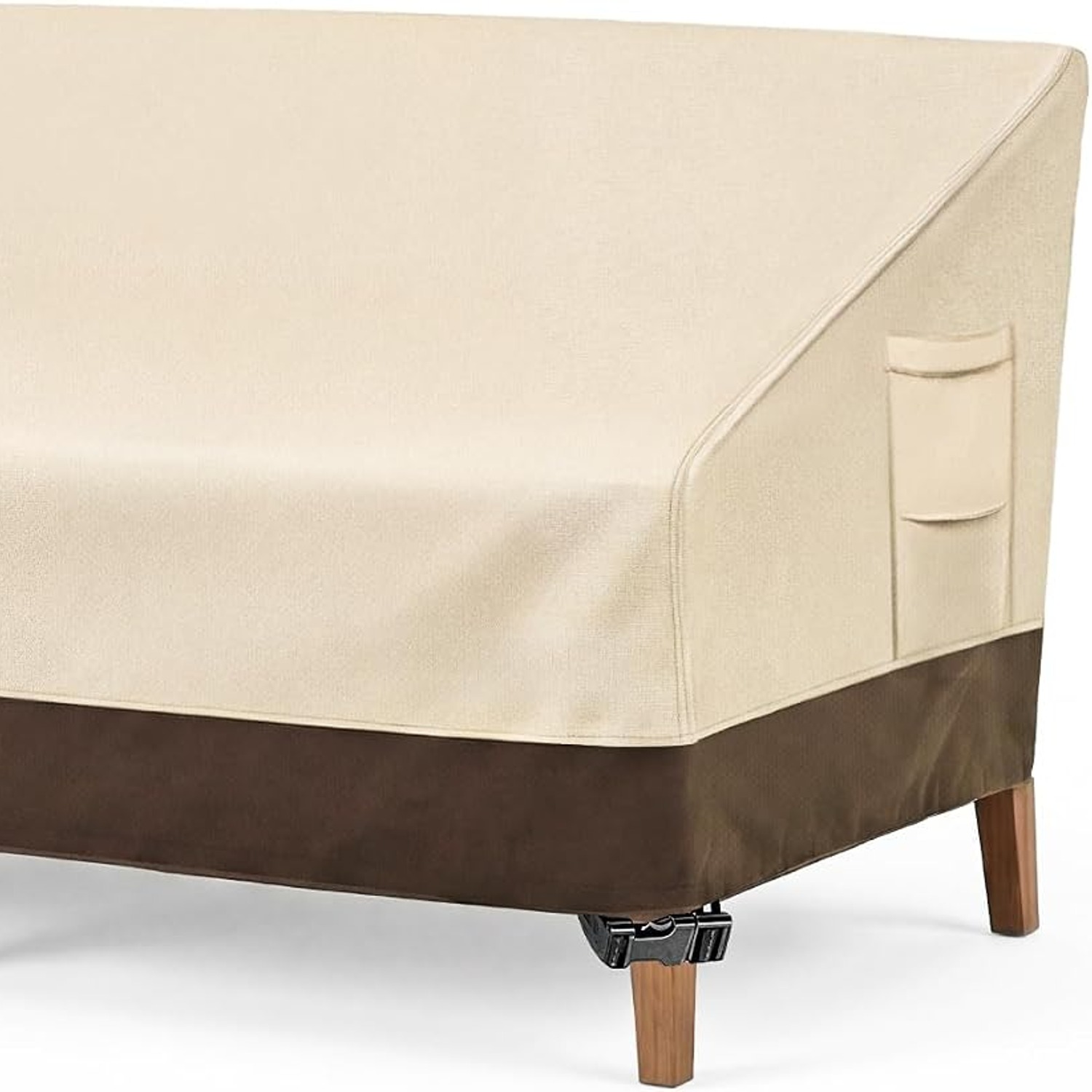
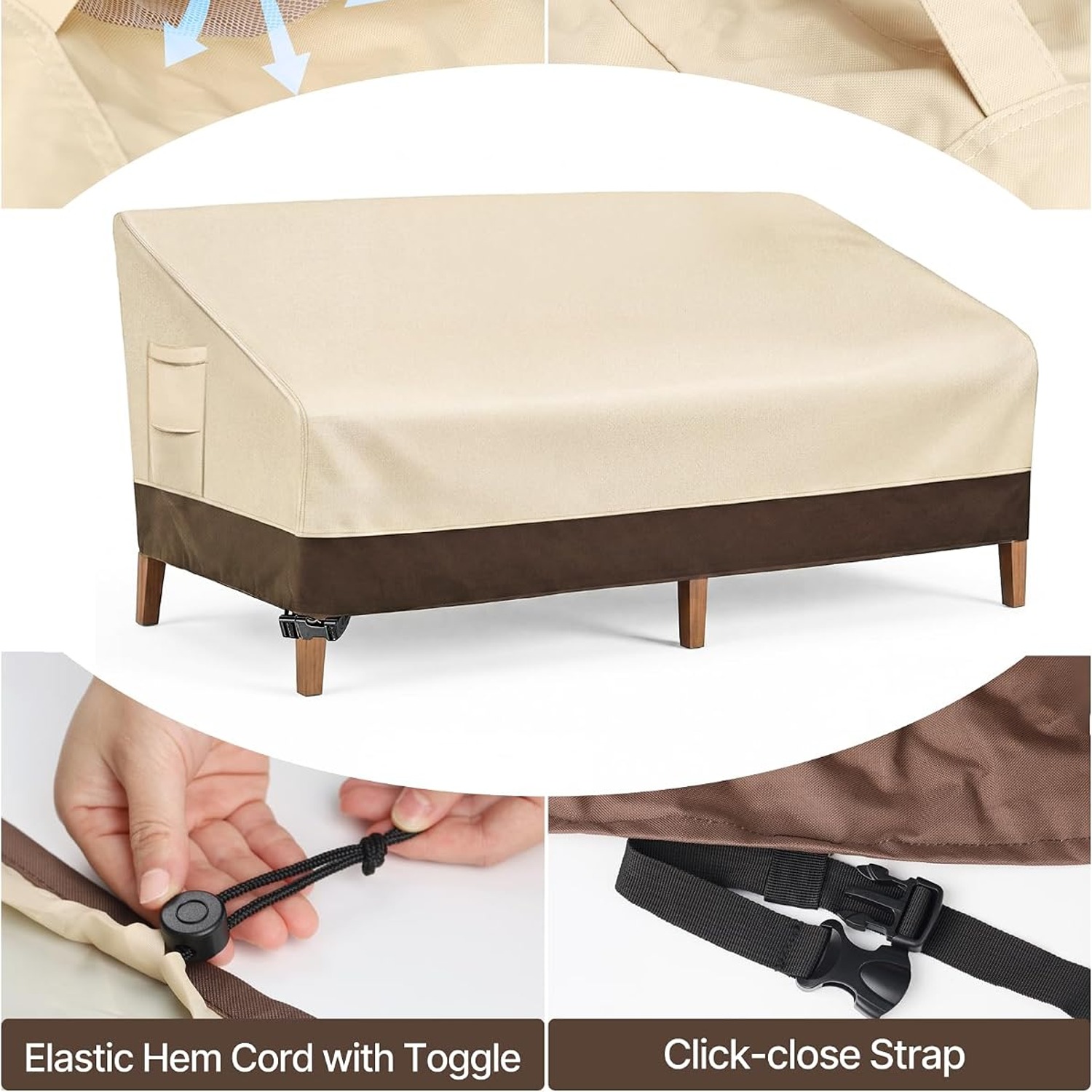
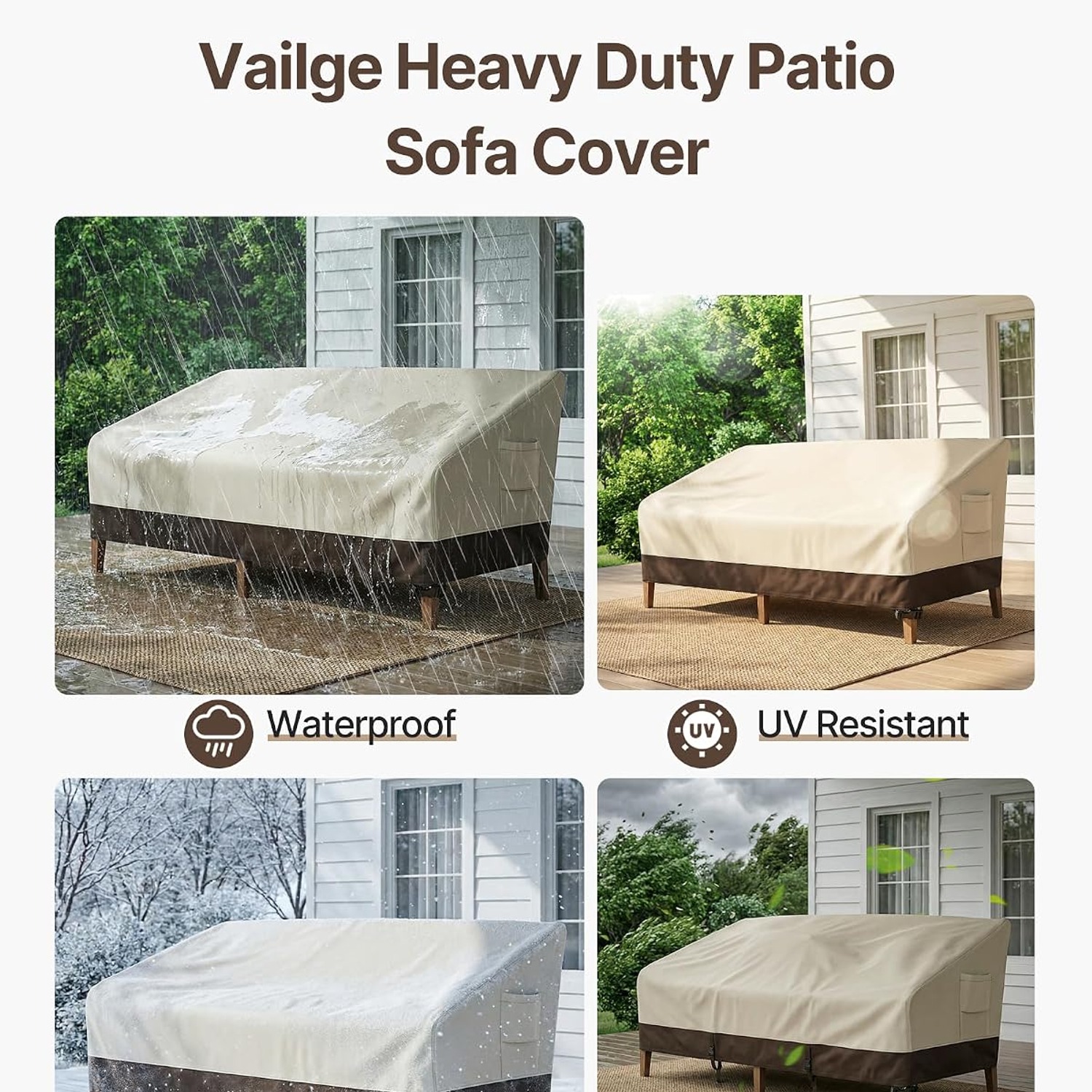
Wind management. Covers do not usually fail, they leave. A cover that balloons in a gust is a sail attached to your furniture. Four click-close straps and two elastic hem cords with toggles pull this one in tight under the base and around the legs, so the air has nothing to catch.
Ventilation. A fully sealed waterproof cover creates its own weather. Warm air rises off the furniture, hits the cold underside of the fabric, and turns into droplets. That is where the musty smell comes from. Two mesh vents let that air move out while rain still runs off the top. Any serious breathable patio cover has them.
Handling. Padded handles sound like a small thing until you are pulling a wet cover off a lounge in the wind. Reinforced grab points let you apply force where the cover can take it, rather than tugging at a thin hem until it tears.
Getting the size right
This is where most orders go wrong, and it is entirely avoidable.
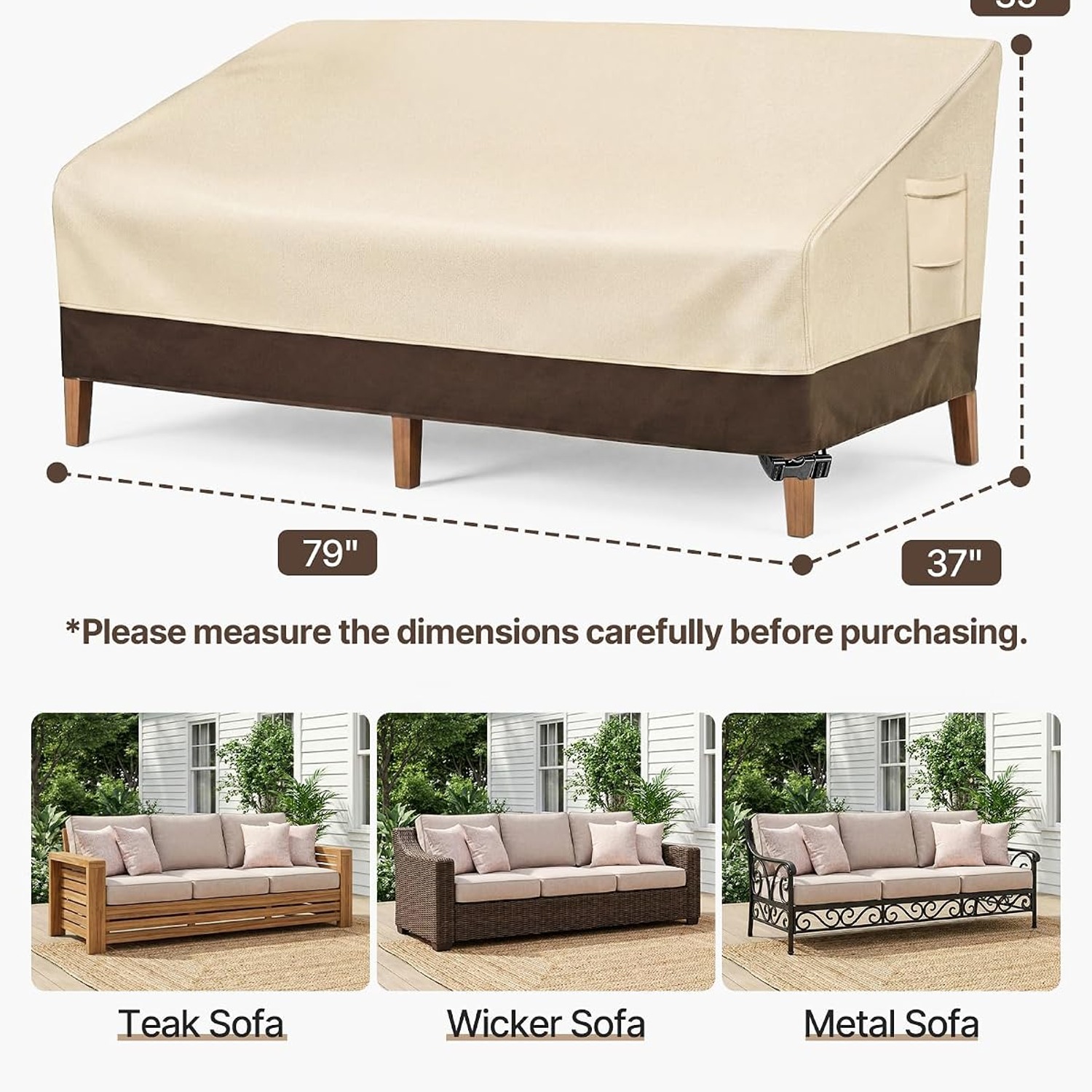
Take three measurements. Length is across the widest part of the sofa, including arms, not just the seat. Depth is front to back at the deepest point, which is usually the base of the cushions, not the backrest. Height is from the ground to the top of the back, with cushions in place if you plan to leave them on.
This cover is tailored for 79 inches long, 37 inches deep and 35 inches tall. A little extra room is fine and actually helps, because you need slack to get the cover over the arms. Too much extra room is a problem, since loose fabric flaps and wears at the fold lines.
One important check: this is a straight three-seater cover. It will not work on an L-shaped sectional or a corner lounge, because the footprint is a different shape entirely. If you have a sectional, you need a cover cut for that layout.
Who this suits
If you have a standard three-seat outdoor sofa, a deep seat lounge or a long patio bench in that size range, this is a sensible fit. It works for decks, courtyards, poolside setups and front verandahs.
It is particularly worth having in a few situations. Coastal properties, where salt air attacks everything. Shaded gardens, where things dry slowly and mildew gets a foothold. Yards with large trees, where leaf and sap fall is constant. And holiday homes, where the furniture sits unused for months at a time.
If your lounge already lives under a solid roof with walls on two sides, you need a cover less urgently, though dust and pollen still land on everything. A cover in that setting mostly keeps the cushions clean.
Fitting it properly
Spread the cover over the sofa with the labels and vents oriented as intended, then work it down over the arms using the handles. Pull the hem under the base at the front and back, then draw the elastic cords in through the toggles until the fabric sits close to the frame.
Next, clip the straps around the legs. Snug, not strangled. You want the cover held in position without the webbing digging into the finish. Walk around the sofa once and check there are no large pockets of loose fabric where water could pool or wind could get underneath.
If your sofa has a flat back, give the cover a push up from beneath after heavy rain so any pooled water runs off. Standing water is the single biggest cause of stretched, saggy covers.
Keeping it in good shape
Care is simple and takes a few minutes a season. Hose the cover down when it looks dusty, and use a soft cloth with mild soapy water for marks. Rinse properly, then let it air dry completely before folding it or putting it back on the furniture.
Do not machine wash it, tumble dry it, bleach it or iron it. All four will damage either the water-resistant coating or the taped seams, and once that protection is gone the cover is just a sheet.
After storms, clear off anything sitting on top. Pooled water, wet leaves, heavy snow. Weight is the enemy. And when you pack the cover away for a season, make sure it is bone dry and fold it loosely, because tightly packed damp fabric is how mildew spots appear.
A few honest limits
No cover is magic. A heavy duty outdoor furniture cover will dramatically slow down sun fading, but it cannot stop it entirely across years of use, especially on the sections facing direct afternoon sun. In extreme storms, straps can loosen and need resetting. And if you cover damp cushions, the vents will help but they will not fully undo the problem, so bring wet cushions inside to dry first.
The fabric is polyester, so it will not rot, but like anything outdoors it has a service life. Treated reasonably, a cover of this weight should get you through many seasons rather than one.
The short version
Outdoor furniture fails from sun, water, grime and cold, and a cover handles all four. The things worth paying attention to are fabric weight, taped seams, a proper strap system and built-in vents. This cover has all of them, in 600D Oxford polyester, cut for a 79 by 37 by 35 inch three-seat patio sofa.
Measure your lounge first. Fit the cover snugly. Hose it down occasionally and let it dry before folding. Do that, and the furniture underneath will still look like something you want to sit on in three summers' time.