
The complete guide
How to Choose a Porch Swing Cover That Actually Survives the Weather
The slow damage nobody notices
A porch swing does not break all at once. It fades. The cushions go pale on one side, the cords get stiff, the cup holder fills with grit and a patch of green appears where the frame meets the ground. By the time you notice, two or three seasons have gone by and the swing you paid good money for looks tired.
Weather is relentless, and it works in layers. Sun bleaches color and makes fabric brittle. Rain soaks into foam cushions and sits there. Dust and pollen stick to damp surfaces and turn into grime. Birds do what birds do. Tree sap drips and hardens. None of it is dramatic on any given Tuesday, and all of it adds up.
A cover is the cheapest insurance you can buy for outdoor furniture. The question is not whether to use one. It is which one, because a badly made cover can be worse than nothing if it traps water against your cushions or shreds in the first big wind.
What the fabric number actually means
You will see "420D Oxford" on a lot of outdoor covers, including this one. The D stands for denier, a measure of how thick the yarn is. Higher numbers mean thicker threads and a heavier cloth. Very light covers sit around 150D to 210D and tend to be seasonal at best. 420D is a sensible middle ground. It is substantial enough to resist tearing and snagging, but it is not so heavy that one person cannot handle it.
The weave alone does not stop water. The waterproof coating on the back does that. Water beads and runs off instead of wicking through the threads. This is why you should not machine wash a coated cover, by the way. The agitation and heat can crack the coating and leave you with a cover that looks fine and leaks anyway.
Then there is sun. UV is what quietly destroys outdoor fabric. It breaks down the fibers from the surface in, which is why old covers turn chalky and then tear when you touch them. This cover is described as UV protective and fade-resistant, which is the specification you want if your swing sits in open sun most of the day.
Seams and closures matter more than the fabric
Here is the thing most people learn the hard way. Covers almost never fail in the middle of a panel. They fail at the seams and at the stress points where a strap pulls.
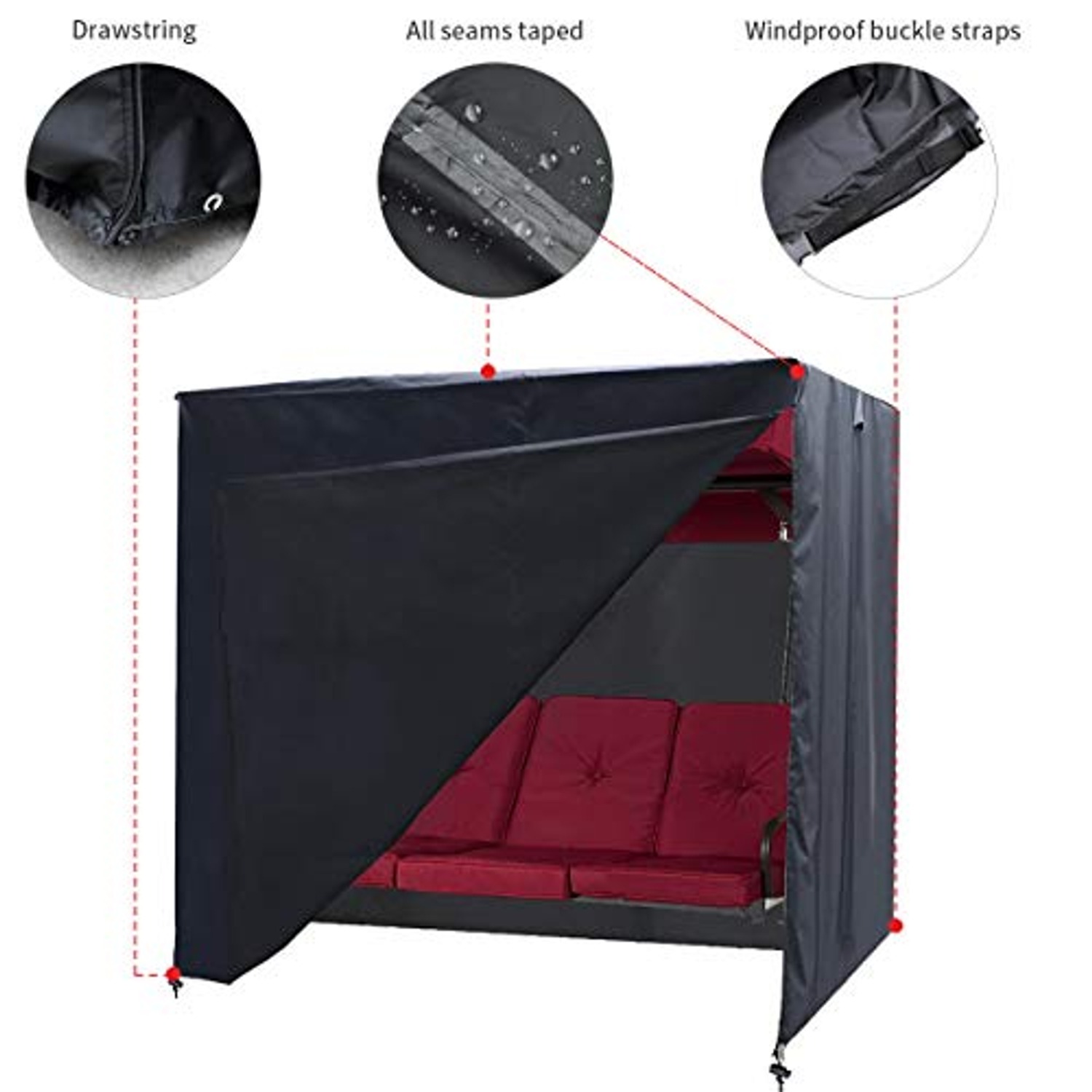
Double-stitched seams are two rows of stitching instead of one. It takes longer to make and it roughly doubles the strength at the join. On a cover that spends its life being pulled at by wind, that is the difference between a few seasons and a single one.
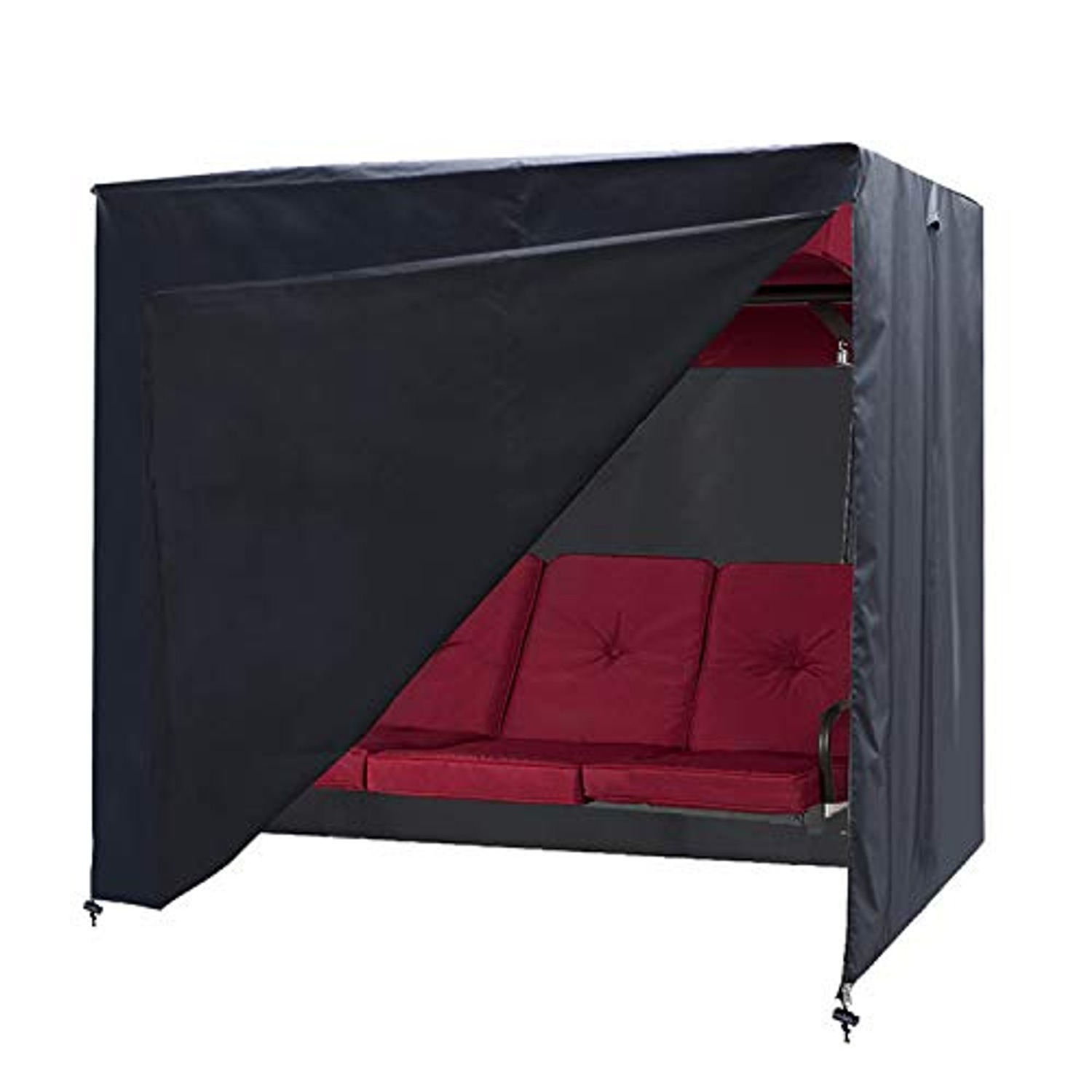
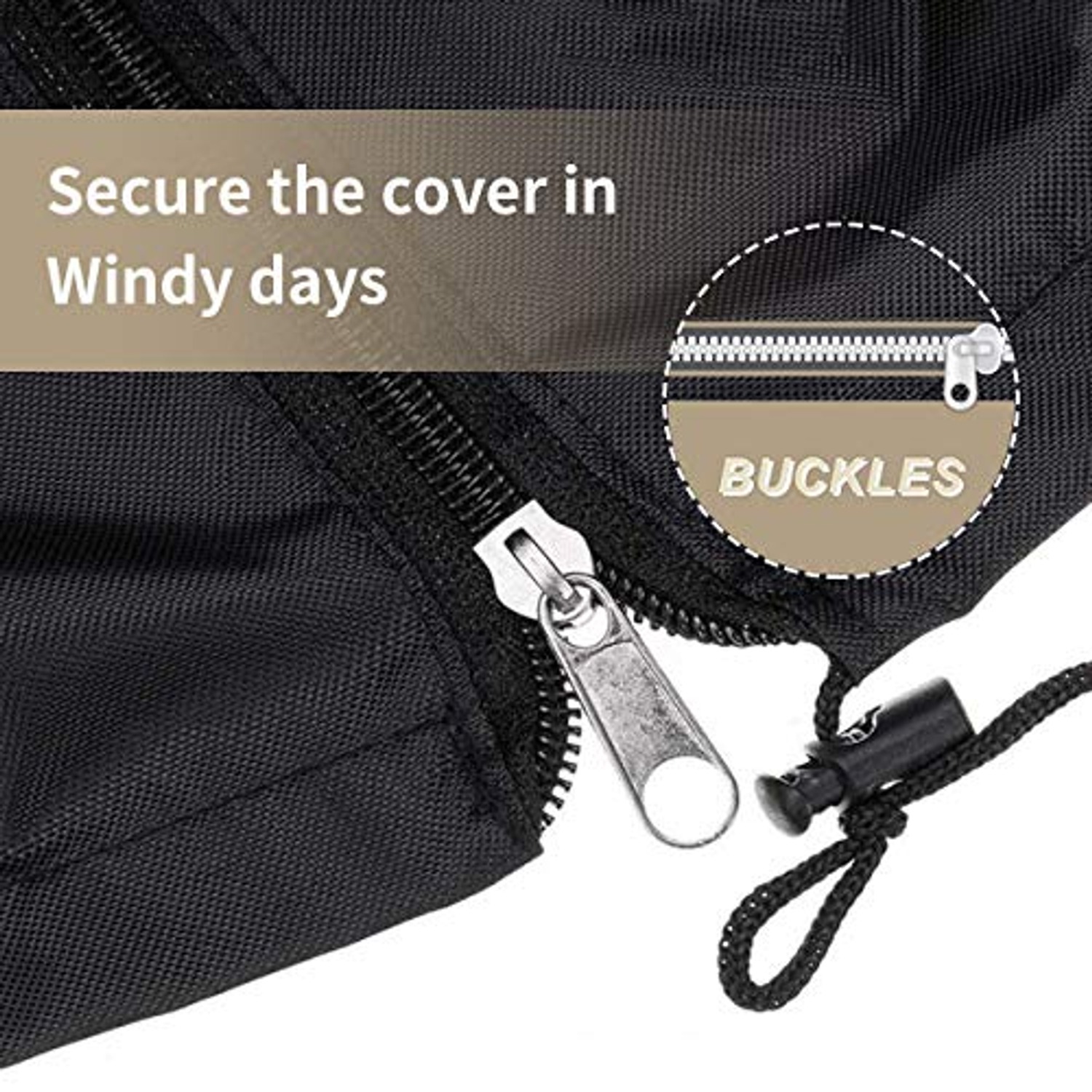
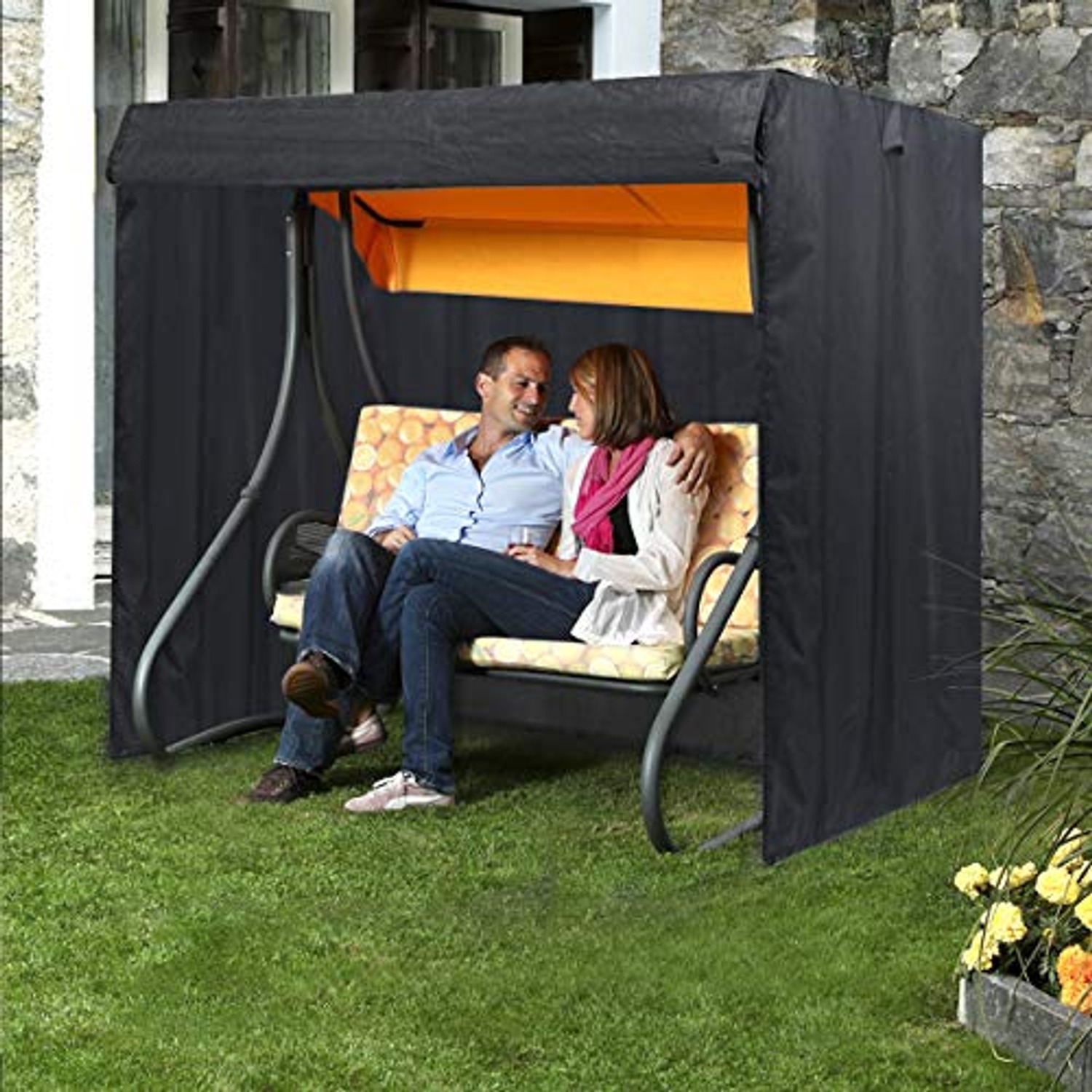
The closures on this model are two front zips, two drawstrings, one belt and four buckles. That sounds like a lot of hardware, and it is, deliberately. A cover that simply drapes over a swing is a sail. Wind gets underneath, the cover balloons, and either it lifts off entirely or it rubs itself raw against the frame all night. Drawstrings pull the hem in. The belt and buckles strap the body of the cover to the swing so there is nothing for the wind to grab.
The zips do something different. They let you open the front and use the swing without stripping the cover off. If you sit outside most mornings, that small convenience is the reason the cover gets used instead of ending up in the shed.
Why vents are not optional
There is a tempting logic that says the tighter you seal furniture, the better protected it is. It is wrong.
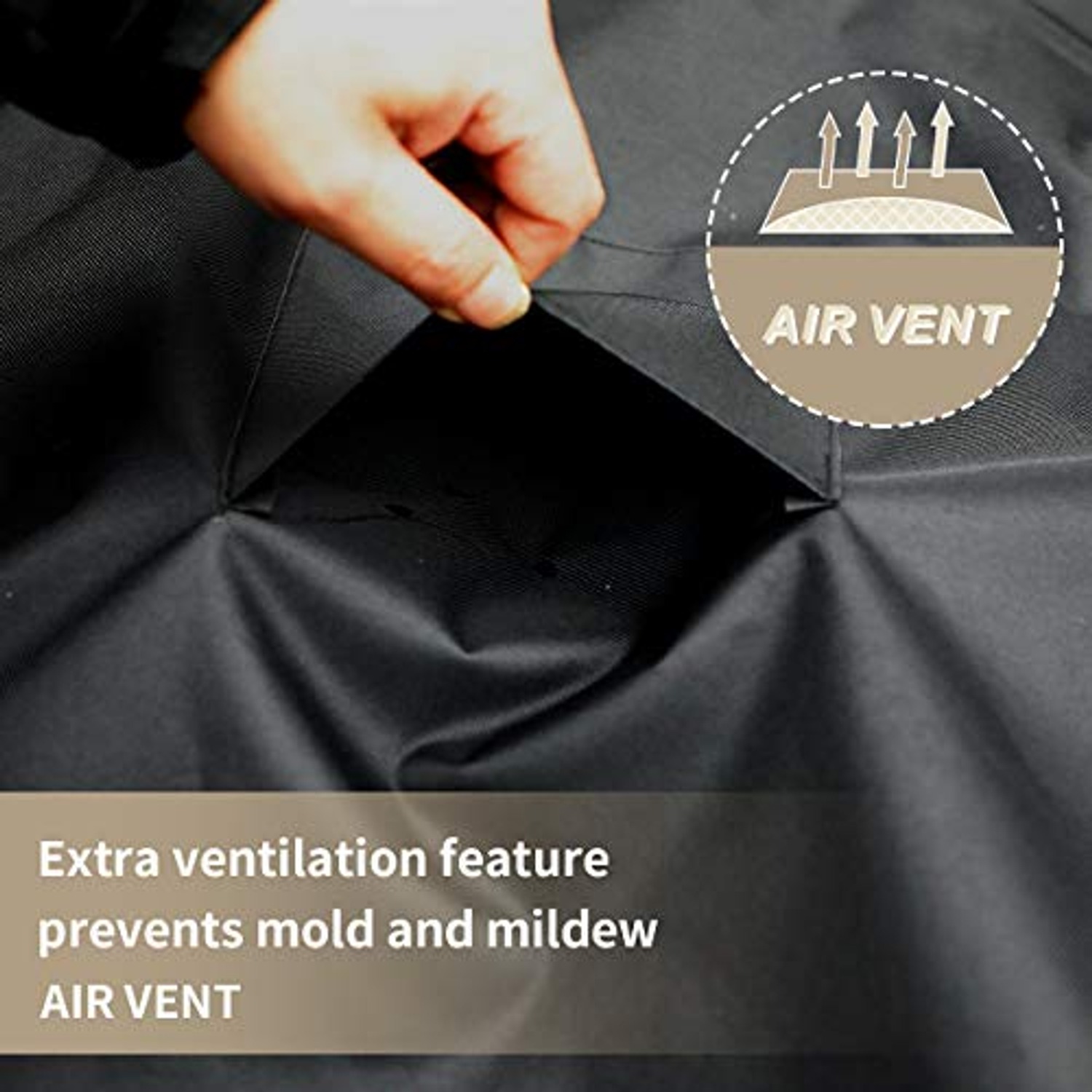
Cushions hold moisture. Air holds moisture. The ground gives off moisture. Seal all of that into a waterproof bag, add a warm afternoon, and you have made a small greenhouse. Water condenses on the inside of the cover and drips back onto the cushions. Within a few weeks you get mildew spots and a smell that never quite leaves.
Vents on both sides fix this by letting air move through. Warm damp air exits, drier air comes in, and the whole thing stays reasonably dry underneath. The side benefit is practical: air escapes when you pull the cover on, so you are not fighting a trapped pocket every time you fit it.
Getting the size right
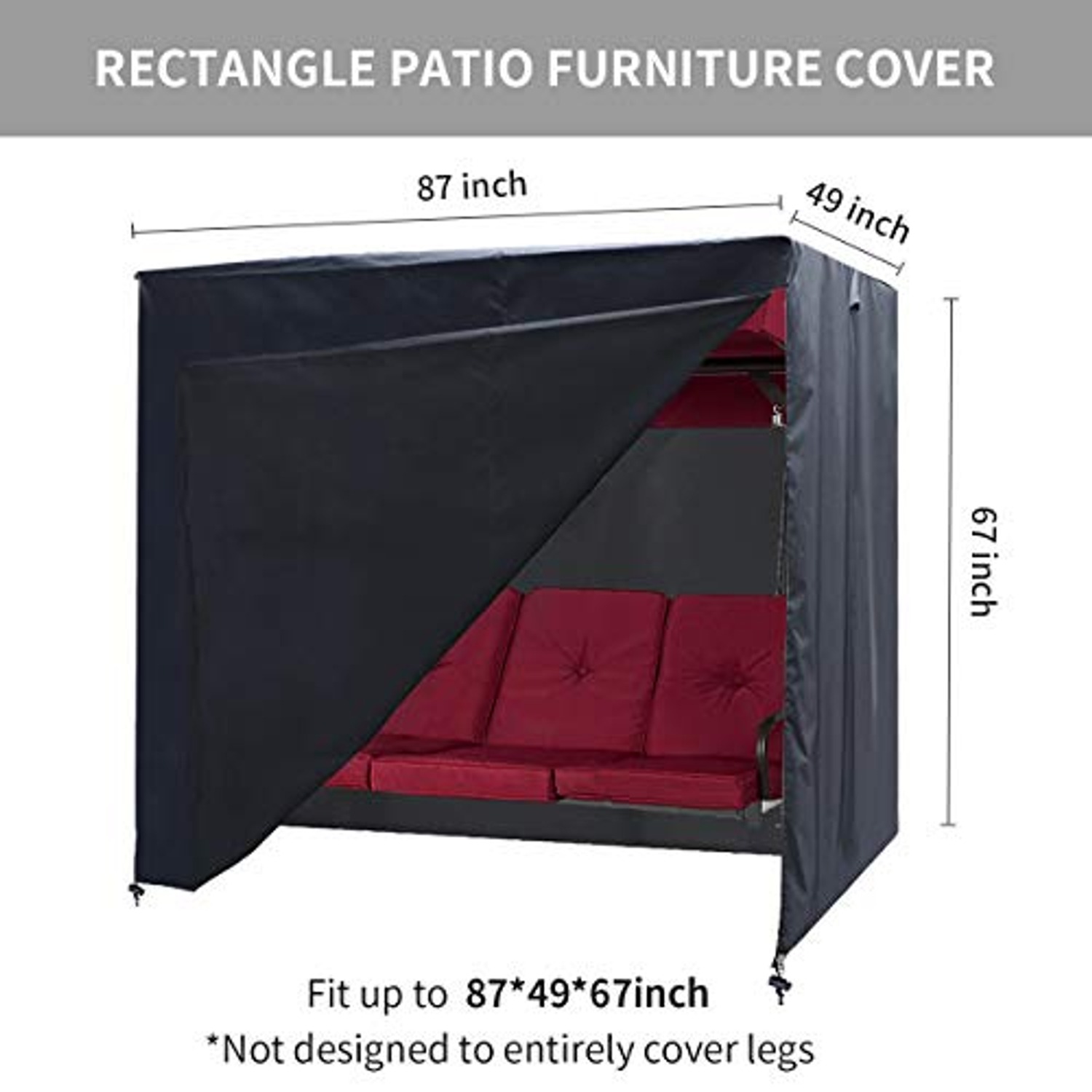
This cover is 87 inches long, 49 inches wide and 67 inches high, and it is listed as fitting three-seat porch swings and canopy swings up to that size.
Before you order, measure three things. Measure the length across the widest part of the seat, including armrests. Measure the depth from the front of the seat to the back of the frame. Then measure the height from the ground to the very top, including the canopy frame if you have one, because that is the number people most often forget.
If your swing is a little smaller than the maximum, that is fine. Pull the drawstrings fully in and tighten the belt to take up the slack. If your swing is larger in any one dimension, do not force it. A cover stretched to its limit tears at the seams, and a cover that will not reach the ground leaves the legs exposed anyway.
Who this suits
It suits anyone with a standard three-seat swing that lives outdoors year-round. It is particularly worth it if your swing sits under trees, since sap and bird mess are harder to clean off cushions than off coated fabric.
It also suits people in windy spots. The belt and buckle system is doing real work there, and it is the feature you will appreciate most after the first storm.
It is less essential if your swing lives on a fully enclosed porch with a roof and walls, where the main enemy is dust rather than weather. Even then, a dustproof cover saves you a wipe-down every spring.
Fitting and living with it
Fit it when the swing is dry. This is the single most important habit. Covering wet cushions guarantees mildew no matter how good the vents are.
Drop the cover over the top, line up the front, pull the drawstrings at the hem, then run the belt underneath and clip the four buckles. Give it a tug. It should feel snug, not strained.
Through the season, brush off leaves before they rot into the fabric and knock snow off the top so the weight does not stress the seams. Clean it with mild soapy water and a cloth when it needs it, rinse, and let it dry fully in the air.
When you put it away for the summer, make sure it is bone dry first, then fold it loosely. Hard creases in one spot can eventually crack a coating. At 4 pounds, it stores easily in a tub or on a shed shelf.
The short version
Look for three things in a swing cover: a fabric with real weight behind it, seams that are stitched twice, and a closure system that straps down rather than just hangs. This one covers all three with 420D Oxford, a waterproof coating, double-stitched seams, and a combination of zips, drawstrings, a belt and four buckles.
Add side vents to stop damp getting trapped, and you have a cover that protects the swing instead of quietly ruining it. Measure your swing against 87 x 49 x 67 inches, fit it dry, and it should see you through several seasons of whatever the sky sends down.