
The complete guide
How To Choose A Round Fire Pit Cover That Lasts
The problem with leaving a fire pit uncovered
A fire pit is one of the few bits of patio furniture that lives a hard life. It sits outside all year, it holds water like a bowl, and it has metal parts that corrode and gas parts that stop working when they get damp. Most people buy one in spring, use it all summer, and then watch it slowly deteriorate through autumn and winter.
The damage is not dramatic. It is slow. Rain fills the bowl and sits there. Leaves break down into a sludge that holds moisture against the steel. Grit works into the burner ports on a gas unit, and the ignition starts clicking without lighting. On a fire pit table, water marks the stone or tile top and UV dulls the finish. By the second summer, a pit that cost real money looks ten years old.
A cover solves most of that for a small outlay. It is not glamorous, but it is the single most effective thing you can do to keep a fire pit working and looking right. The trick is buying one that fits and one that is built well enough to survive the same weather it is protecting against.
What makes a heavy duty cover different
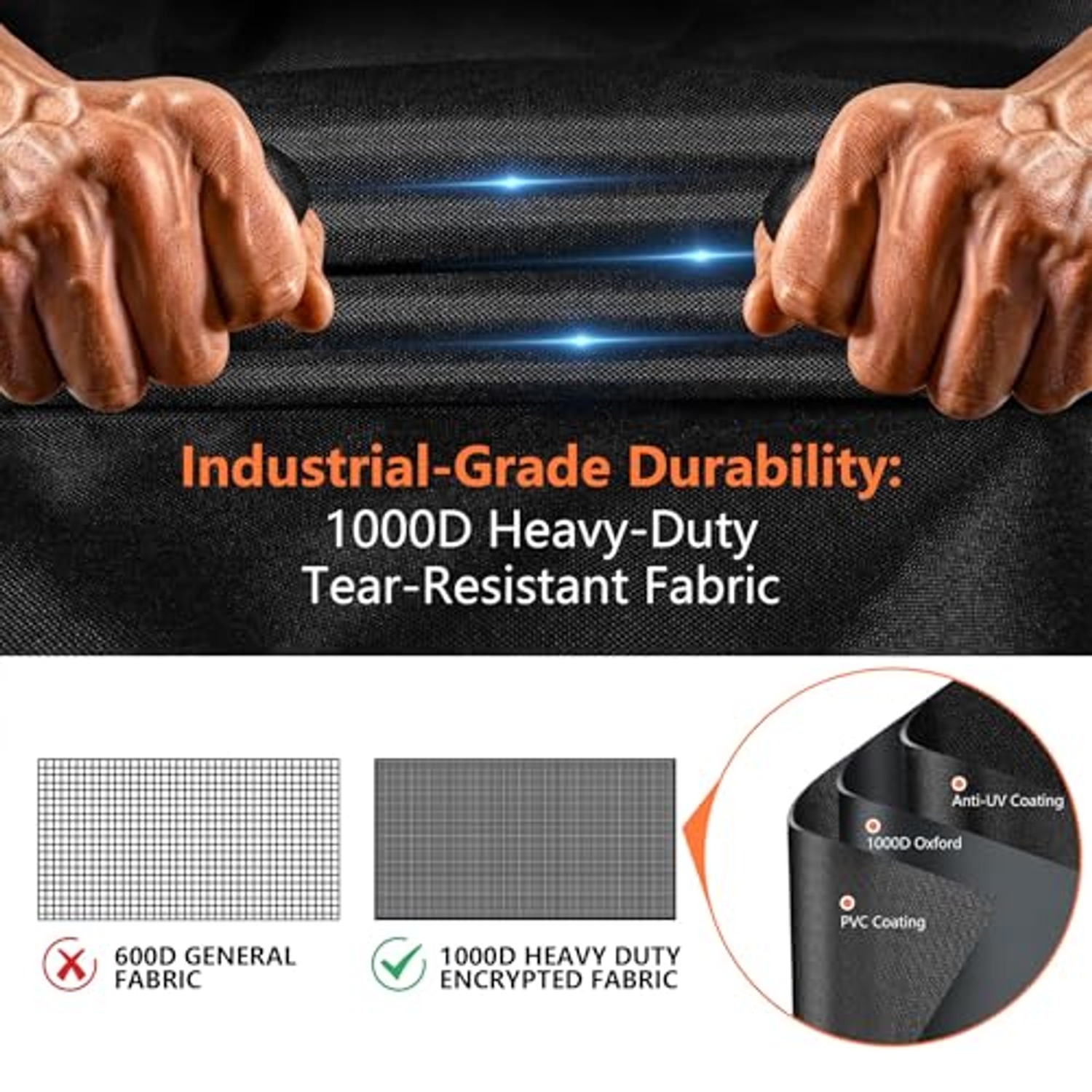
The number that tells you most about an outdoor cover is the denier rating. You will see 420D, 600D, 900D and 1000D on listings. That number describes how thick the yarn is. Thicker yarn makes a denser, tougher weave that handles wind flap, branch strikes and dragging over a rough table edge without splitting.
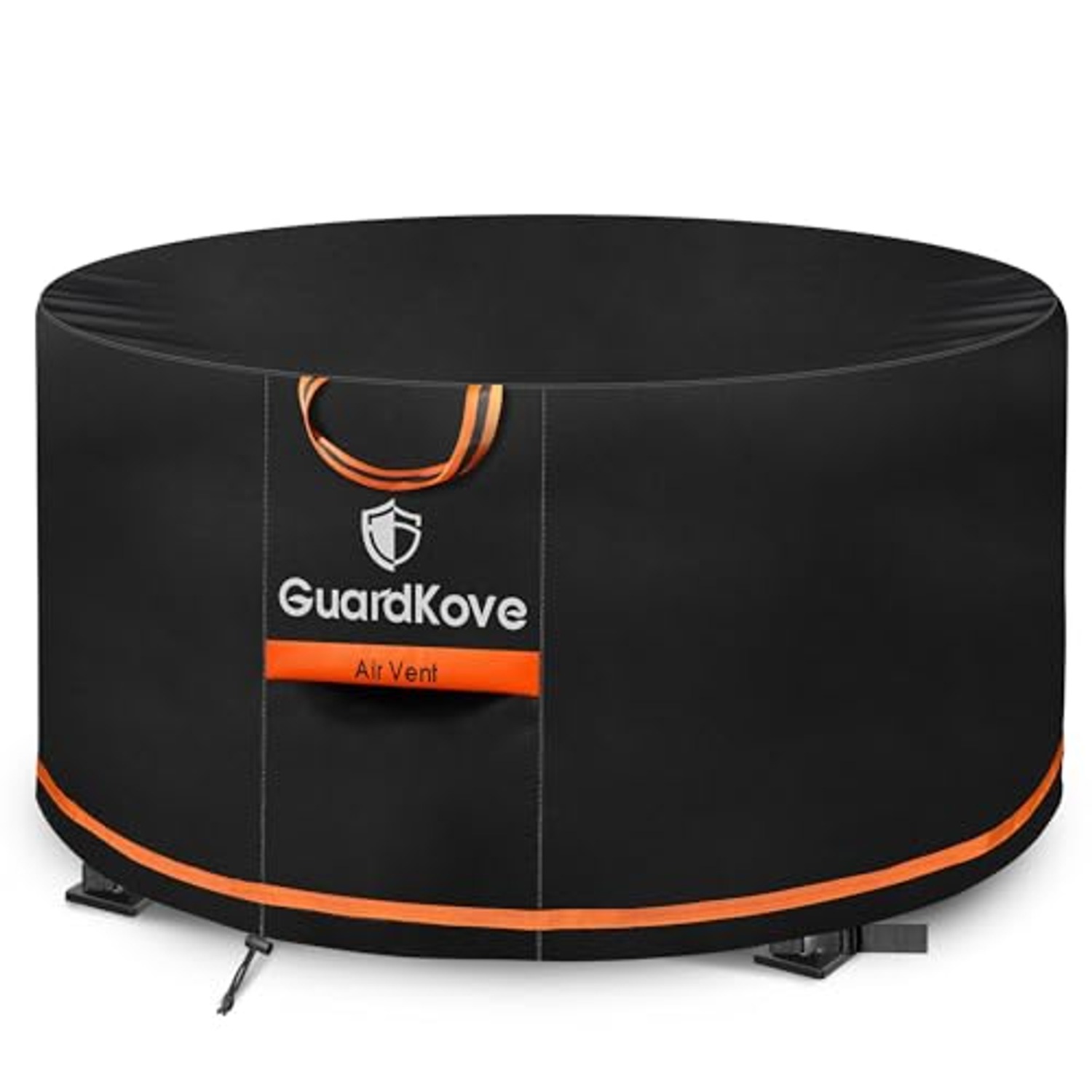
This cover uses 1000D Oxford fabric, which sits at the heavy end of the scale for domestic outdoor covers. In practice that means it feels substantial in your hand rather than flimsy and plasticky. A thin cover tends to fail in two places first, at the seams and anywhere the fabric rubs on a hard corner. Heavier cloth pushes both of those failure points further out.
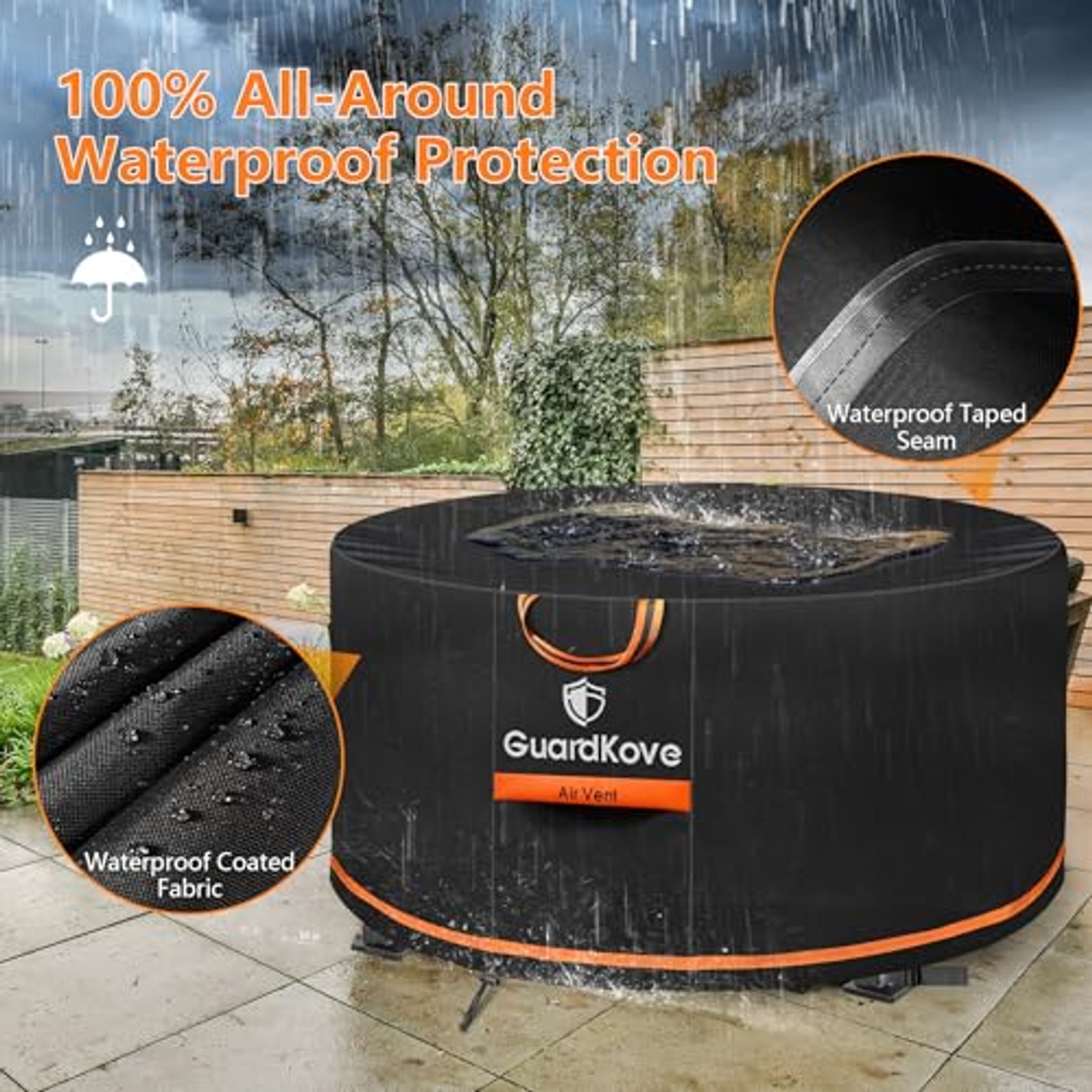
Fabric weight alone does not make something waterproof, though. Water gets through covers in two ways, through the weave and through the stitch holes in the seams. The answer to the first is a coating, in this case a PVC inner layer bonded behind the Oxford outer. The answer to the second is heat-sealed seams, where the panels are welded rather than just sewn. This cover uses double heat-sealed seams, so the joins are not acting as drinking straws for rainwater.
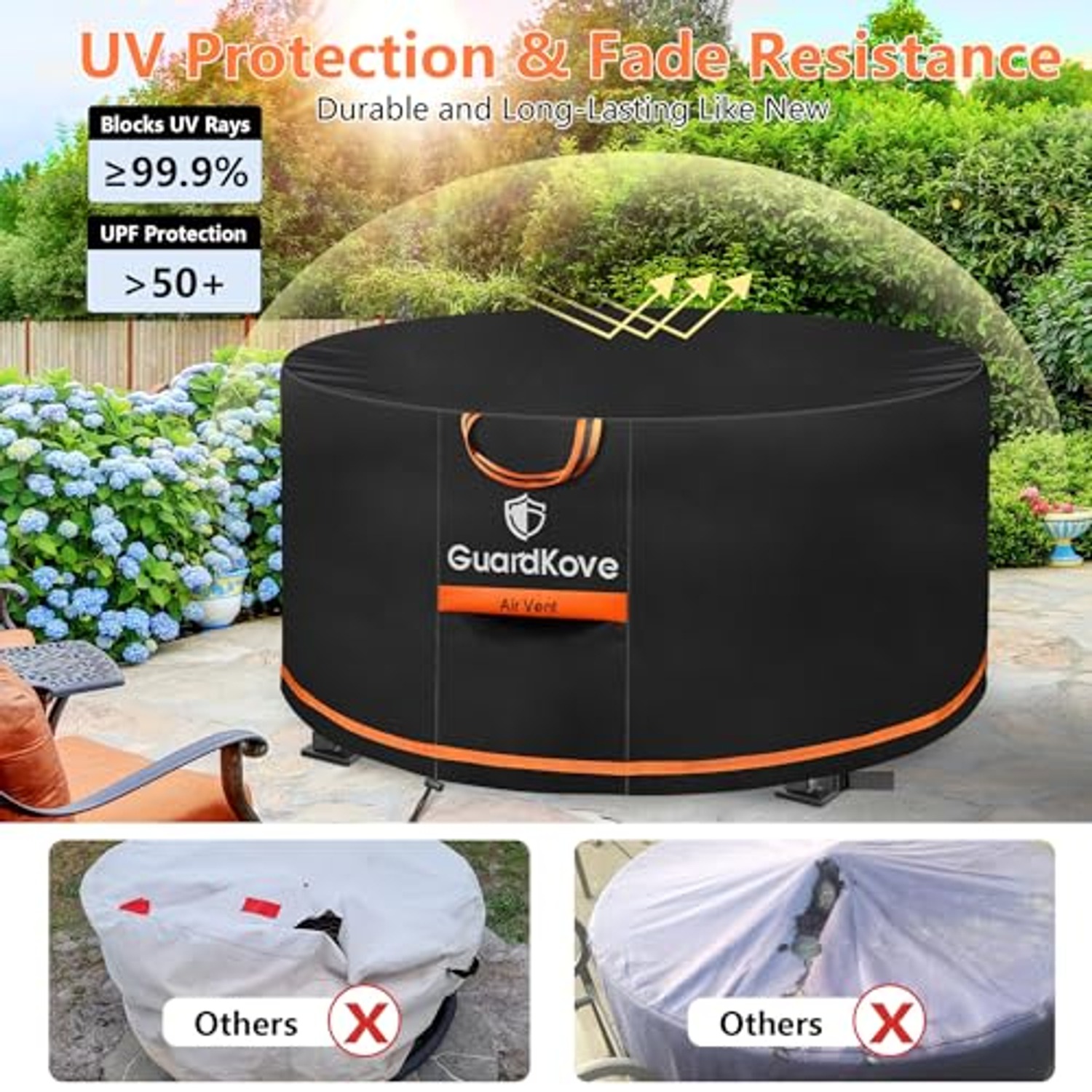
UV protection is the third piece. Sun is what makes outdoor fabric go chalky, fade and eventually crack. A UV-treated cloth holds its structure and color far longer. If you live somewhere with hard summer sun, that treatment matters as much as the waterproofing.
Getting the size right
This is where most cover purchases go wrong. People order by the name of their fire pit rather than by measuring it.
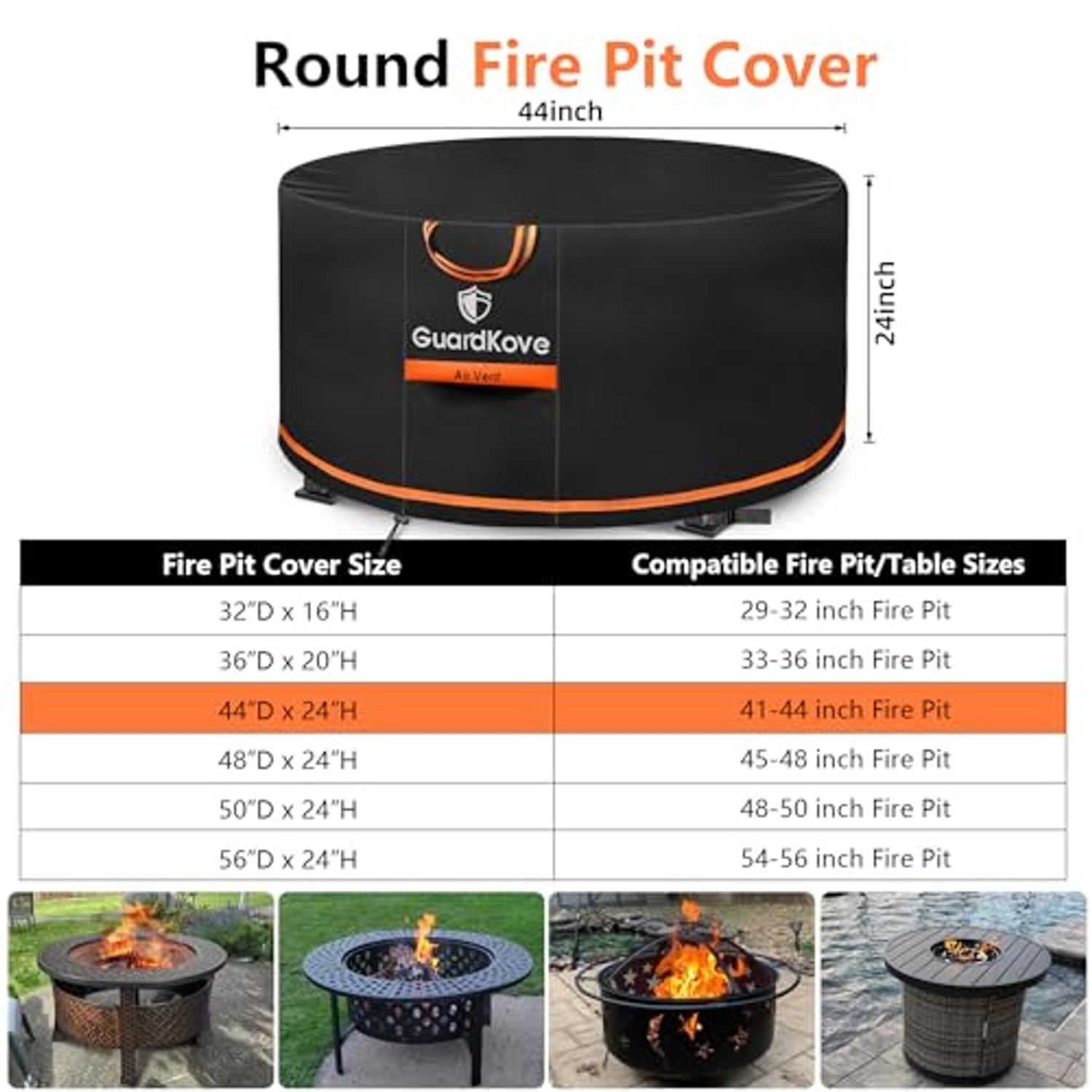
Take a tape measure and get two numbers. First, the diameter across the top at the widest point. Include any lip, rim or overhanging table edge, because that is the part the cover actually has to clear. Second, the total height from the ground to the highest point of the unit.
This cover is 44 inches across and 24 inches tall, and it is designed for round fire pits and fire pit tables between 42 and 44 inches wide and up to 24 inches high. If your measurements land in that window, you will get a proper fit. A snug cover is a better cover. It has less loose fabric to flap in the wind, which is the main thing that wears a cover out over time.
If your fire pit is a few inches under the range, the drawstring will still pull it in and it will work, just with some slack at the base. If it is over the range, do not try to force it. A stretched cover puts load on the seams and will fail early.
Shape matters too. This is a round cover. On a square or rectangular pit of the same width, the corners stick out and the hem will not close. Match the shape first, then the size.
How it stays put
Wind is the enemy of every patio cover. A loose cover acts like a sail, and either it blows into the neighbor's garden or it works itself loose and lets rain underneath.
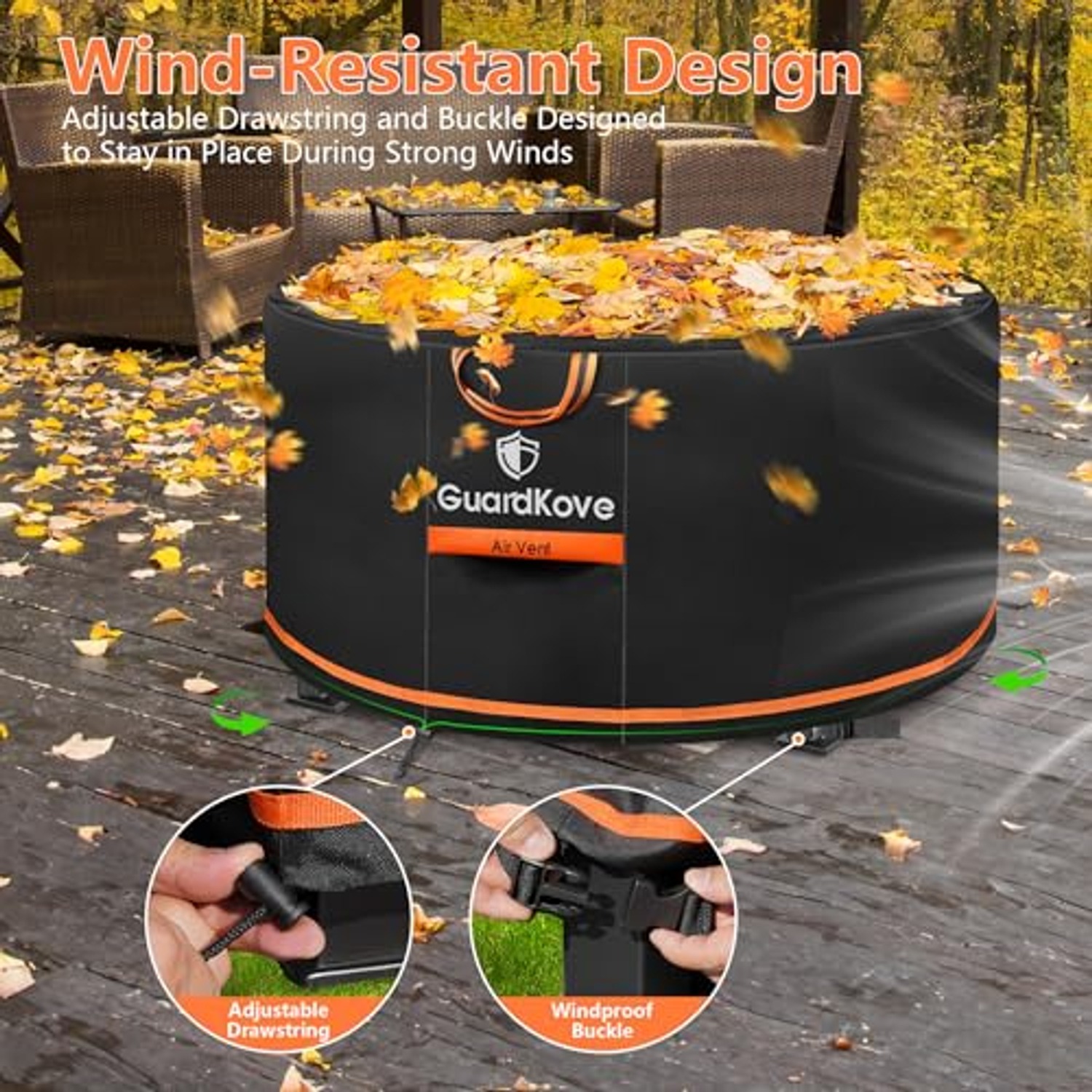
Two things hold this one down. The first is a pair of buckle straps that clip underneath, pulling the body of the cover in tight against the fire pit. The second is an adjustable drawstring threaded through the bottom hem, which cinches the opening closed below the base. Used together they give you a close, drum-tight fit rather than a loose drape.
The mesh air vents work alongside that. A fully sealed cover will balloon when wind gets under it, and it traps warm damp air inside on sunny days. Vents let that pressure and moisture escape. You end up with less condensation sitting on the burner and less lifting in a gust. It is a small design detail that makes a big difference over a season.
Reinforced handles are the other practical touch. Fitting a cover over a wide rim is awkward without something to grab, and tugging at raw fabric is how hems tear. Handles give you a proper grip point.
Who this suits
It fits a specific group of people well. If you have a round fire bowl or a round gas fire pit table in the 42 to 44 inch range, and it lives outdoors permanently, this is the right category of product for you. Anyone in a windy coastal spot, a snowy region, or somewhere with punishing summer sun will get the most value out of the heavier fabric.
It is less relevant if you store your fire pit in a garage between uses, or if you only bring it out a few weekends a year. In that case a lighter cover will do.
It also makes a genuinely useful gift. Most people who receive a fire pit do not think about a cover until after the first storm, by which point some damage is already done. A good outdoor fire pit cover is the thing they would not buy themselves and will use every week.
Looking after the cover
The care routine is short. Brush leaves and loose dirt off the top before they get wet and stick. When it needs a proper clean, use a damp cloth with mild soapy water, rinse with clean water, and let it dry completely in the air before folding.
Do not put it in a washing machine, do not bleach it, and do not iron it. Machine washing damages the coating and can stress the sealed seams, which is the part doing the waterproofing work.
Two habits will extend its life more than anything else. One, never cover a warm fire pit, as heat marks coated fabric. Two, never fold a damp cover away for storage, because mildew grows fast in a dark bag. If you are putting it away for the summer, give it a day in the sun first.
After a heavy snowfall, push the snow off rather than letting it pool and freeze in the middle. Fabric will take the weight, but a frozen lump sitting there for weeks is unnecessary strain.
The short version
Buy a cover that matches the shape of your fire pit, then match the size by measuring rather than guessing. Look for heavy fabric, a waterproof coating, sealed seams, and a way to hold the cover down in wind. This one has 1000D Oxford cloth, a PVC inner layer, double heat-sealed seams, two buckle straps, a drawstring hem and mesh vents, sized for round units 42 to 44 inches wide and up to 24 inches tall.
Keep it clean, let it dry before folding, and only put it on a cold fire pit. Do that and you will spend far less time scooping wet leaves out of your burner and far more time actually using the thing.