
The complete guide
How To Choose A Patio Table Set Cover That Actually Fits And Lasts
The problem with leaving a dining set uncovered
Outdoor furniture is bought in good weather and then quietly abandoned to bad weather. That is the pattern in most gardens. A rectangular dining table and six chairs look superb in April, and by October the table top has water marks, the chair frames have a chalky film, and there is a layer of grit you have to wipe off every time you want to eat outside.
None of that happens in one dramatic event. It is cumulative. Rain carries dust and leaves onto the surface and leaves a tide line when it dries. Sun bleaches color out of timber and plastic alike. Pollen settles into every joint in spring. Birds do what birds do. Each one is small, and together they age a set years faster than actual use does.
A cover stops the cycle before it starts. It is the cheapest maintenance you can do on outdoor furniture, and it takes about thirty seconds a day. The main reason people give up on covers is not the idea, it is the execution: the wrong size, no way to secure it, or a fabric that turned brittle after one season.
How a full set cover works
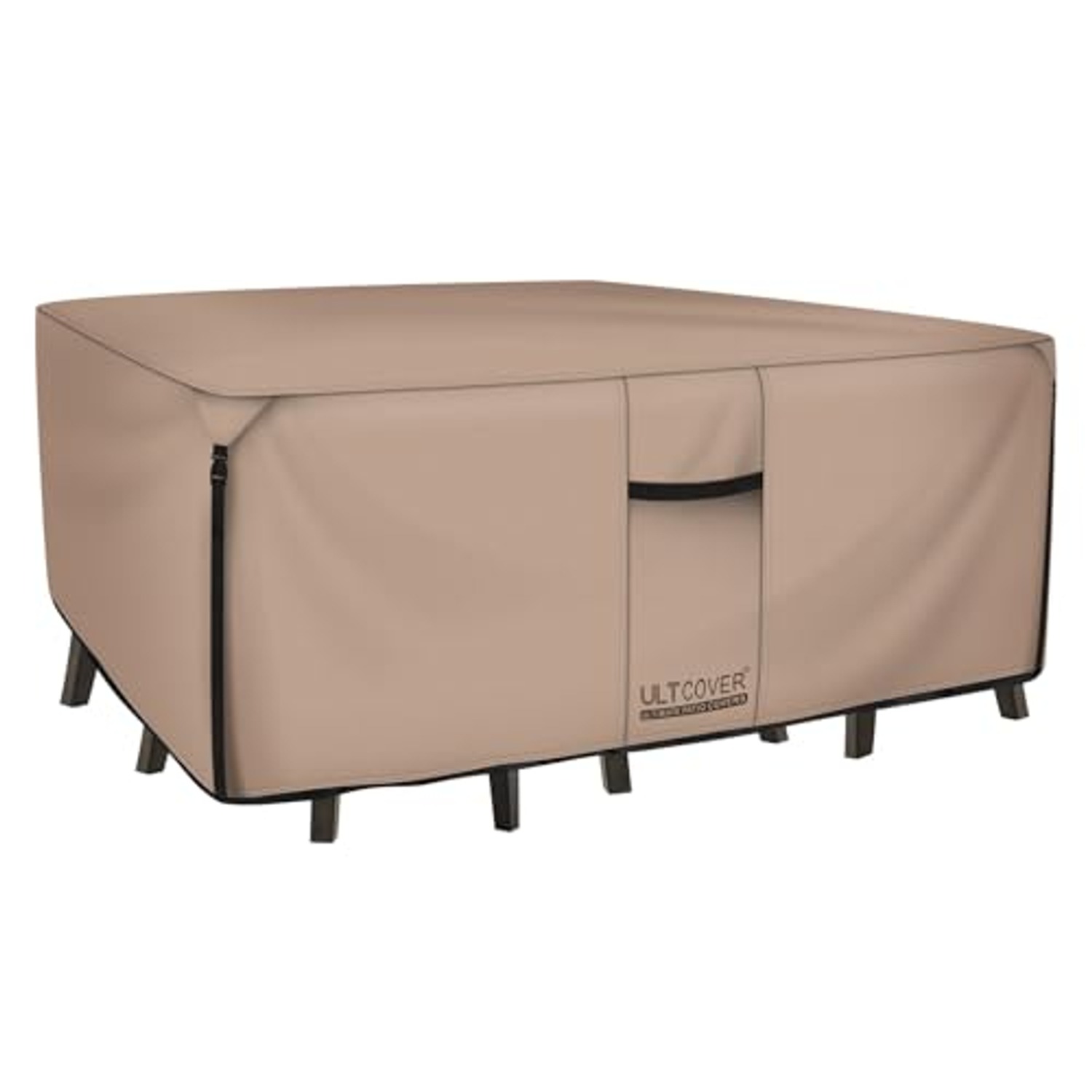
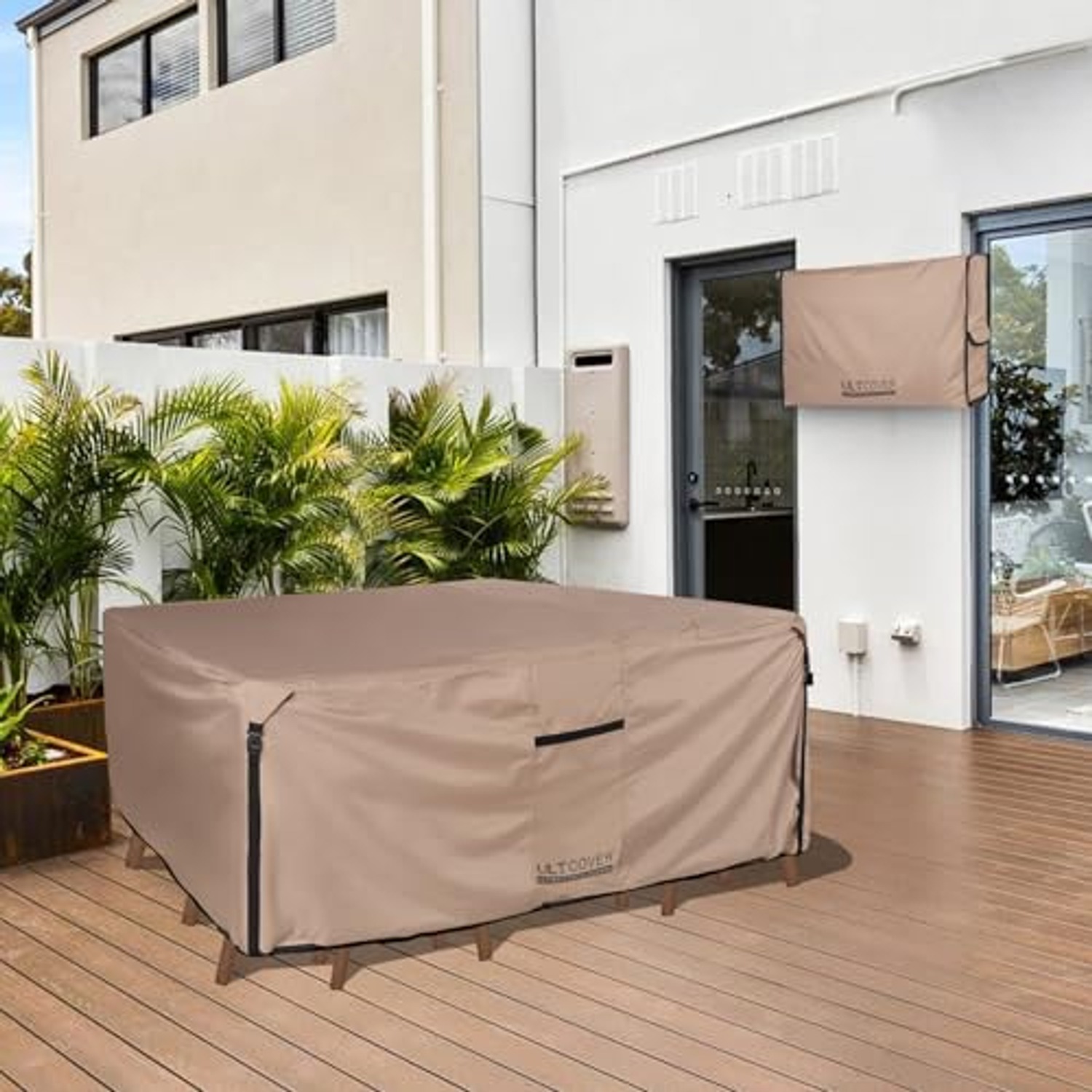
This style of cover treats the table and the chairs as one object. You tuck the chairs in against the table, then drop the cover over the whole group so it hangs down the sides. That is the full coverage design, and it matters because it leaves no exposed surface for sun or rain to work on.
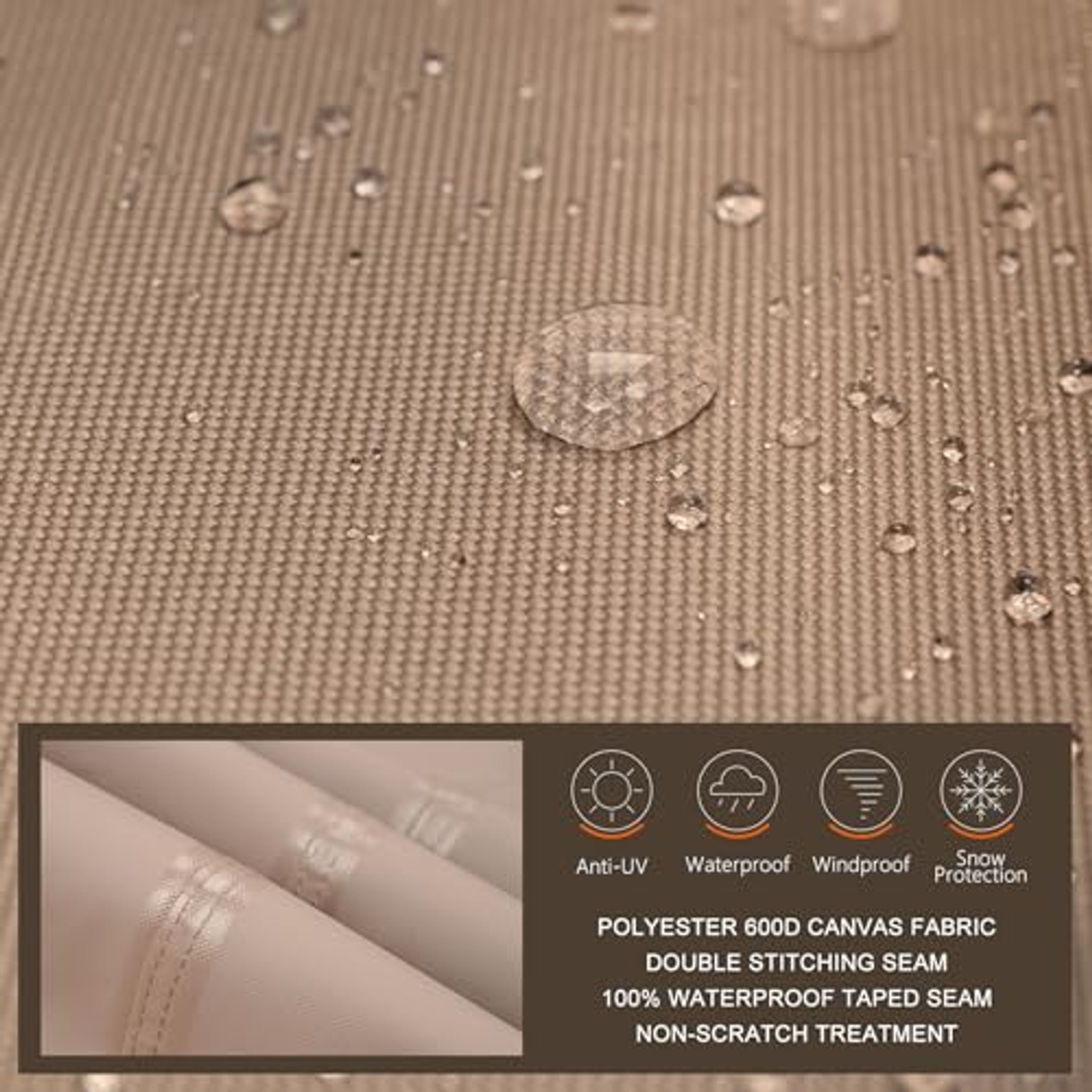
The fabric is 600D polyester canvas with a PVC backing. The D number refers to the thickness of the yarn, and 600D sits at the sturdy end of what you find in garden covers. The polyester face does the heavy lifting against sun, wind and scuffing. The PVC layer bonded to the back is the waterproof part, which is why the fabric is listed as 70 percent polyester and 30 percent PVC rather than polyester alone.
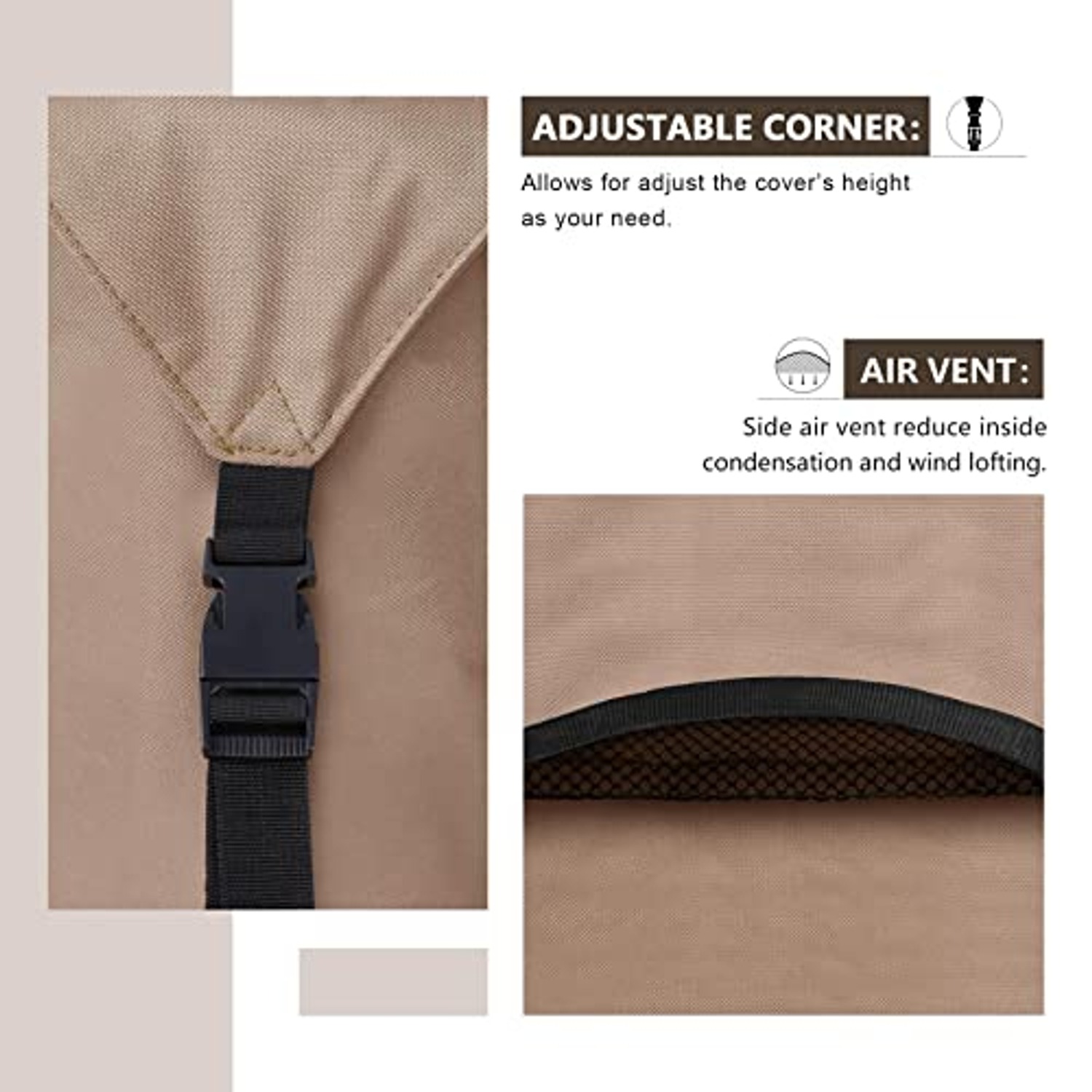
Then there is the wind problem. A sealed cover over a table is basically a parachute, and the first real gust lifts it off and deposits it in next door's hedge. The structured vents on two sides of this cover let air pass straight through, so pressure does not build underneath. The same vents let humid air escape, which keeps condensation from sitting on your table top on damp mornings.
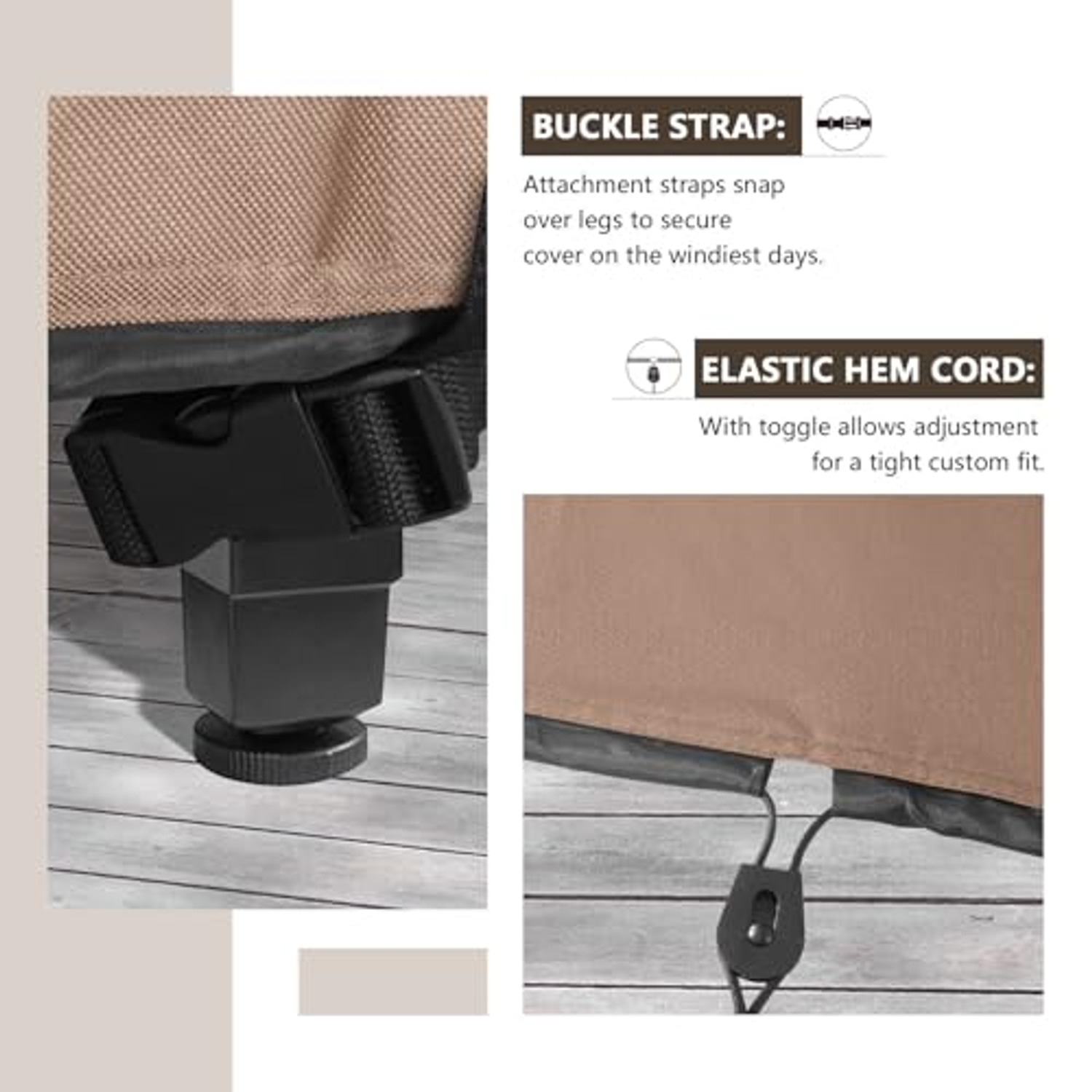
Securing it is the second half of the answer. Plastic clips and heavy duty elastic draw cords run through the hem, so you can pull the bottom edge in tight and fasten it around the table legs. On a still week you can leave it relaxed. Before a storm, spend the extra minute clipping it down properly. That one habit is the difference between a cover that lasts years and one that disappears in a gale.
Who this one suits
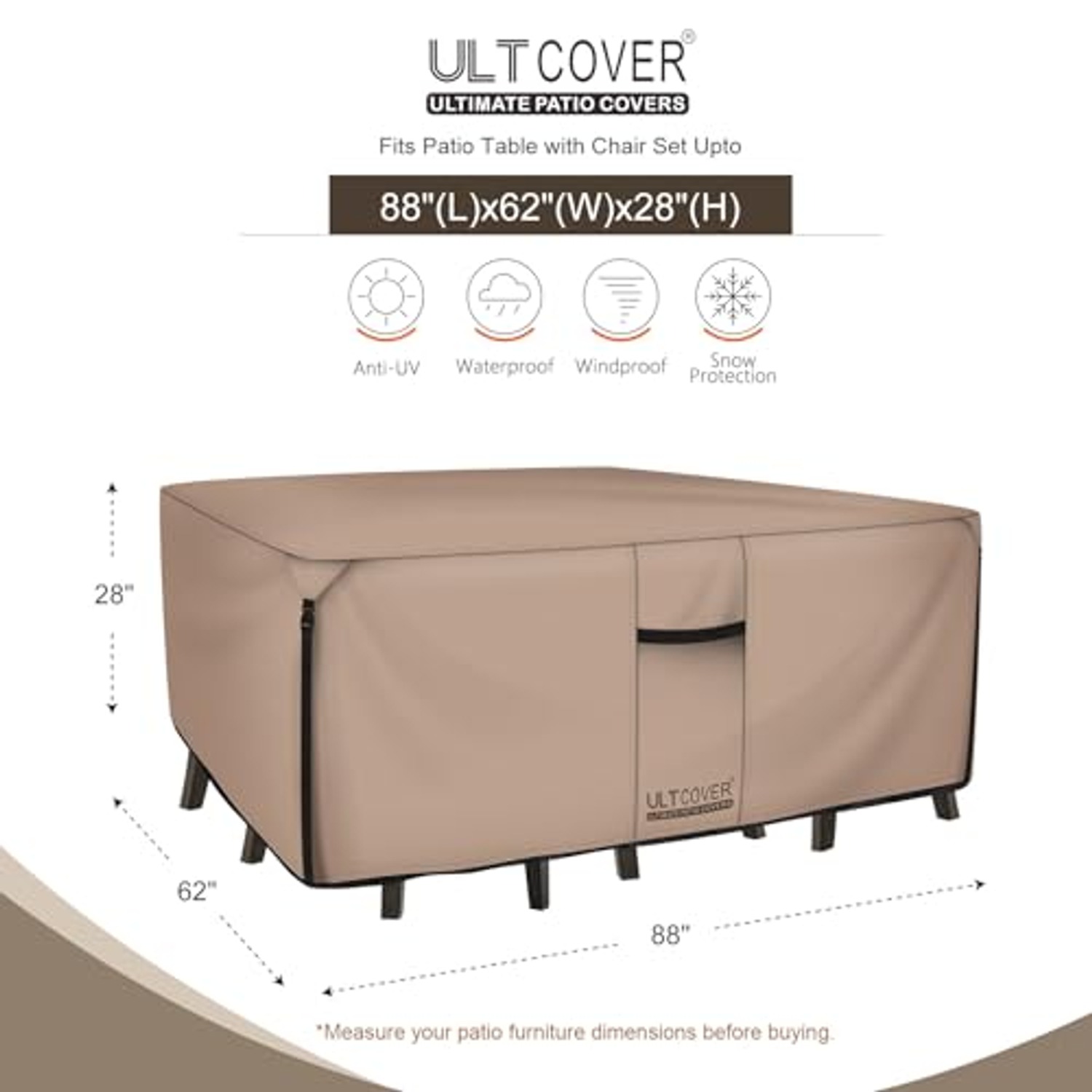
The size is the deciding factor. This cover is 88 in wide by 62 in deep with a 28 in drop, and it is built for a rectangular or oval table with four to six standard chairs. If your set sits inside that footprint with the chairs pushed in, you are in the right place.
It suits people with a decent sized family dining table on a deck, patio or paved area. It suits anyone in a climate with a real wet season or a real winter, where furniture sits unused for months. It also suits people who simply do not have garage space to pack furniture away, which is most of us.
It is not the right pick for a small bistro set, a round table with a large diameter, or an eight to ten seater. For those, the fit will either be comically loose or impossible. A loose cover on a small set can be managed with the draw cords, but an undersized cover on a big set is a lost cause, so size up rather than down if you are between options.
Measuring before you buy
This is where most returns come from, and it takes two minutes to avoid. Push the chairs all the way in. Measure the longest dimension across the whole group, then the widest. Those are your two numbers, and both need to fall within 88 in and 62 in.
Then measure the height from the ground to the highest point, usually the top of a chair back. The cover's 28 in height is a guide to how it sits, and if your chair backs are well above the table, the cover will tent over them rather than drape flat. That is fine and normal, it just changes how the fabric falls.
A few inches of slack is your friend. A cover you have to stretch over the corners will wear through at those corners first, and it is genuinely annoying to put on every evening. The best outdoor dining set cover is the one you can throw over the set one handed while carrying plates in the other.
Living with it day to day
The routine is simple. Wipe the table down before you cover it so you are not trapping grit against the surface. Drop the cover on, pull the draw cords in, and clip it if the forecast looks lively.
Check it every couple of weeks. Clear off leaves before they rot and stain. Push off standing water if the fabric has sagged in the middle, and if your table is dead flat, consider putting something low in the center under the cover to create a slope. Snow should be brushed off rather than left to compact, since the weight will stretch the fabric over time.
On a dry, sunny day, take the cover off for a few hours and let everything air out. Covered furniture in a humid climate can hold moisture even with vents, and a periodic airing keeps musty smells away.
Cleaning and storage
Care is hand wash only. A hose rinse handles dust and pollen. For bird droppings, sap or algae, use a soft cloth with mild soapy water, work gently, then rinse the soap off. Avoid bleach, solvents and stiff brushes, since those attack the PVC backing and the coating is what keeps water out.
Never put it in a washing machine or a dryer, and do not iron it. Heat and agitation will separate the backing from the fabric, and once that happens the waterproofing is gone.
If you pack it away for the season, dry it completely first. Fold it loosely rather than creasing it hard in the same places every year, and store it somewhere cool and dark. A tub in the garage is ideal. A damp shed corner is not.
The short version
This is a heavy duty patio furniture cover for a rectangular or oval dining set with four to six chairs, sized at 88 in by 62 in with a 28 in drop. The fabric is 600D polyester with a waterproof PVC backing, in solid brown. Side air vents reduce wind lift and help moisture escape, and plastic clips with elastic draw cords let you secure it to the table legs.
Measure your set with the chairs tucked in before you order, clip it down when the weather turns, rinse it off when it needs it, and store it dry. Do that and the furniture underneath will still look presentable several seasons from now, which is the entire point.