
The complete guide
Choosing an L Shaped Sectional Cover That Actually Fits and Stays On
The problem with leaving a sectional uncovered
Outdoor sectionals get bought in summer, when the weather is doing its best work. Nobody is thinking about March rain or August glare. Then the first winter passes and the cushions feel heavy, the seams look tired, and the arms have gone a shade lighter on the side that faces the afternoon sun.
None of that happens overnight. It is slow damage, built from small daily exposures. Water soaks into foam and takes days to dry out. UV breaks down the dye and weakens the fibers. Dust and pollen grind into the weave every time someone sits down. Birds do what birds do. On its own, each one is minor. Stacked over a few seasons, they age a lounge set well beyond its years.
A cover interrupts the whole cycle. It is not glamorous, and it will never be the thing guests comment on. It is just the cheapest way to make an expensive piece of furniture last.
How this cover works
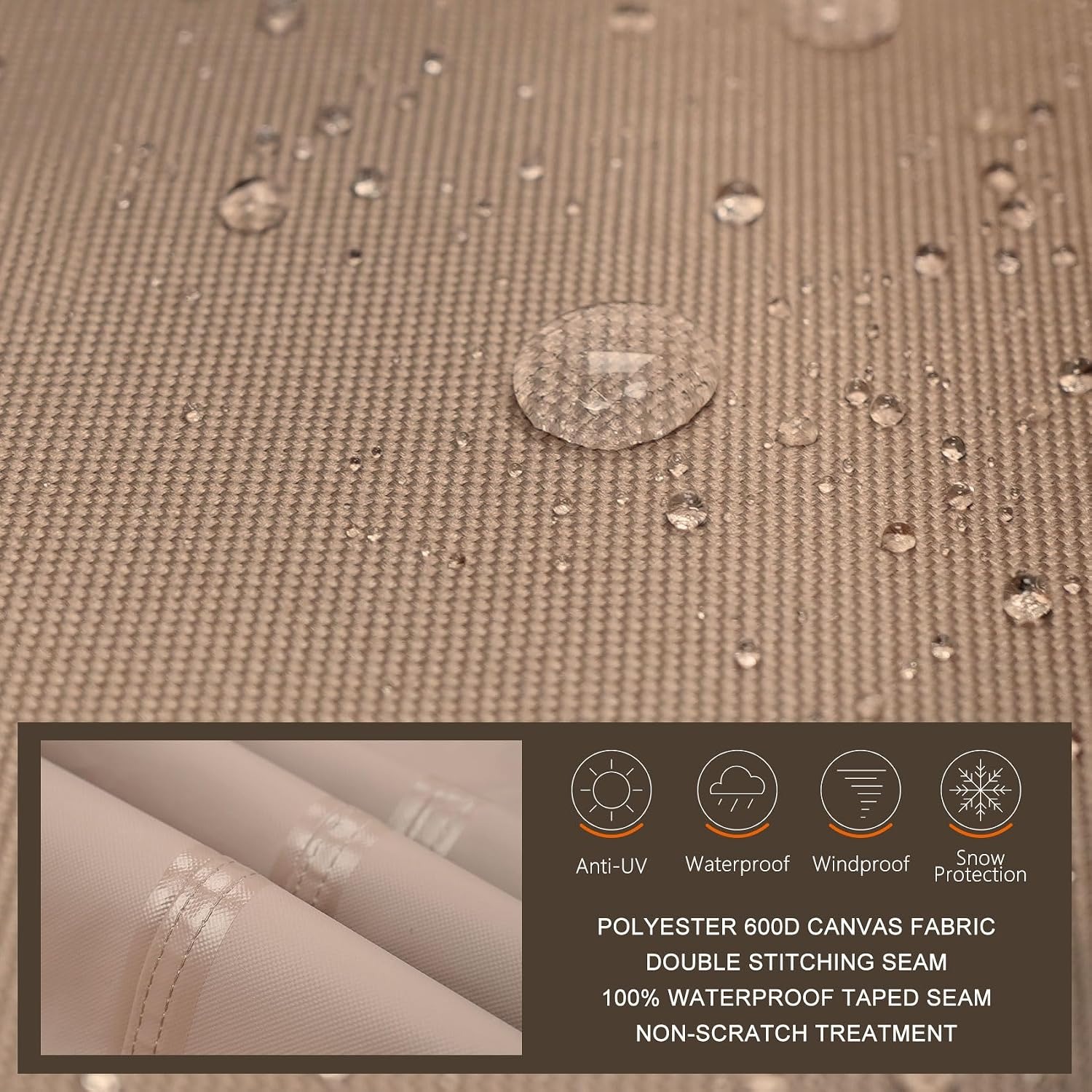
The shell is 600D polyester. The "D" stands for denier, which measures how thick the yarn is. A 600D weave is substantially heavier than the thin, crinkly covers sold at the bottom of the market, and it resists tearing and scuffing much better when you drag it on and off.
Behind that outer layer sits a waterproof backing. This is the part doing the real weather work. The polyester face handles abrasion, sun and general wear, while the backing stops water making it through to your cushions. Together they keep out rain, hail, snow, leaves, dust and bird droppings.
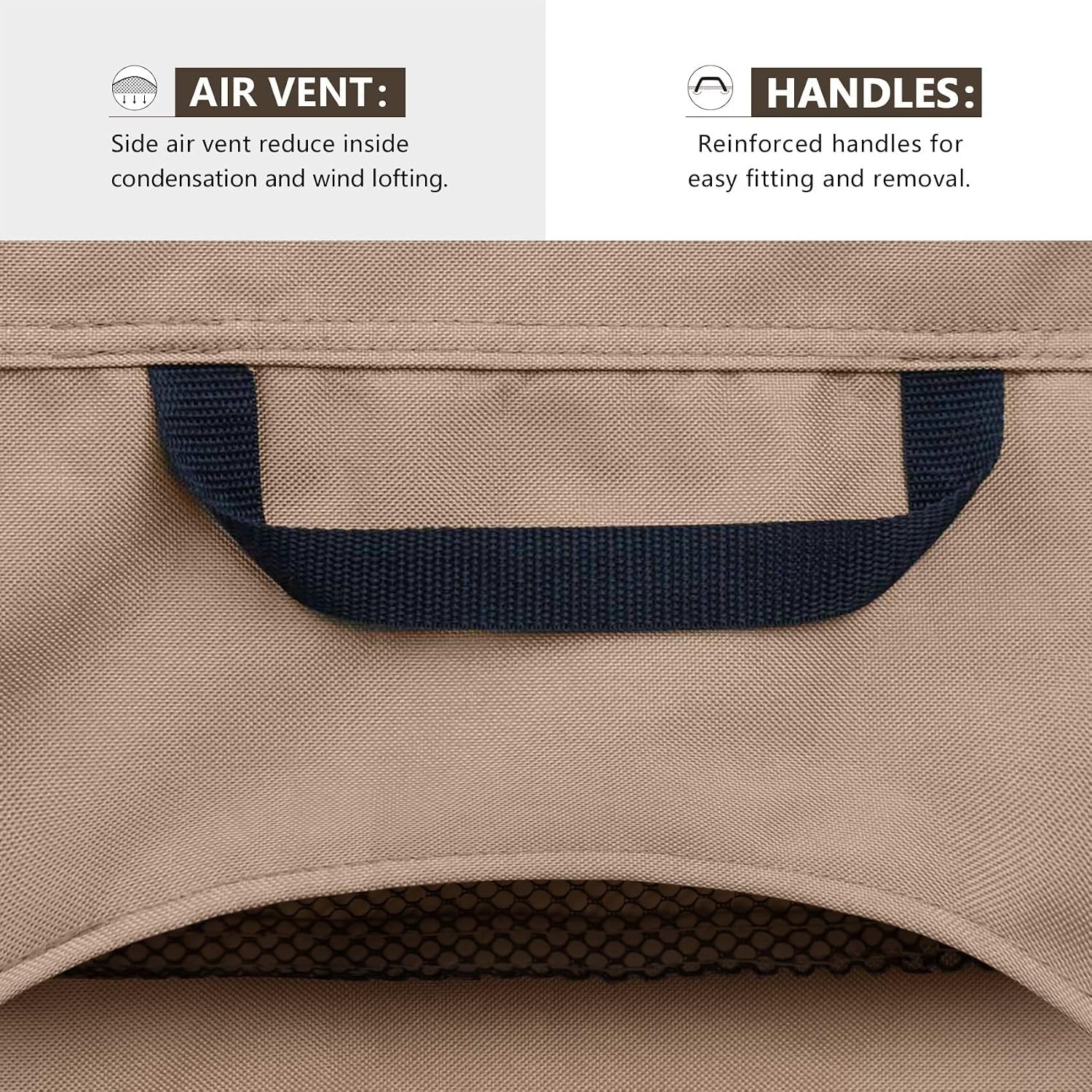
Then there is airflow. Structured air vents sit on both sides of the cover and stay open. People sometimes assume a cover should be completely sealed, but that is exactly how you end up with damp and mildew underneath. Air needs somewhere to go. The vents let humidity escape, and they also let wind pass through rather than inflating the cover and tearing it off the sofa.
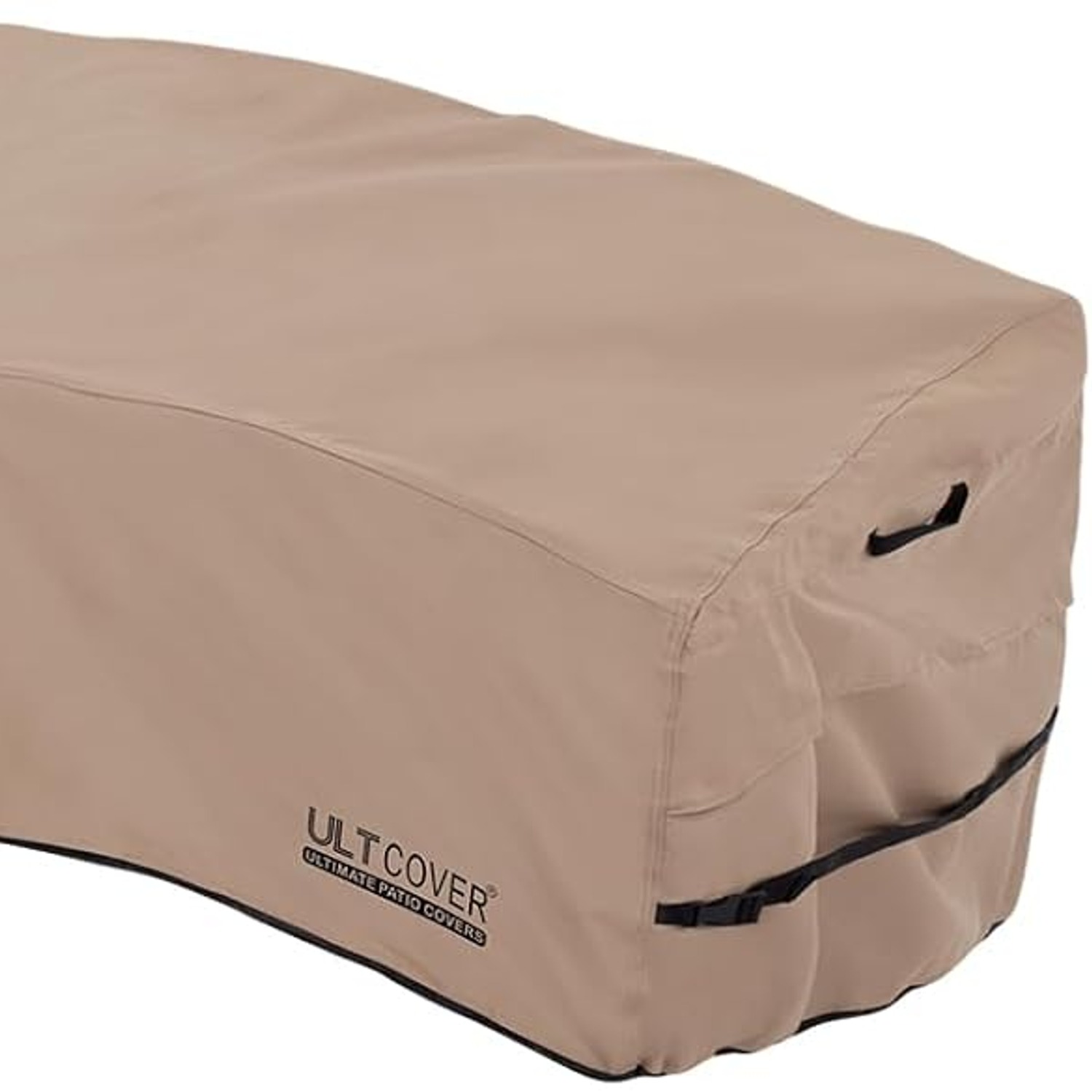
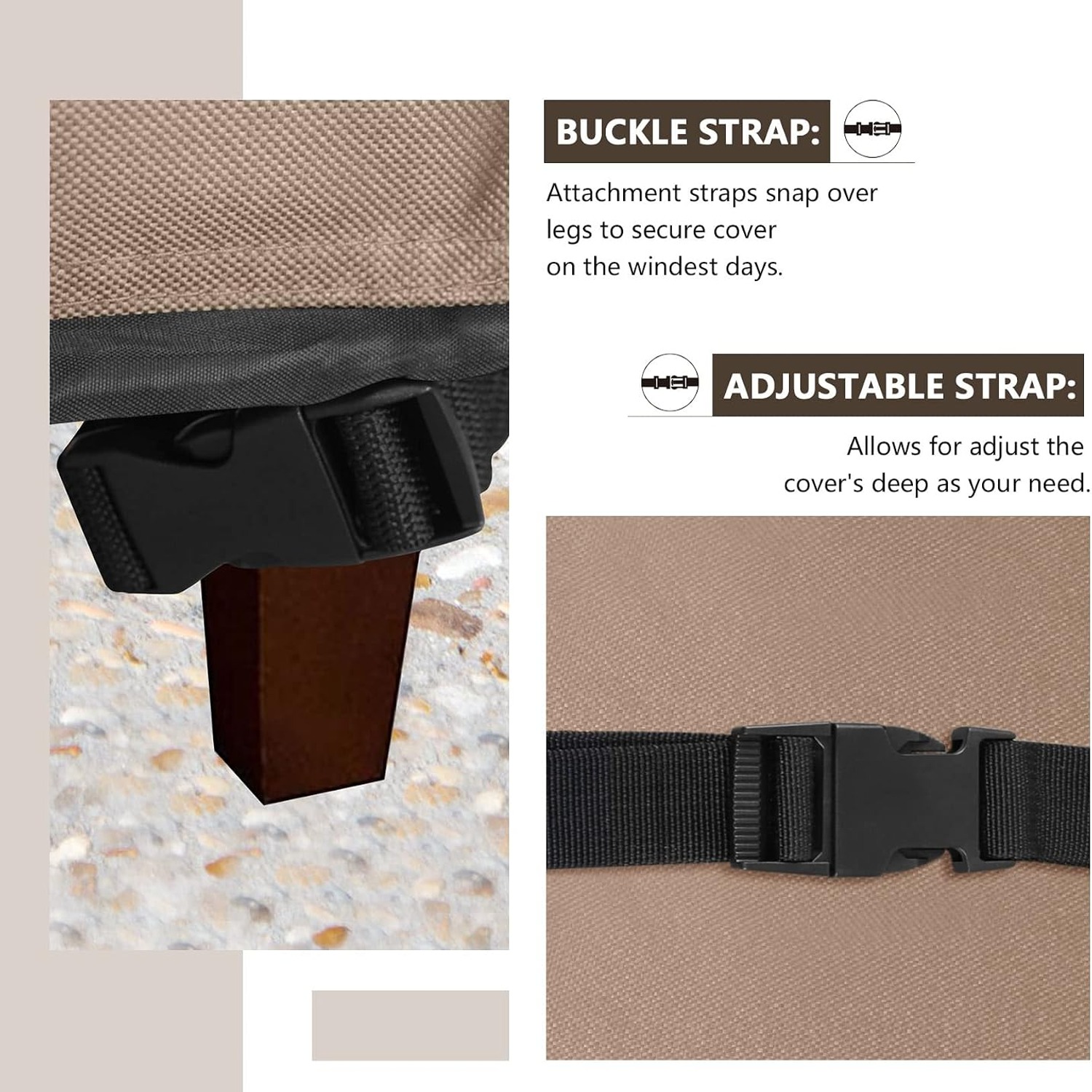
Finally, the straps. Plastic clip buckles on click-close straps wrap around the sofa legs and fasten underneath. They anchor the cover in gusty weather, and they let you pull the cover tighter so it hangs at the depth you prefer. A snug cover looks better and lasts longer than a baggy one.
Left facing, right facing, and why it matters
This is the detail most people get wrong, and it is worth slowing down for.
Stand in front of your sectional, the way you would if you were about to sit down. Look at the long arm, the chaise or return that extends out from the main back. If it runs out to your left, you have a left facing sectional, and this is your cover. If it runs to your right, you need the right facing version.
Getting this backwards means the cover will not sit properly. The corner lands in the wrong place, one side bunches up and the other side leaves furniture exposed. Covers are shaped, not symmetrical, so there is no way to make the wrong orientation work. Check it twice before ordering.
Getting the measurements right
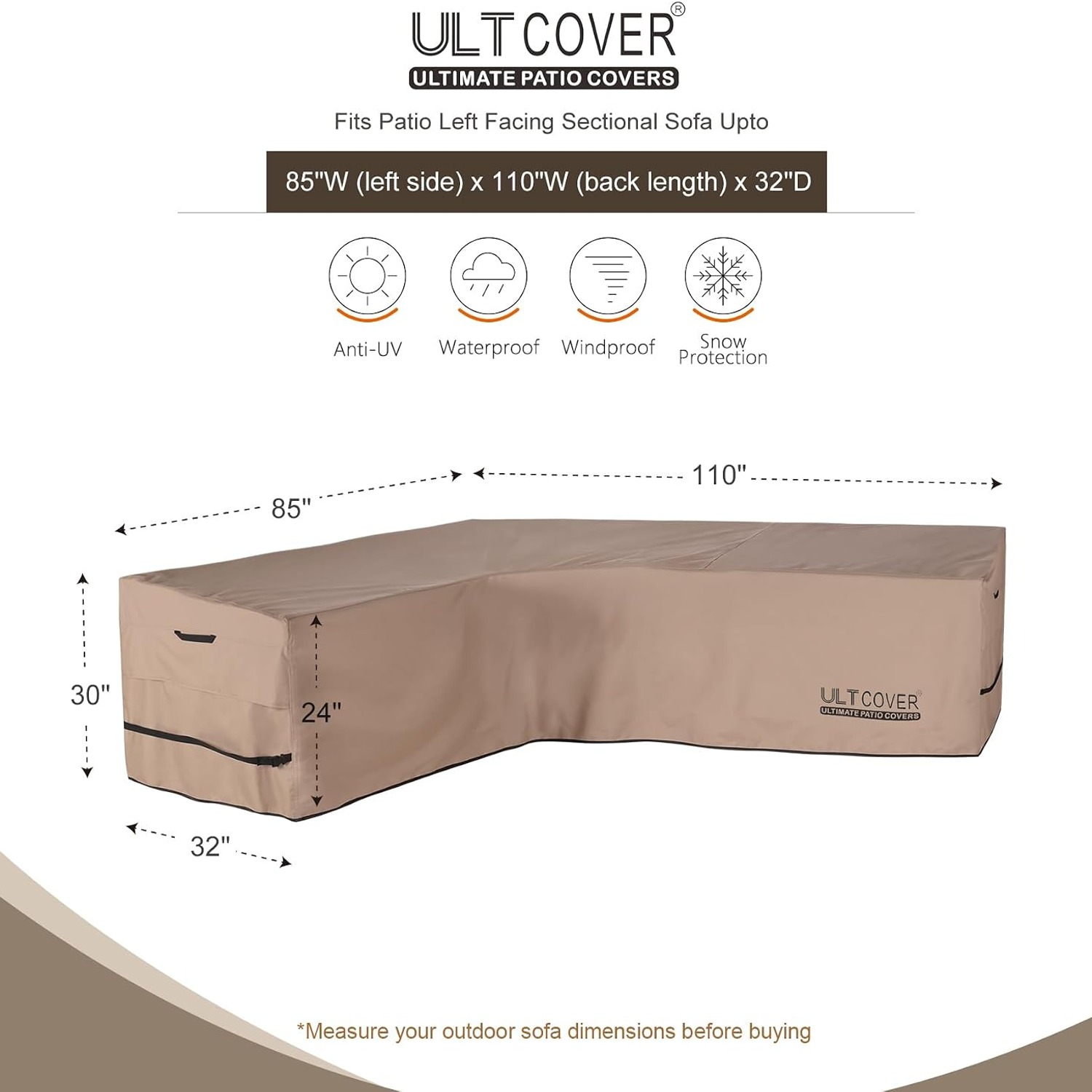
This cover fits left facing L sets up to 85 inches wide on the left side, 110 inches along the back length and 32 inches deep. Those are ceilings, not targets, so anything within them should work.
Measure the outside edges, not the frame. Cushions often sit proud of the frame by an inch or two, and that is the dimension that matters when fabric has to pass over the top. Use a tape measure rather than guessing from the showroom spec sheet, because real sets sometimes differ once cushions are in place.
Take three numbers. The width of the left arm section from outer edge to outer edge. The back length along the longer run. The depth from front edge to back. Then compare all three against the listed maximums. If every number is under, you are good. If one is over, the cover will strain at that point and probably fail there first.
Slightly undersized is usually fine. Noticeably oversized means flapping, which invites wind damage. The best left facing sectional cover for your patio is the one closest to your actual numbers.
Who this suits
It makes most sense for anyone whose sectional lives outside permanently, with no roof, pergola or sheltered corner to retreat to. Coastal homes, exposed decks and gardens under trees all benefit, because salt air, wind and falling debris are relentless.
It also works well for holiday houses and rentals, where furniture sits unused for long stretches. Put the cover on when you lock up, take it off when you arrive, and you skip the big clean every visit.
It is less essential if your lounge sits under a solid roof and is used daily. Even then, a cover is handy for winter storage or when you are away. For furniture kept in a garage or shed, it still earns its place as a dust shield.
Living with it day to day
The routine is simple. Take the cover off when you want to use the lounge, put it back on when you are done or when the sky turns. Doing up all the leg straps takes under a minute and makes a real difference in wind.
Brush off leaves and debris as they gather, especially in autumn. Left sitting, wet leaves stain and hold moisture against the fabric. If you get bird droppings, deal with them sooner rather than later.
For a proper clean, wipe the surface with a damp cloth and mild soapy water, then rinse it with a hose. Let it dry completely before folding. Do not put it in the washing machine, do not bleach it, do not iron it and do not tumble dry it. The backing and hardware are not built for any of that.
One practical tip. If water pools in the middle of a wide flat section, pop something underneath to create a high point, like an upturned bucket or a pool noodle laid across the seats. Water then runs off instead of sitting there stretching the fabric.
When the season ends and you want the cover off, make sure it is bone dry before you fold it away. Damp fabric stored in a bag is how mildew starts. Fold it loosely and keep it somewhere cool and sheltered.
What to look for in any outdoor cover
If you are comparing options, a handful of things separate a cover that lasts from one that shreds in a season.
Fabric weight comes first. Lighter covers feel cheap because they are, and they tear at the corners where the tension is highest. A heavier weave like 600D polyester holds up far better.
Then check for venting. A cover with no vents traps moisture and catches wind, which is the worst of both worlds. Side vents solve that quietly.
Look at how it attaches. Elastic hems alone are not enough on an exposed patio. Straps that buckle around the furniture legs are what keep a cover on through a storm.
And check the shape matches your furniture. A rectangular cover thrown over an L-shaped sectional leaves corners open and bunches where it should not. A shaped cover sits properly.
The short version
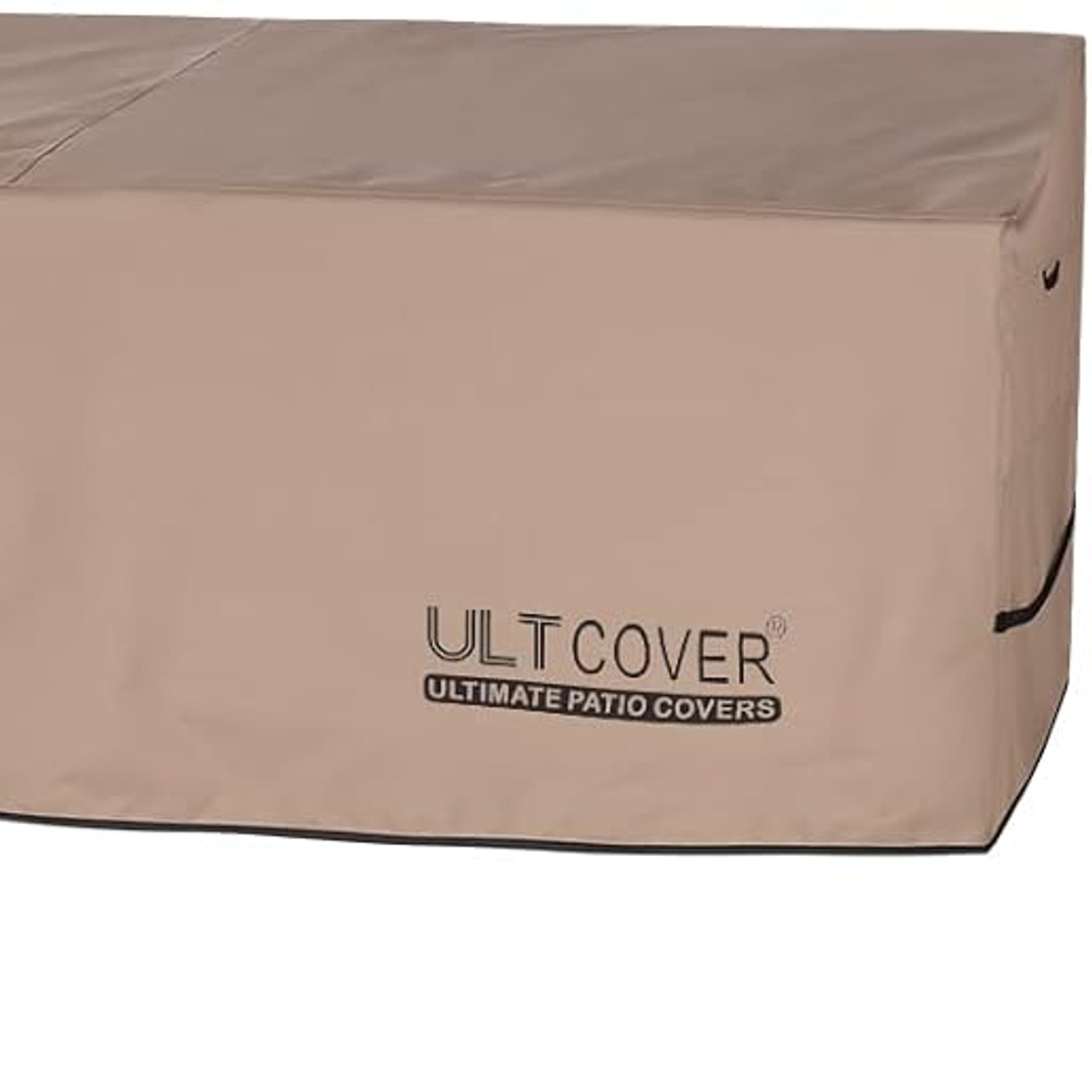
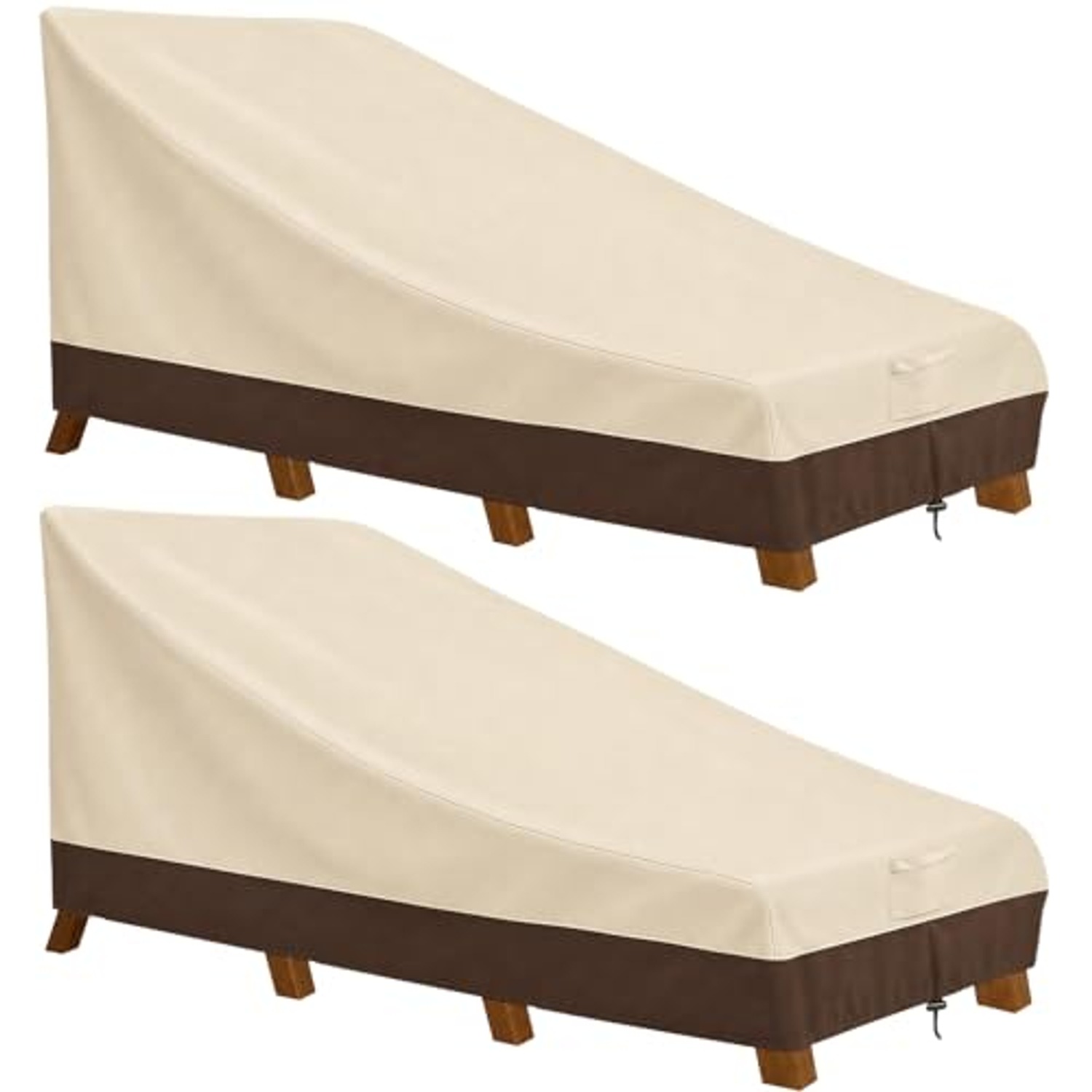
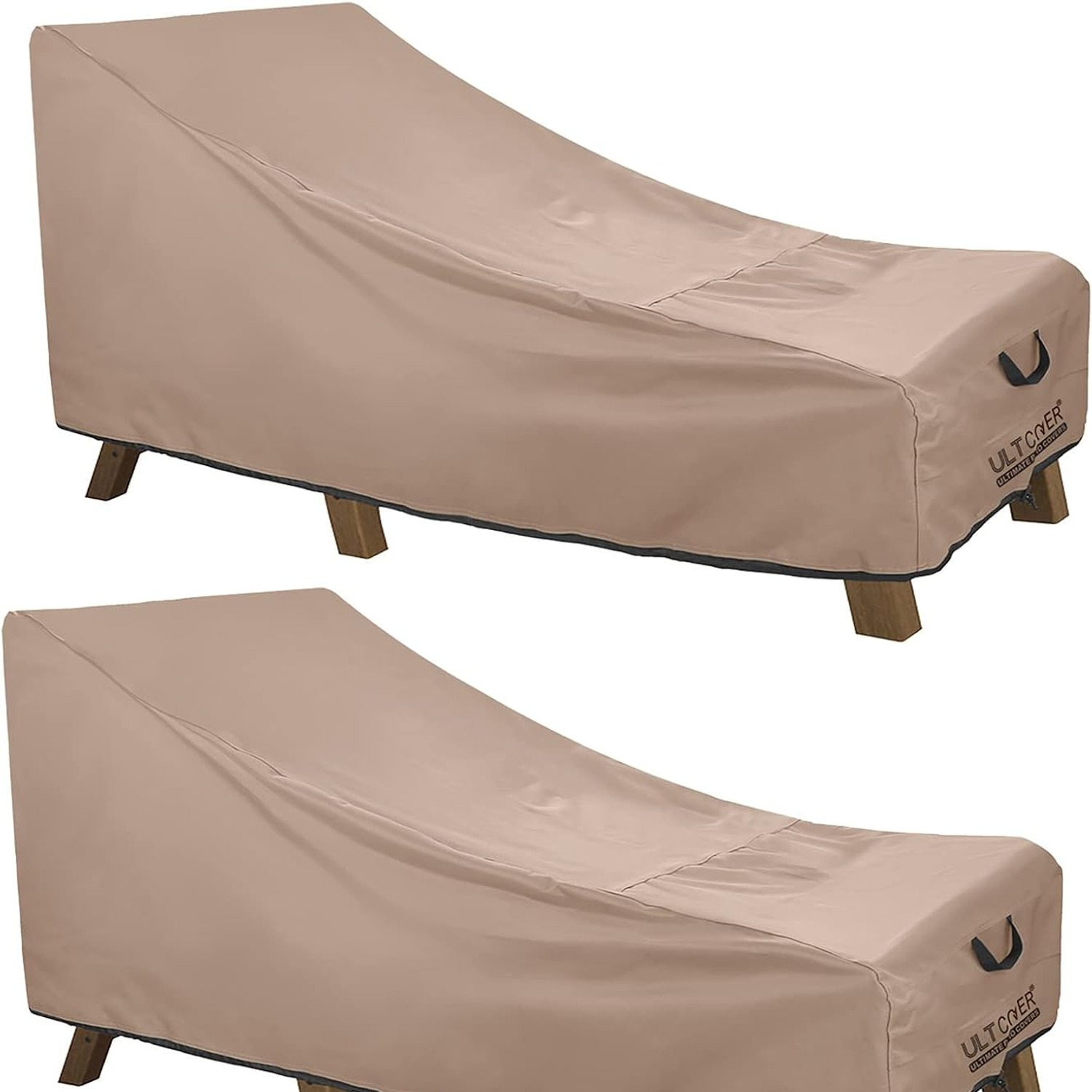
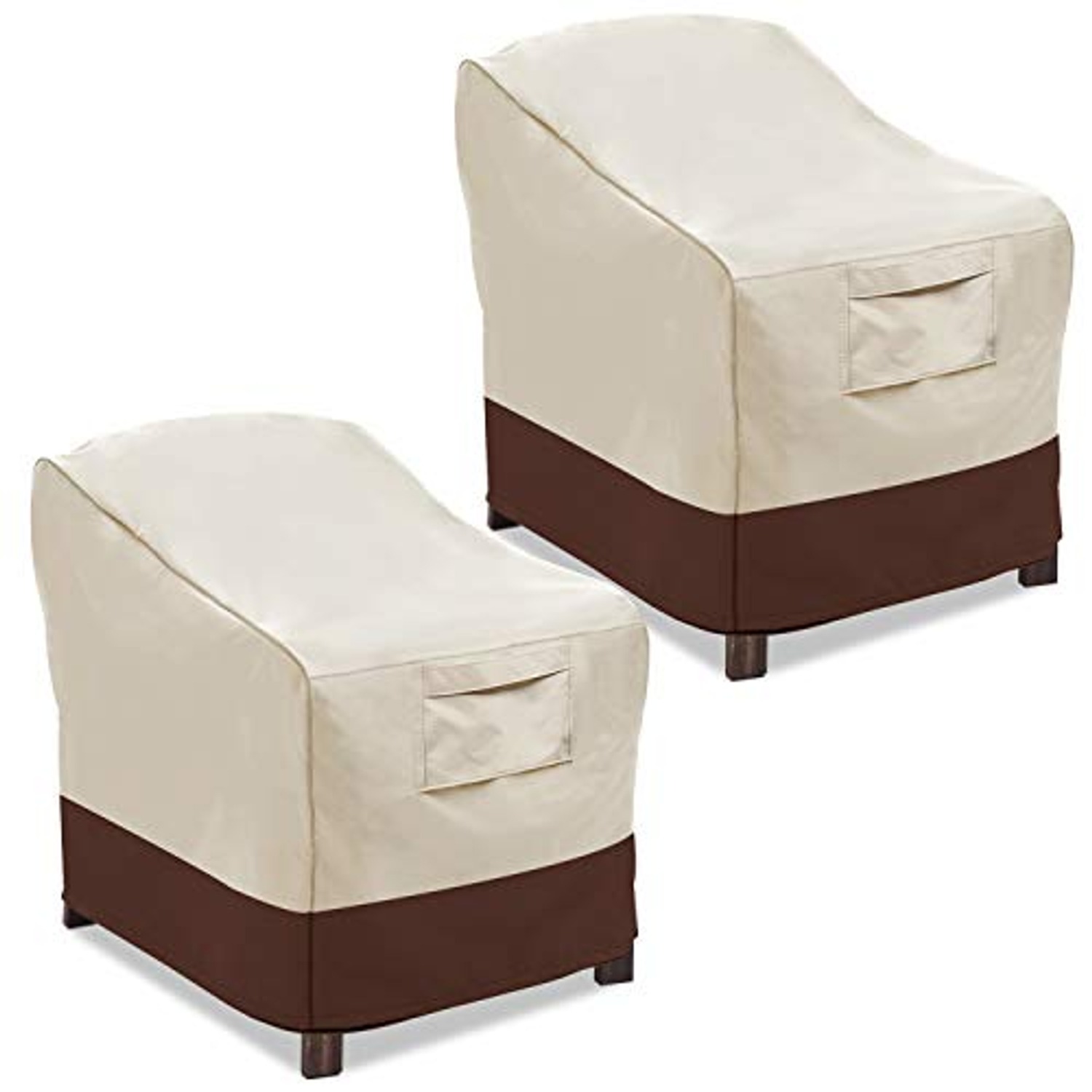
This is a left facing L-shaped patio sectional cover in 600D polyester with a waterproof backing. It fits sets up to 85 inches wide on the left side, 110 inches along the back and 32 inches deep. Side air vents reduce wind lift and let damp escape, and click-close strap buckles fasten around the sofa legs to hold it in place. The listed color is brown.
Measure your sofa before you order and confirm the long arm runs to your left. Do that, keep the straps done up, and let the cover dry before storing it, and your outdoor lounge will still look sharp several summers from now.