
The complete guide
How to Choose a Patio Heater Cover That Lasts
The problem with an uncovered heater
A standing patio heater is one of those things you use for maybe twenty evenings a year and leave outside for the other three hundred and forty five. All that time it is collecting rain in the dome, dust in the burner ports, pollen on the reflector and spiders in the gas line housing. Then one cold night in autumn you go to light it and it sputters, or the knob has seized, or the mirror-finish reflector has gone dull and streaked.
None of that is a design fault. It is just weather doing what weather does to painted steel, aluminum and rubber hose. The frustrating part is that it is almost entirely preventable with a piece of fabric that costs a fraction of the heater.
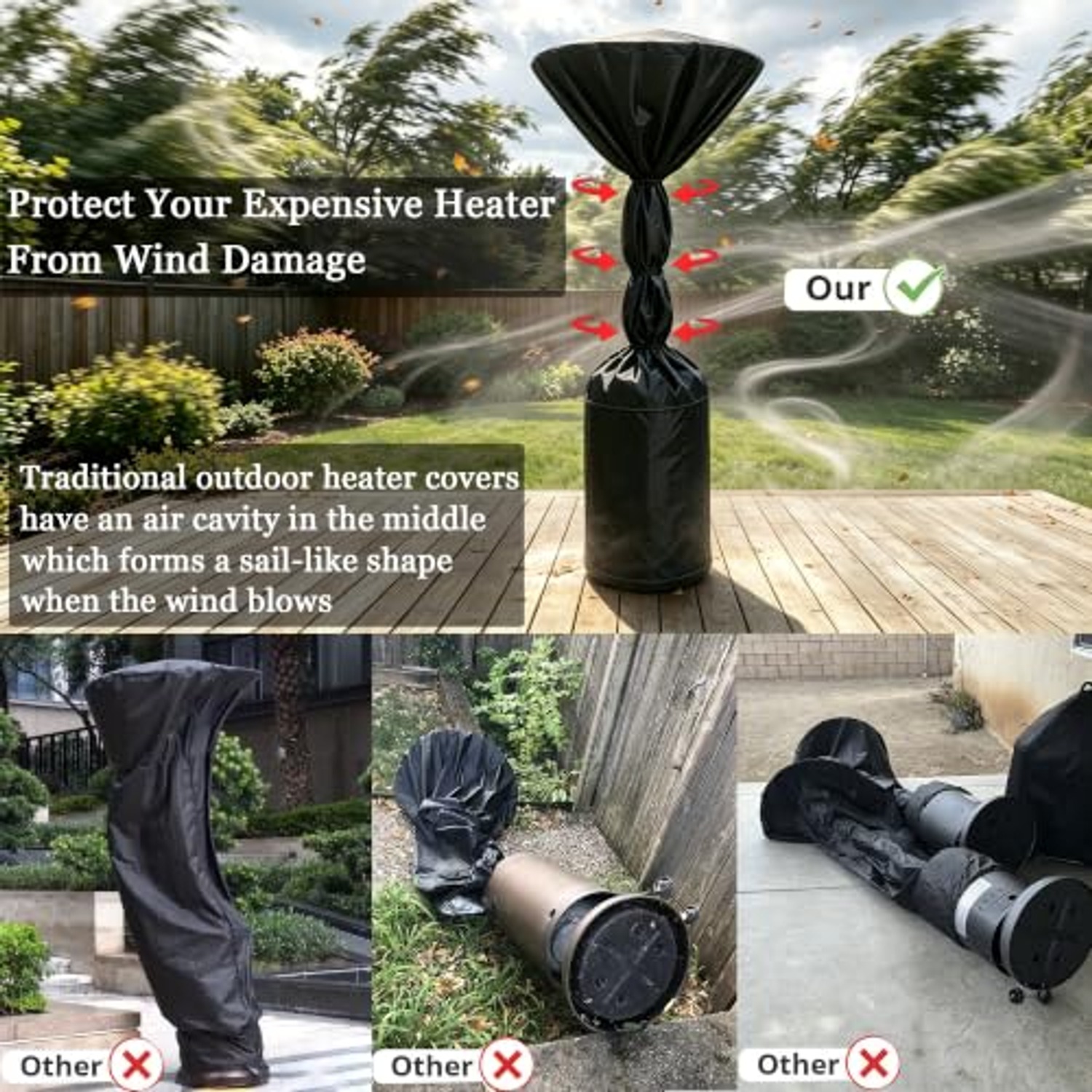
The second problem is wind. People who skip the cover often do so because a previous one ended up in the neighbor's garden, or worse, took the heater down with it. A cover that cannot stay put is worse than no cover at all, which is why the way it fastens matters as much as the fabric it is cut from.
What the fabric number means
You will see covers advertised as 210D, 420D and 600D. The D stands for denier, a measure of how thick the yarn is. Thicker yarn generally means a tougher, heavier cloth that resists tearing and holds its shape.
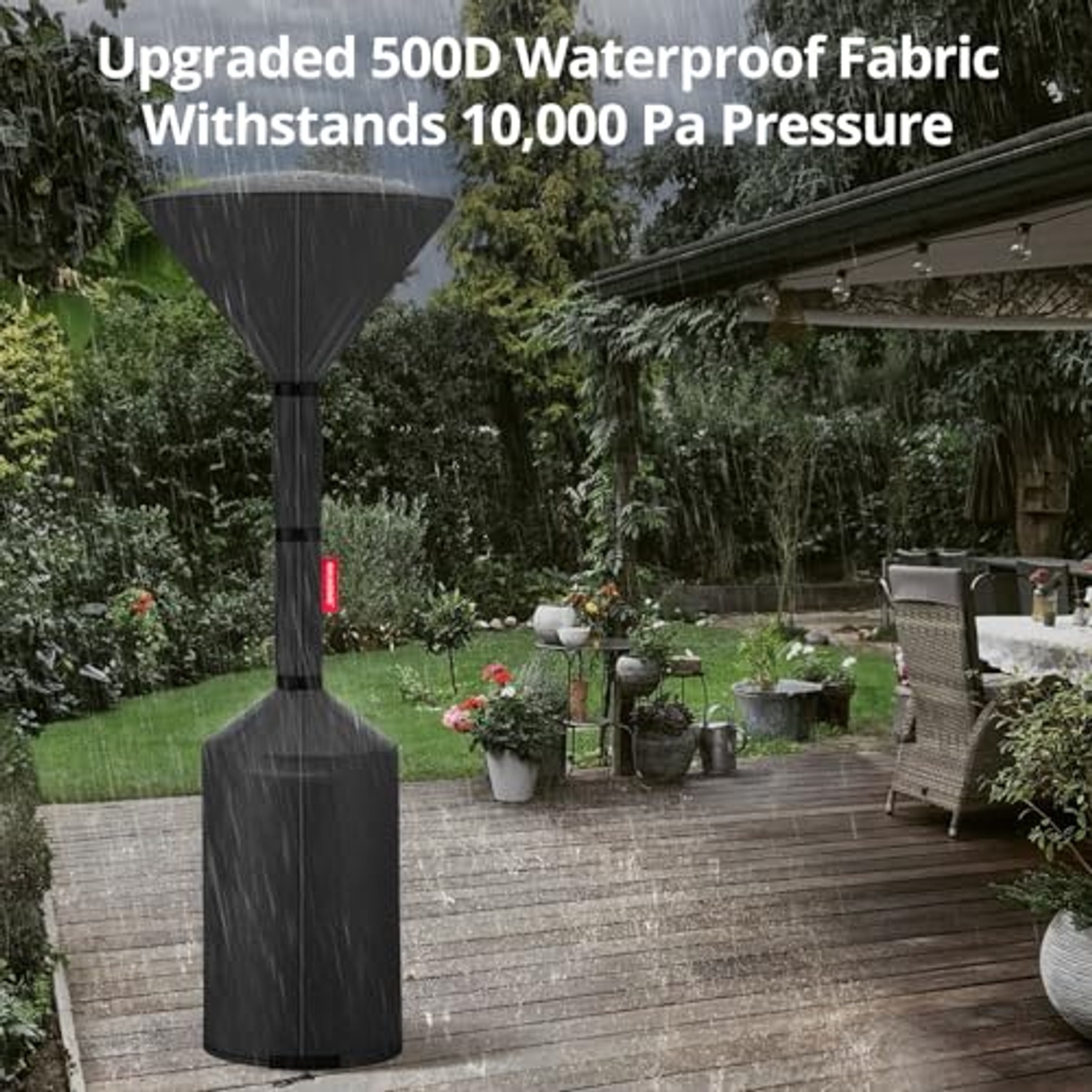
This cover uses 500D Oxford fabric. Oxford is a basketweave cloth, and at 500D it sits well above the thin fabrics used on the covers that come bundled free with some heaters. In practical terms you notice it in three places. The seams do not pull open as easily when the wind tugs. The fabric does not go papery and crack after a frosty winter. And it hangs with a bit of weight to it instead of flapping at the first breeze.
It is also waterproof, which is the other half of the job. Water that sits on a cover and slowly seeps through is almost as bad as no cover, because the moisture ends up trapped against the metal with nowhere to evaporate. A surface that sheds water keeps the heater dry underneath.
Why straps beat a tight fit
A lot of buyers assume the answer to wind is a really snug cover. It is not, or at least not on its own. Heaters are an awkward shape, wide at the top and narrow in the middle, and a cover that hugs the dome tightly will strain at the seams and still leave a big air pocket around the post.
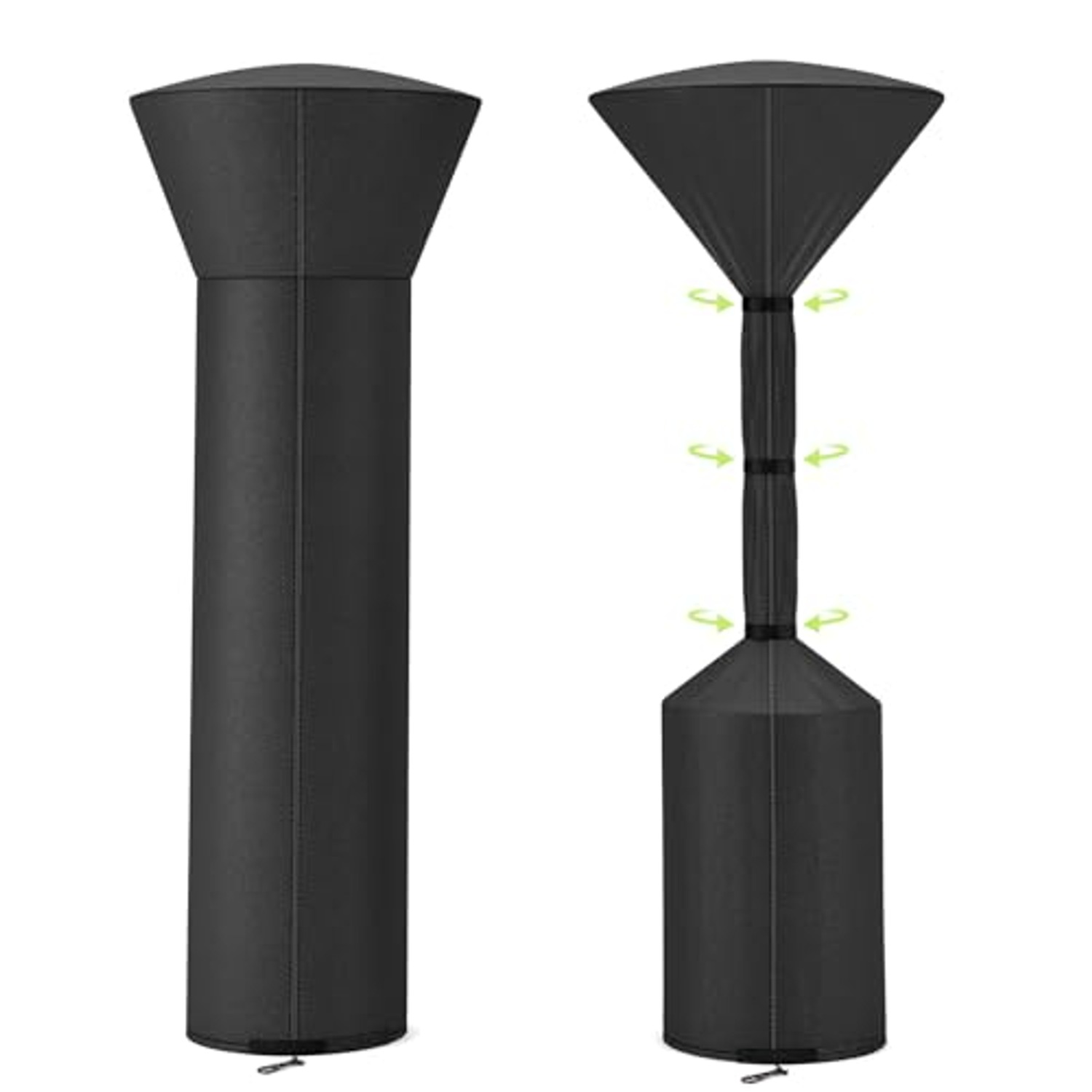
The approach here is three retractable Velcro straps set around the middle of the cover. You drop the cover on, then pull the straps in so the loose fabric at the waist is cinched to the post. That turns a billowing tube into something closer to the heater's actual shape. Less trapped air means less lift, and less lift means the cover is still there in the morning.
The base tightens with Velcro too, rather than the drawstring and plastic toggle you see on cheaper covers. Drawstrings work until the cord frays or the toggle spring gives out, usually on a cold night when you are trying to do it one-handed. Velcro just presses together.
Getting it on and off without a fight
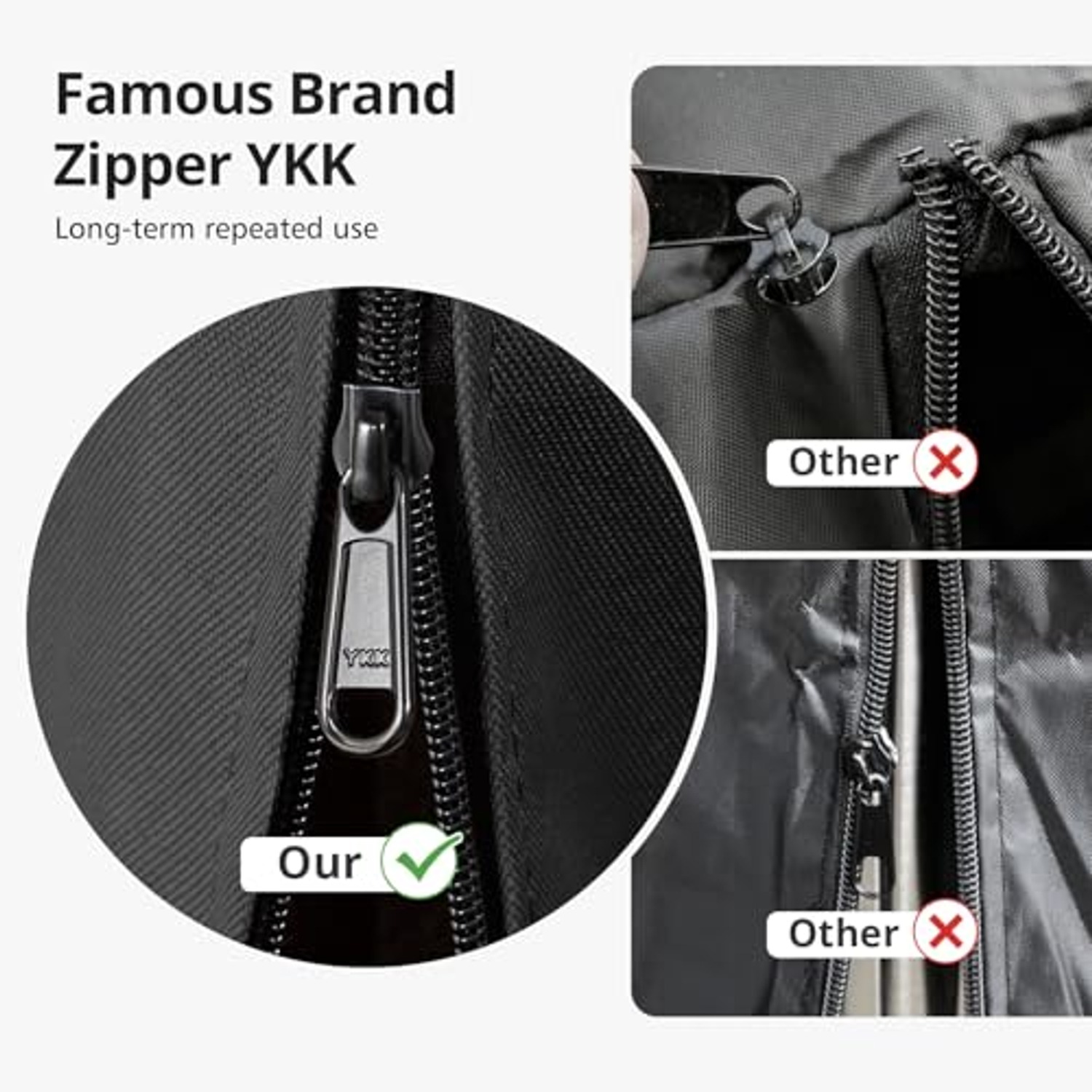
An 89 inch cover is taller than most people, so how it opens makes a real difference to whether you actually use it. A full-length zipper runs down this one. You unzip, lift the fabric over the dome, zip it back up and fasten the straps.
Compare that to a closed sleeve, where you have to lift the whole thing above your head and feed it down over a wide reflector while trying not to catch the edges on the burner guard. Most people give up on that after a couple of goes.
You will still want a step stool or a short ladder to settle the top properly. Work on a calm day the first time so you can learn where the straps naturally fall. After that it is a one-minute job.
Two habits make it last longer. Let the heater cool completely before covering it, every single time. And run the zipper slowly, brushing grit off the teeth if the heater has been sitting near a dusty path or a building site.
Measuring your own heater
The listed size is 89 inches high, 33 inches across the dome and 19 inches at the base. Before buying any cover, take a tape to your own heater and write down three numbers.
Start with total height from the ground to the very top of the dome. Then measure the widest point of the reflector, straight across. Finally measure the base, which on most heaters is a round or square housing that holds the gas cylinder.
If your heights are within a few inches of 89, you are fine. Spare fabric gathers at the bottom and the Velcro base closure pulls it in. What you do not want is a cover that falls short, leaving the cylinder housing and lower post sitting in the rain. That lower section is exactly where rust tends to start, because water pools on flat surfaces near the base.
Dome width is the other number to watch. A dome that is noticeably wider than 33 inches will strain the top of the cover every time wind pushes on it, and strained seams eventually let go.
Who this suits
It is a good match if you own a standard mushroom-shaped propane heater on a deck, patio, courtyard or balcony, and you want something you can leave on for most of the year.
It is less suitable for a pyramid heater with a glass flame tube, since the shape is completely different. It is also not for tabletop heaters, which need something much smaller. And if your heater lives permanently in a garage or covered pergola, you can get away with something lighter since wind and direct rain are not in play.
For a weekend place or a holiday rental, a cover like this earns its keep fast. Those heaters sit unused for weeks at a stretch, which is when weather does the most damage with nobody around to notice.
Looking after the cover
Care is simple. Wipe it down with a damp cloth and mild soapy water when it gets grubby, then rinse with clean water. Skip the washing machine, the tumble dryer, bleach and the iron.
If you take it off for the summer, let it dry out completely before folding. A cover packed away slightly damp will grow mildew spots that never fully come out. Store it somewhere dry and out of direct sunlight.
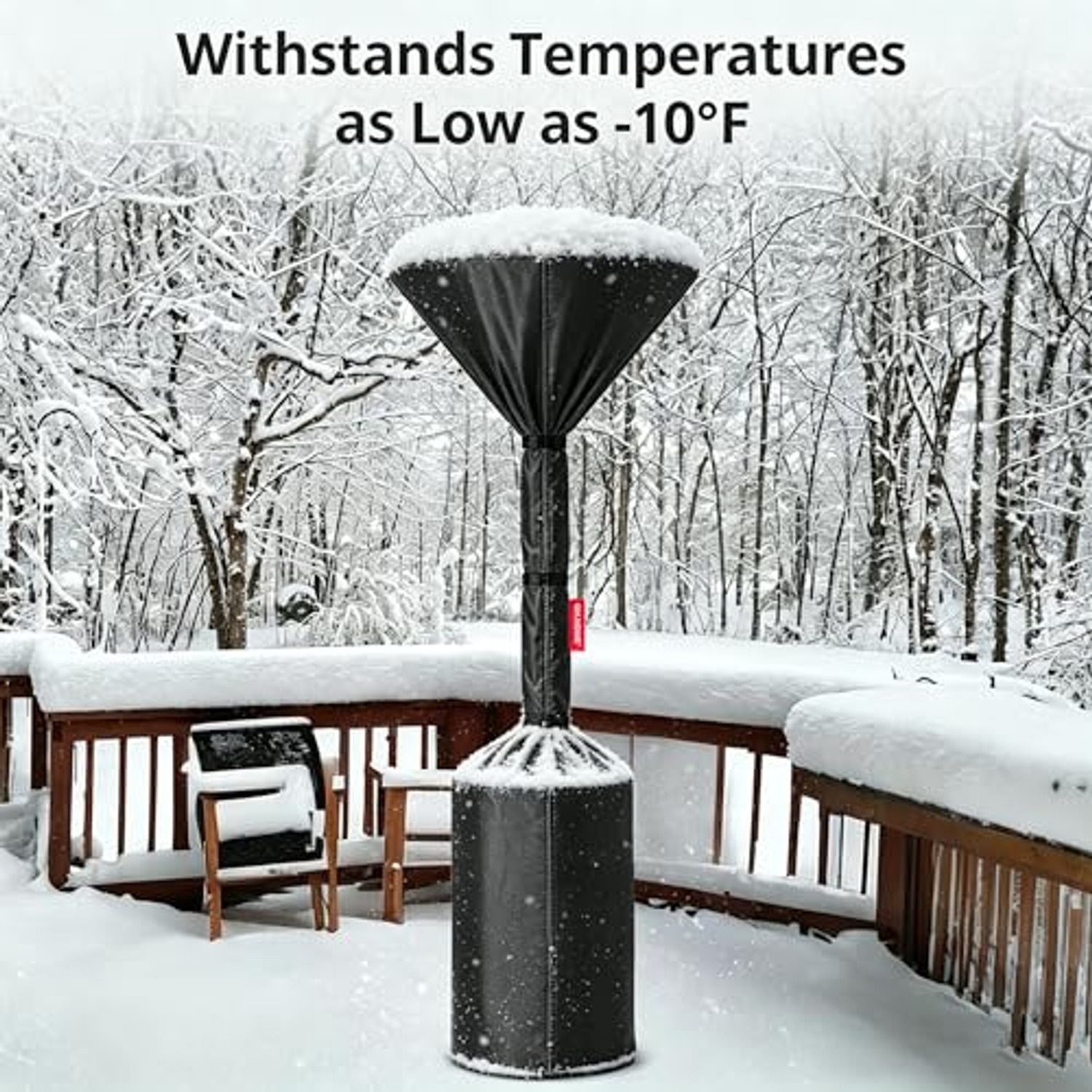
Through winter, knock heavy snow off the dome rather than letting a thick layer build up. Snow gets heavy, and weight plus freezing and thawing puts strain on seams. A quick sweep with a soft broom is all it takes.
Once in a while, pick a dry day and lift the cover off for an hour. It lets any trapped moisture escape and gives you a chance to check the heater over, which is how you catch a loose fitting or a perished hose before the cold sets in.
The short version
Patio heaters fail from neglect far more often than from use. Rain, dust and sun work on them quietly for months, and the bill arrives the night you want to sit outside.
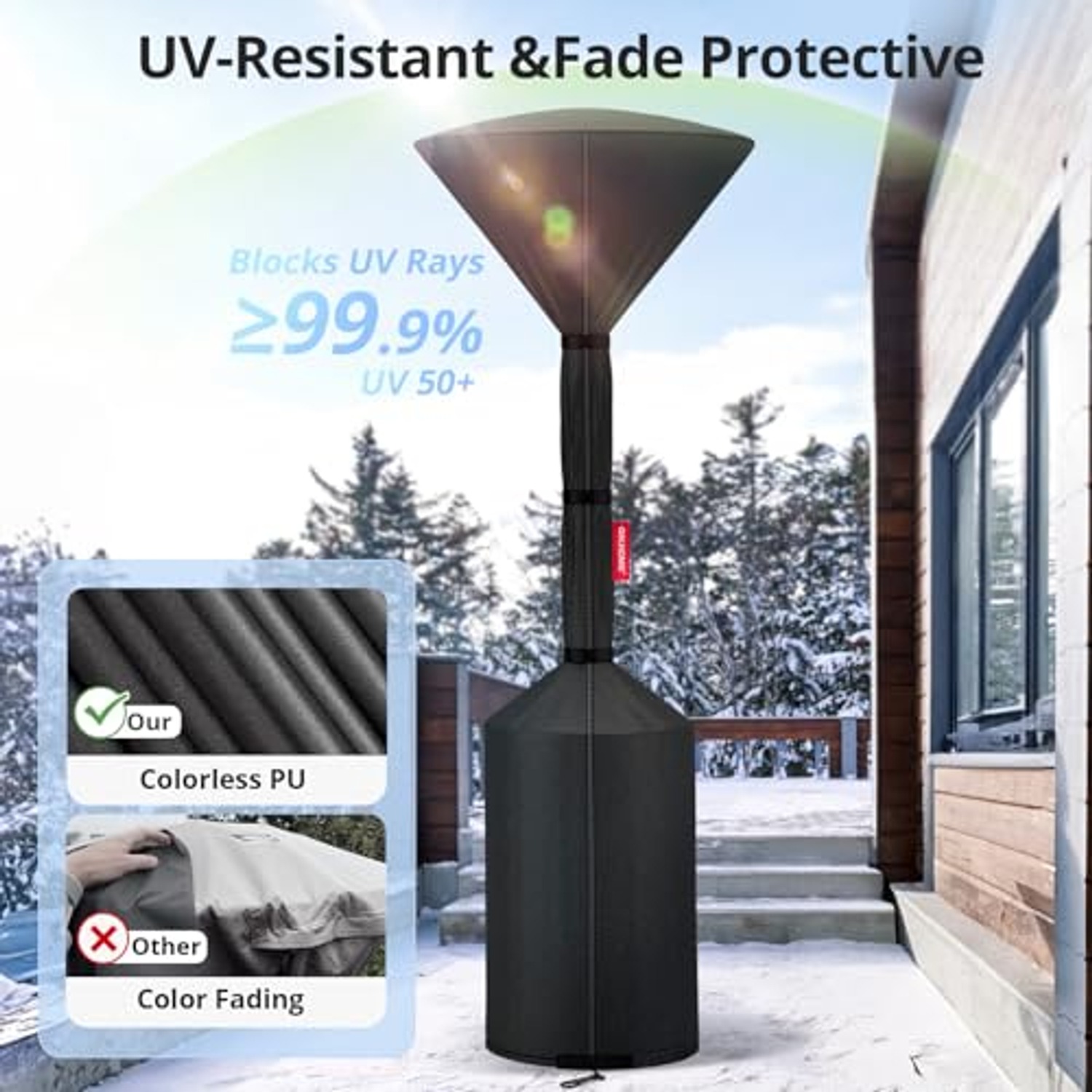
This cover handles the basics properly. Heavier 500D Oxford fabric that does not tear or go brittle. A waterproof surface that sheds rain. Three Velcro straps that stop wind turning the cover into a sail. A zipper down the full length so you can actually be bothered to use it. And a size that fits the shape most people own.
Measure your heater, check the three numbers, and let the heater cool before you cover it. Do that and this should see you through a good few seasons.