
The complete guide
How to Choose an Outdoor Loveseat Cover That Actually Lasts
The problem with leaving furniture uncovered
Most people buy patio furniture in spring and feel pretty good about it. Then autumn arrives. Leaves pile into the corners of the seat. Rain soaks the cushions, and they never quite dry out before the next shower. Birds find the backrest. By the following summer the cushions smell faintly of pond, the frame has chalky white marks on it, and the whole set looks five years older than it is.
None of that is the furniture's fault. Outdoor furniture is made to handle weather, but handling weather and shrugging it off are different things. Water that sits in a cushion seam for weeks works its way into the foam. UV light breaks down the color in fabric and the finish on timber. Grit blown into a rattan weave acts like sandpaper every time someone sits down.
A cover stops nearly all of it. It is a small purchase next to the cost of replacing a two-seater, and it is the difference between furniture you refresh and furniture you replace.
What makes one cover better than another
Walk into any garden center and you will find covers at wildly different prices. The cheap ones are thin polyethylene, basically a fitted tarp. They work for a season, then the sun makes them brittle, they split at a corner, and you are back where you started.
The things worth paying attention to are fabric weight, seam construction, how the cover anchors down, and whether it breathes.
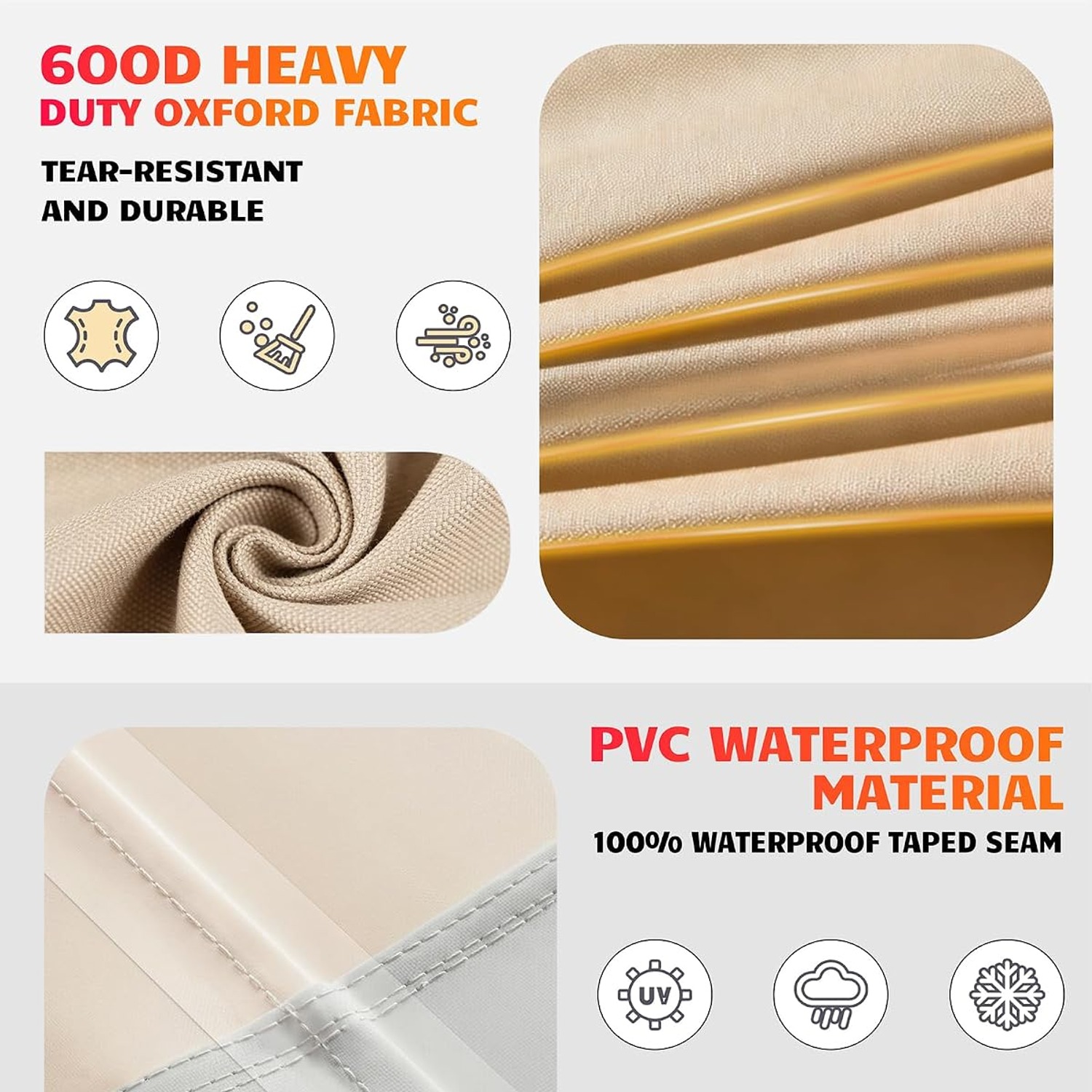
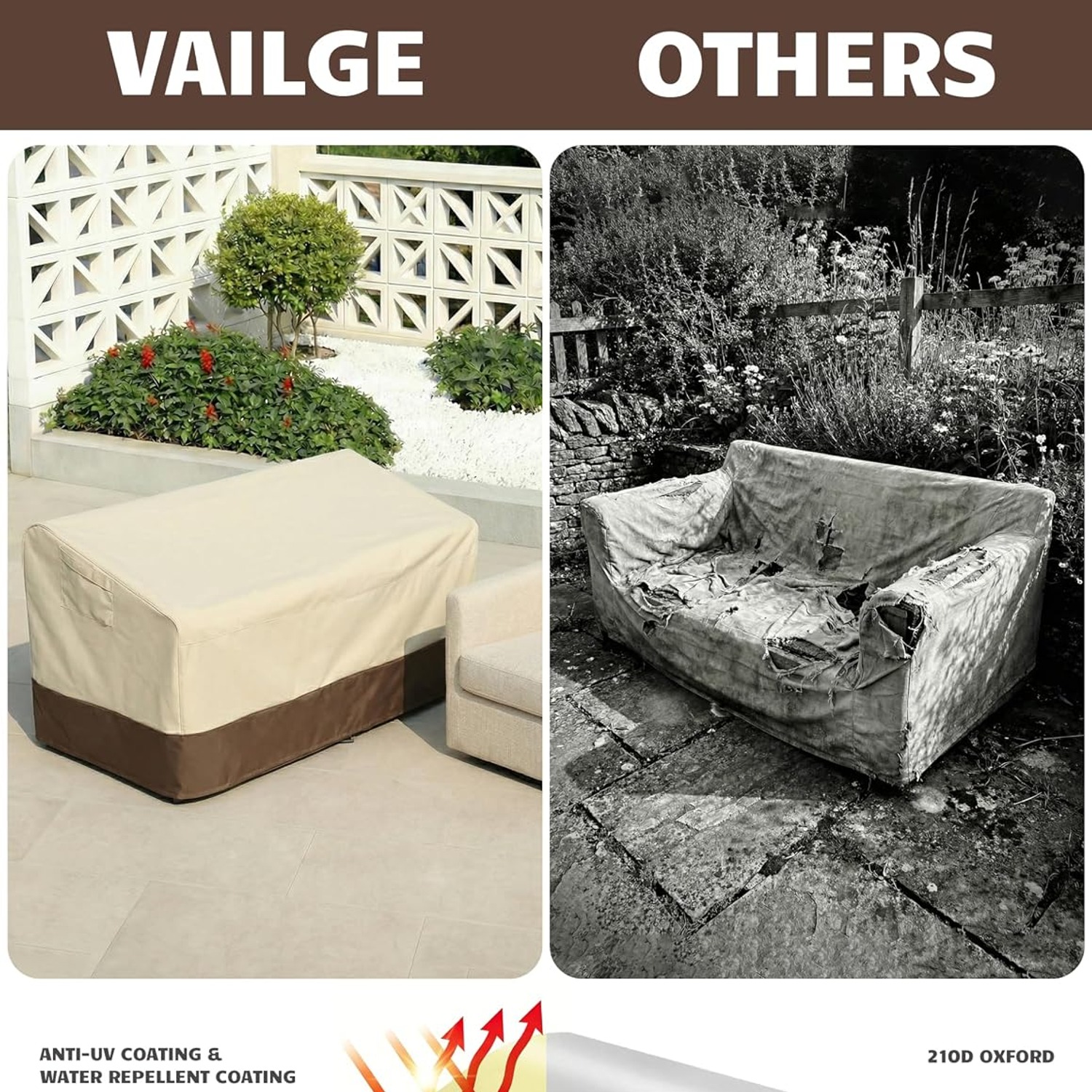
Fabric weight is measured in denier. This cover uses 600D Oxford, which is a dense, heavy weave with a water-resistant coating on it. Compare that to a 210D cover and you can feel the difference between your fingers straight away. Heavier fabric resists punctures from branches, holds up to being folded and unfolded dozens of times, and does not go papery after two summers in the sun.
Seams matter more than the marketing usually suggests. Every stitch is a hole. A cover can be made from genuinely waterproof cloth and still leak like a sieve if the needle holes are left open. This one has taped interior seams, which means the inside of each seam is sealed over so rain running down the cover cannot find its way through. If you are comparing two covers and only one mentions taped seams, that is a real difference, not a sales line.
Anchoring, and why wind is the real enemy
Rain is predictable. Wind is the thing that ruins covers.
A loose cover on a windy night does two bad things. It lifts, which lets rain blow in underneath, and it flaps, which wears the fabric against the furniture frame until it abrades through. Finding your cover halfway across the garden in the morning is the usual result.
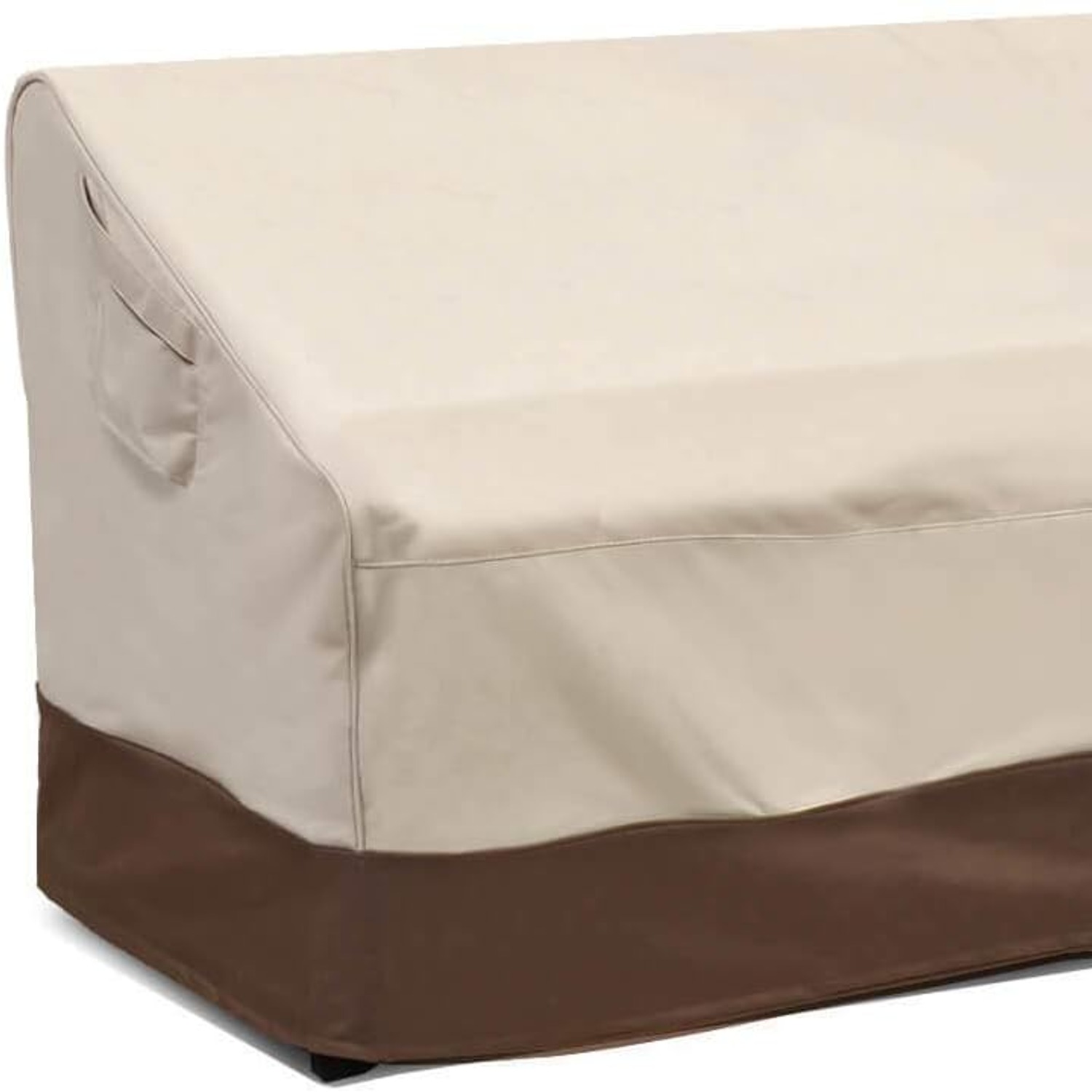
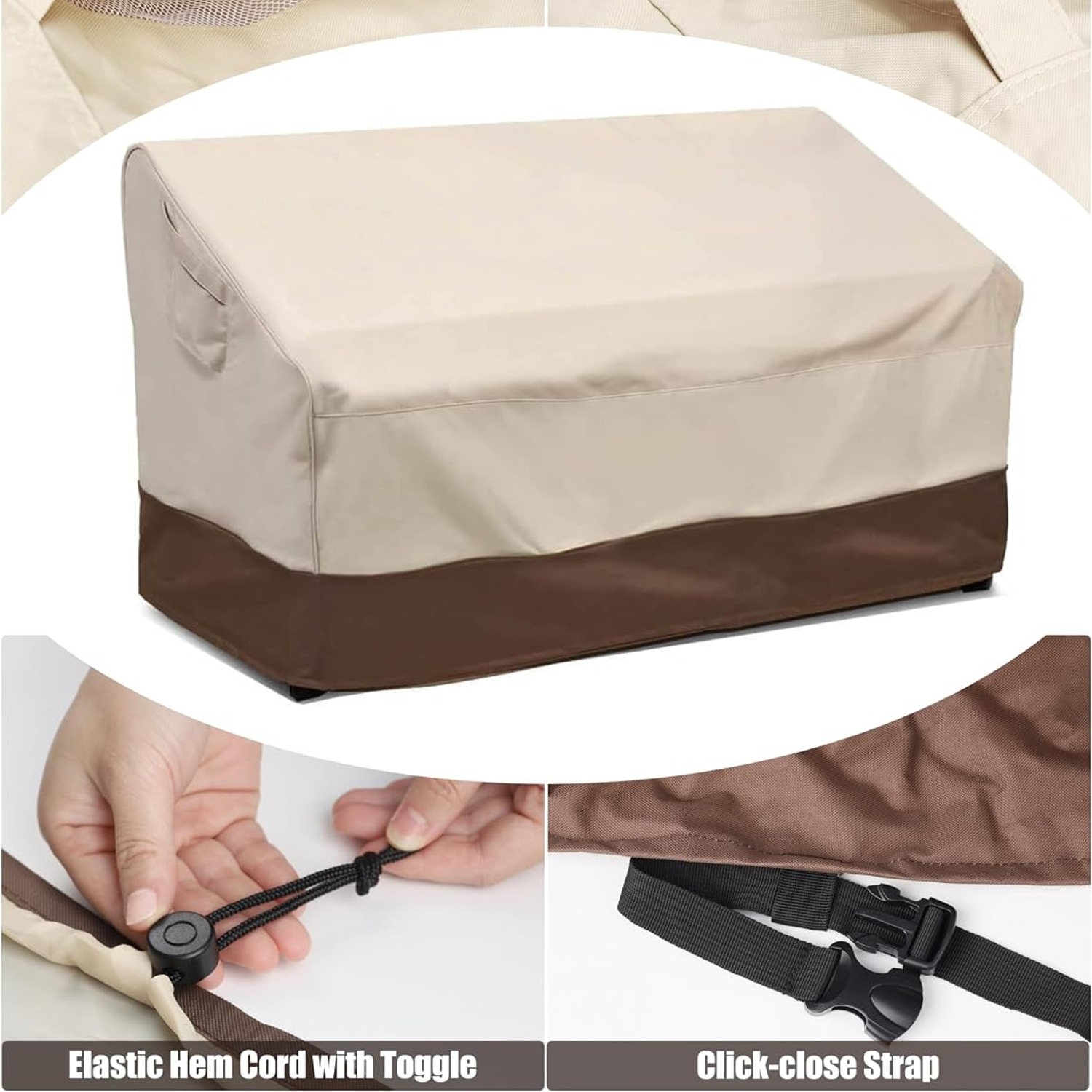
This cover tackles it from two directions. There are adjustable click-close straps that pass under the furniture and buckle together, and there is an elastic hem cord with toggles that pulls the bottom edge in like a drawstring bag. Set both properly and the cover sits tight against the shape of the loveseat with very little slack.
Vents are the other half of the wind story. Air trapped under a sealed cover has nowhere to go, so a gust pushes underneath and inflates the whole thing. Built-in air vents give that air an exit, so the cover stays put instead of ballooning. The same vents help damp air escape, which is why a breathable outdoor furniture cover tends to keep cushions drier than a fully sealed one, even though that sounds backwards.
Getting the size right
This is where most returns come from, so it is worth slowing down.
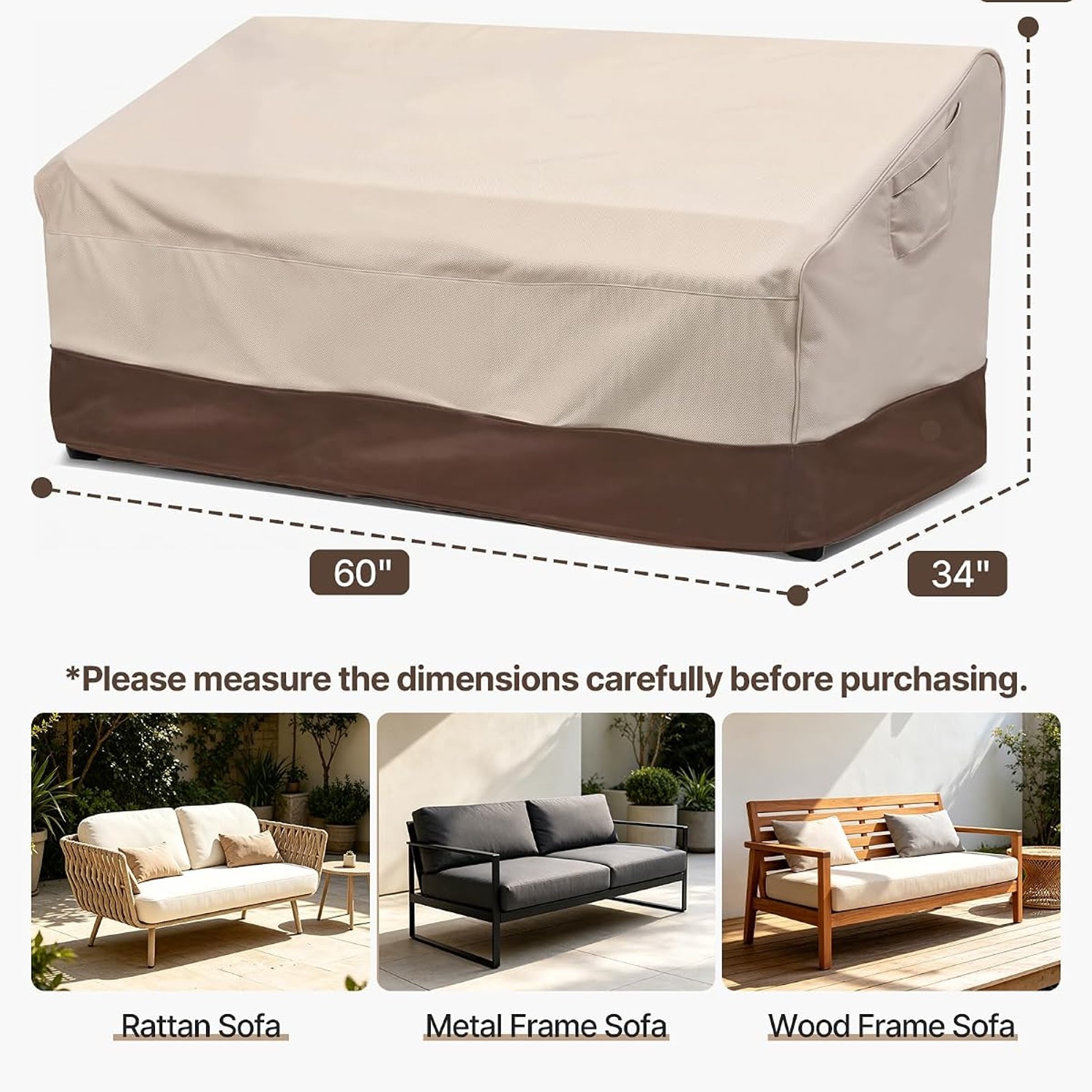
The cover measures around 60 inches wide, 34 inches deep and 30 inches high, and it is designed for furniture up to 58 inches wide, 32.5 inches deep and 31 inches high. Those are maximums, not targets.
Measure your loveseat across the widest point, which is almost always the outside of the arms, not the seat cushions. Then measure front to back at the deepest point, including any cushion that overhangs the frame. Then measure from the ground to the highest point of the back.
Height trips people up most often. A loveseat with a tall or angled backrest can easily clear 31 inches even when the width and depth are fine. If the cover is too short, it rides up and leaves the legs and lower frame exposed, which is exactly where splash-back and pooled water do their damage.
A slightly loose cover is fine. The straps and hem cord take up the extra. A tight cover is a problem, because the strain concentrates at the seams and the hem never seals properly.
Who this suits
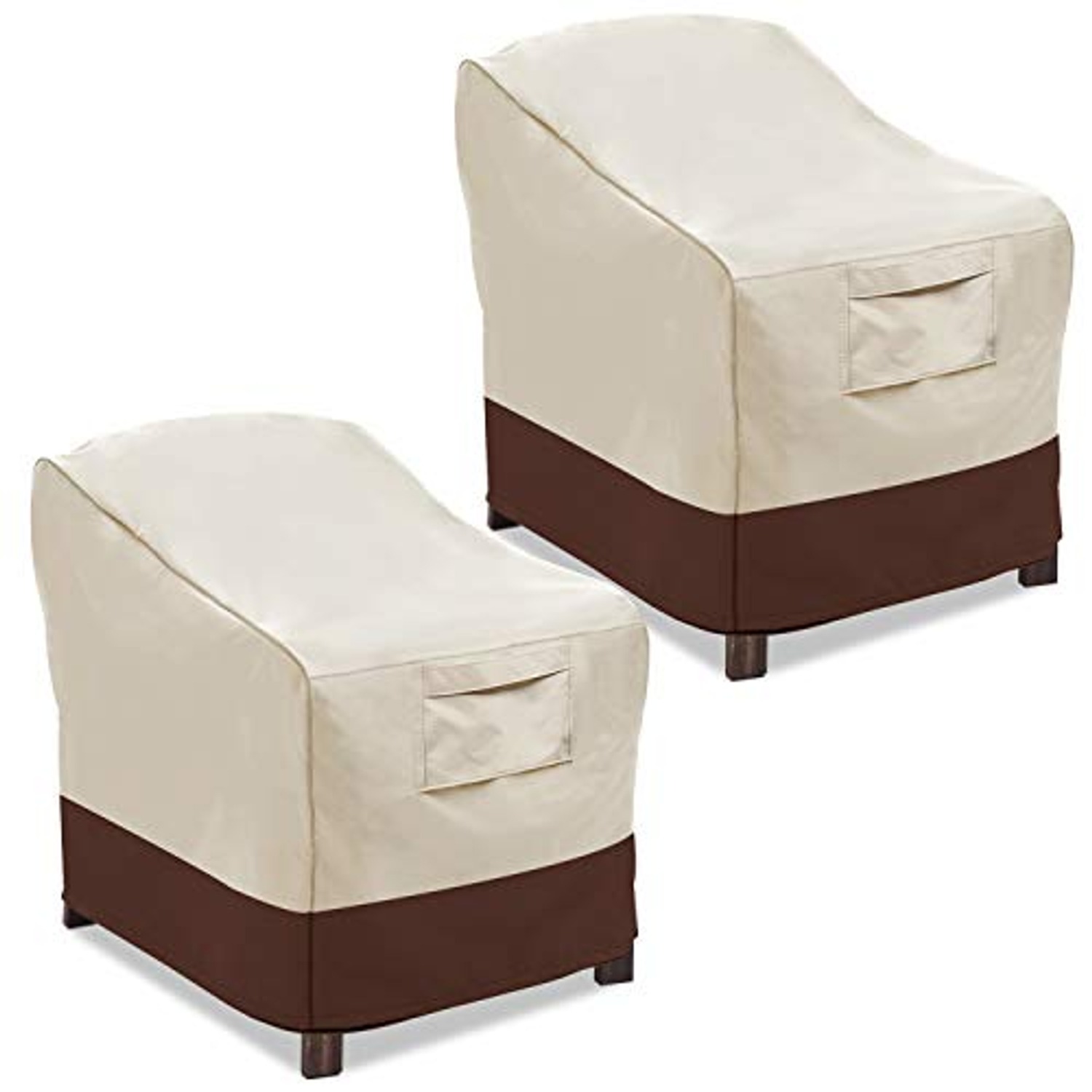
It is made for two-seater outdoor sofas, but the shape works for a lot of things. Garden benches in that size range fit well. So do small couches, some wide double chairs, and two-seat swing seats once the frame is accounted for. If you have a loveseat sitting on a deck or a bench by the back door, this is the size bracket you are in.
It also earns its keep for people who store furniture rather than leave it out. Covering a two-seater in a garage or shed keeps dust, cobwebs and rodent interest off the cushions over winter. The vents matter there too, since still air in a closed space goes stale fast.
If your furniture is a large sectional or a three-plus seater, this is the wrong size. Look for a bigger cover in the same range rather than trying to make this one stretch.
Fitting and looking after it
Fitting is easiest if you start at the back. Drape the cover over the backrest, then walk it forward and down over the arms. The reinforced padded handles give you something solid to pull on, which helps when the fabric is wet and heavy. Once it is on, buckle the straps underneath and pull the hem cord toggles snug.
Always cover dry furniture. Covering a wet seat traps the water in, and no amount of venting fixes that quickly. If it has rained and you need the cover on, towel the cushions off first or bring them inside.
Cleaning is simple. Wipe with a damp cloth for light grime, or hose the whole thing down if it has had a rough season. Let it dry in the sun, then refit or fold. Skip bleach, solvents and stiff brushes, since all three chew through the water-resistant coating.
Through the year, knock leaves and standing water off the top every few weeks. Water that pools in a dip adds weight, stretches the fabric and eventually finds a way in. Thirty seconds with a broom handle prevents it.
For off-season storage, make sure it is bone dry, shake out the debris, and fold it loosely into a dry box or bag. Storing it damp is the single most common way people ruin an otherwise good cover.
The short version
If you own outdoor furniture and you want to still like how it looks in three years, cover it. Look for a heavy fabric (600D Oxford is a good benchmark), taped interior seams, a proper anchoring system rather than just an elastic edge, and vents.
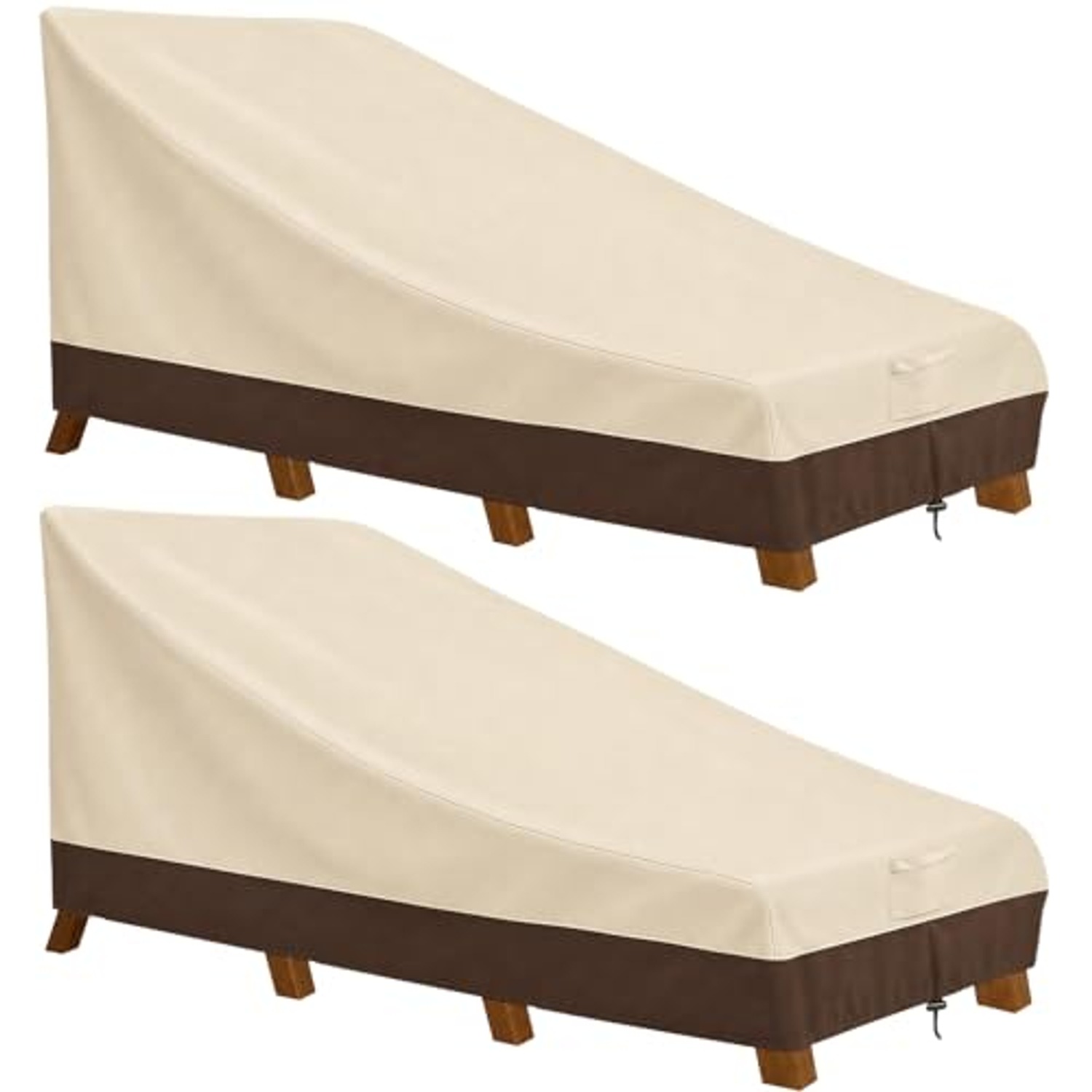
This cover has all four, fits two-seaters up to 58 by 32.5 by 31 inches, and comes in a neutral beige and brown that does not fight with your garden. Measure your furniture properly, fit it over dry cushions, hose it off a few times a year, and it will quietly do its job while you forget it is there.