
The complete guide
How to Choose a V Shaped Sectional Cover That Actually Stays On
The problem with leaving a sectional uncovered
Outdoor furniture is sold on a sunny-day fantasy. The reality is that your lounge spends maybe forty hours a year being sat on and the rest of the time sitting outside taking whatever the sky sends down.
Rain is the obvious one. Cushions soak it up, hold it, and then grow mildew in the warm spell that follows. But sun does more damage over time. UV breaks down the fibers in fabric and the finish on timber, and it does it quietly, so you only notice when the cushion that was charcoal two summers ago is now a patchy gray.
Then there is everything else. Leaves, pollen, bird mess, tree sap, dust blown off a dry garden bed. None of it ruins furniture on its own, but it all adds up to a lounge you have to clean before you can use it. That friction is what stops people using their patio.
A cover solves all of it at once, as long as it fits and as long as it stays put.
Why V and curved shapes are the hard ones
Straight three-seaters are easy. Every brand makes a rectangular cover and most of them are fine.
Corner and V shaped lounges are where things go wrong. The furniture has two arms meeting at an angle, which means a rectangular cover either leaves a corner exposed or drapes so loosely over the join that water pools in the slack. People end up buying two covers and overlapping them, and the overlap is exactly where rain finds its way through.
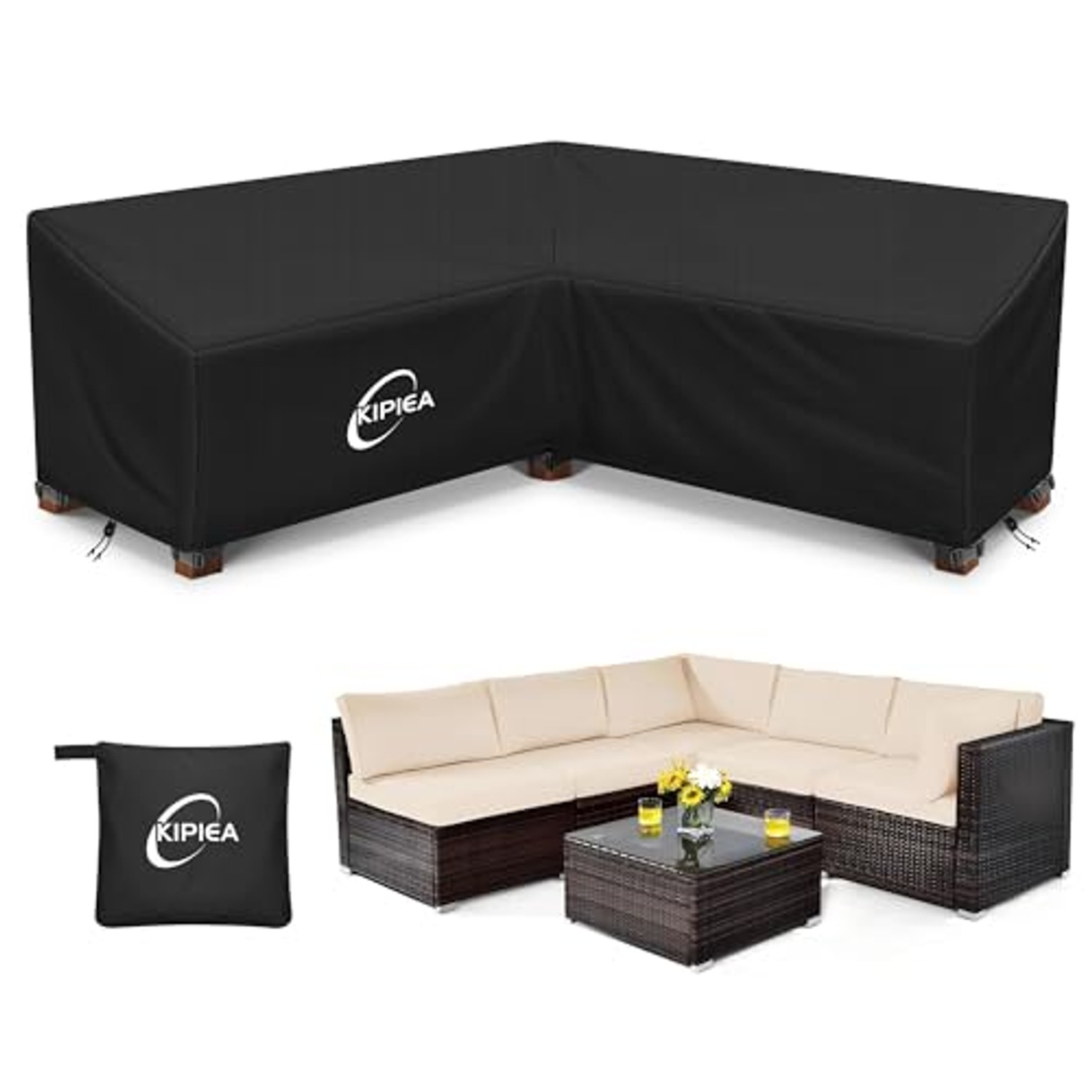
A purpose-made v shaped sectional cover is cut to follow that footprint as one piece. There is no seam sitting over the most vulnerable part of the set, and no gap at the corner where the two halves of a makeshift solution fail to meet.
What the fabric spec actually tells you
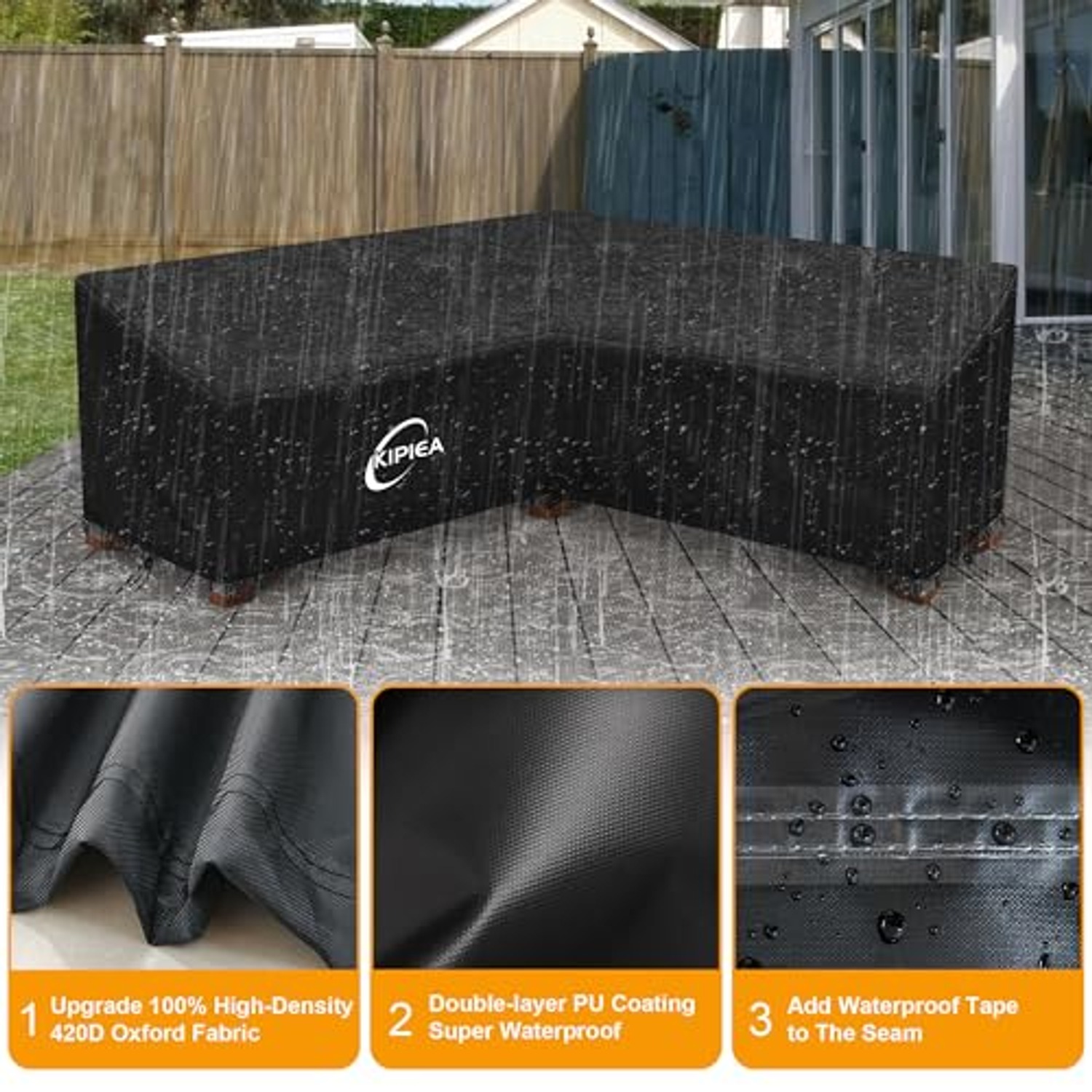
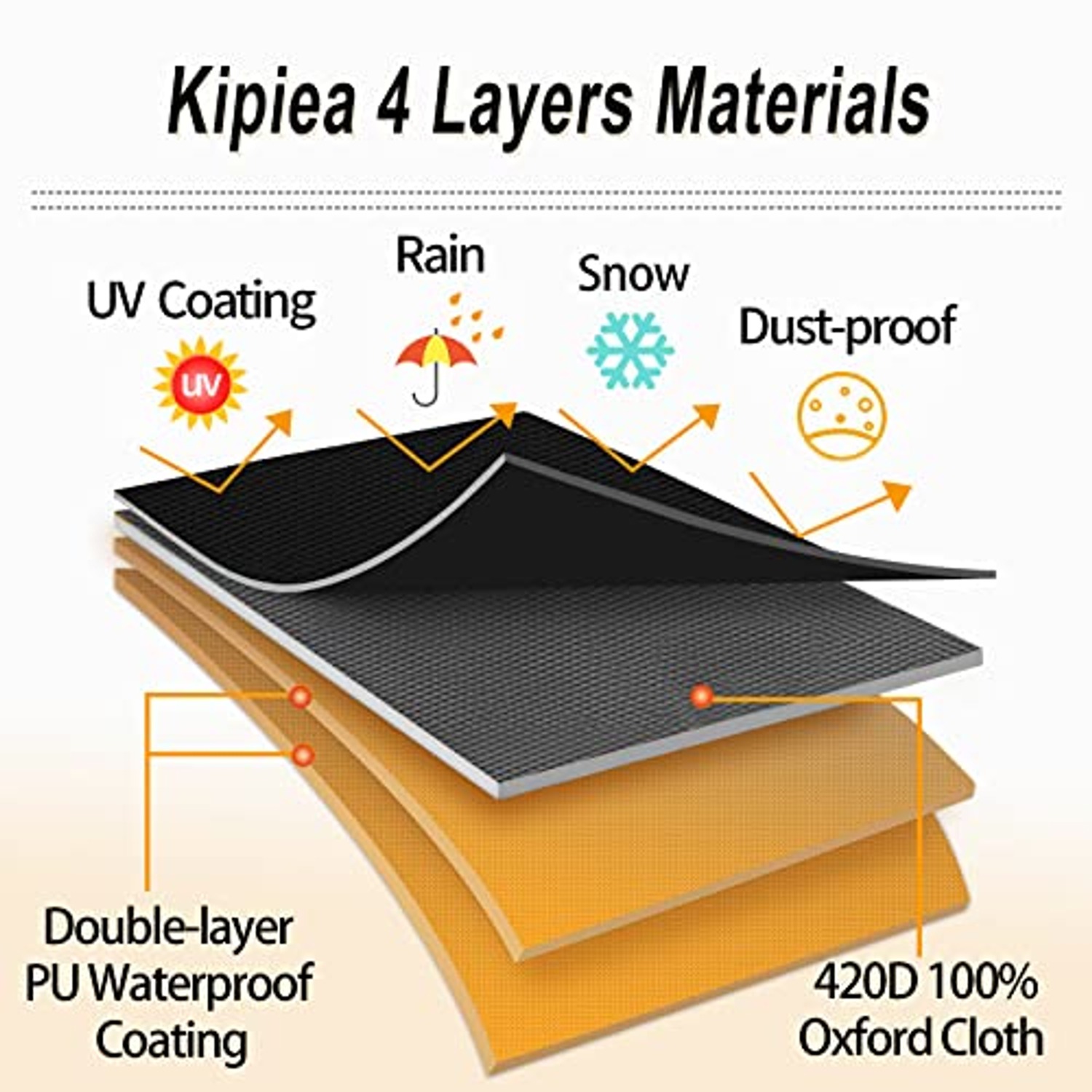
This cover is 100% 420D heavy-duty Oxford fabric. The D is denier, which describes how thick the individual yarns are. Low-denier covers, the ones around 180D or 210D, feel like a cheap poncho and tear when a branch catches them. 420D has real substance without being so stiff that you cannot fold it.
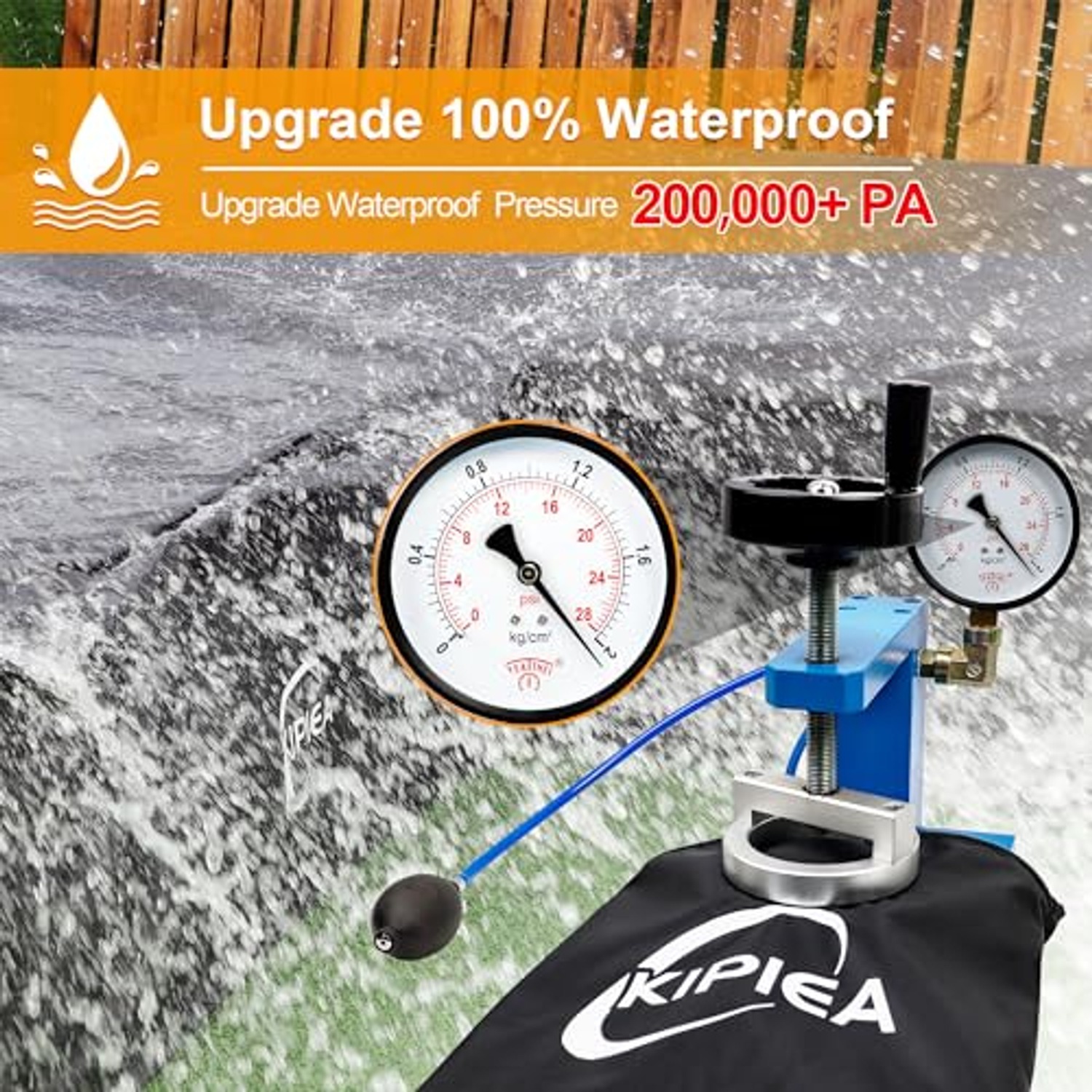
On top of that there is a double-layer PU waterproof coating. The coating is what makes the fabric waterproof rather than merely water resistant. Oxford weave on its own would let water through under pressure.
The seams are taped. This is worth pausing on, because stitching punches holes through the fabric, and every hole is a potential leak. Taped seams seal over the stitch line. A cover with a brilliant fabric and untaped seams will still drip onto your cushions, and plenty of them are sold that way.
The fabric also carries an anti-UV coating, which is what keeps the black from going chalky and the material from becoming brittle after a hard summer.
Fit and measurement
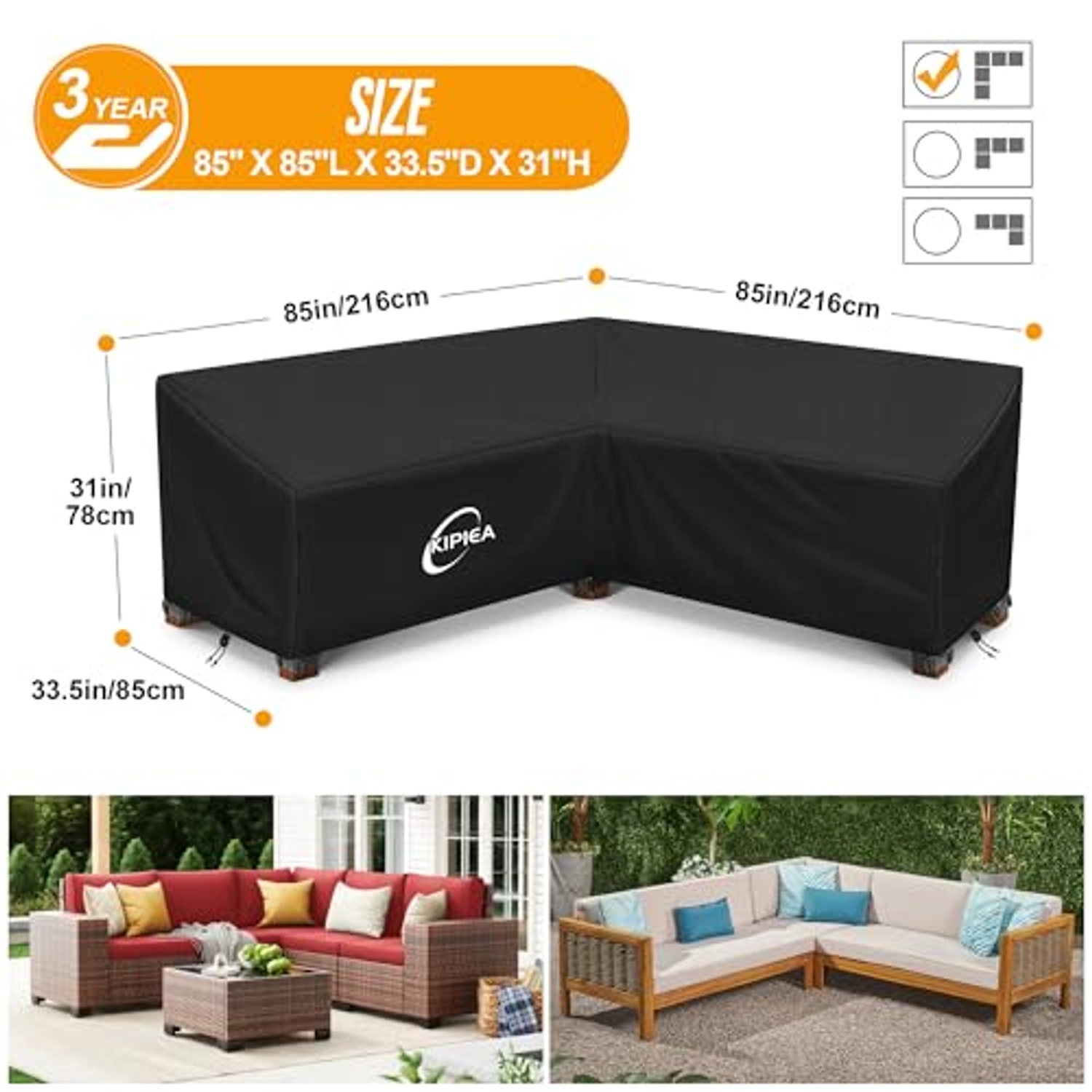
The listed dimensions are 85 inches long by 85 inches wide by 31 inches high, with the model number 216x216x85x78cm reflecting the same figures in centimeters.
Before you buy anything, measure your own lounge. Run a tape along the outside edge of each arm of the V, from the outer corner to the far tip. Then measure the overall height at the tallest point, which is usually the top of the back cushions.
Two rules of thumb. First, slightly too big beats slightly too small every single time, because drawstrings can take up slack but no amount of pulling will make a short cover reach. Second, measure with the cushions on, since that is how the furniture will sit when it is covered.
If your numbers are close to the listed dimensions, you are in good shape. If they are well over, a different size is the answer.
Wind is the real test
Waterproofing gets all the attention in product descriptions, but the thing that actually destroys covers is wind. A loose cover acts like a sail. It lifts, it snaps, it works the seams until something gives, and eventually a strong enough gust takes the whole thing over the fence.
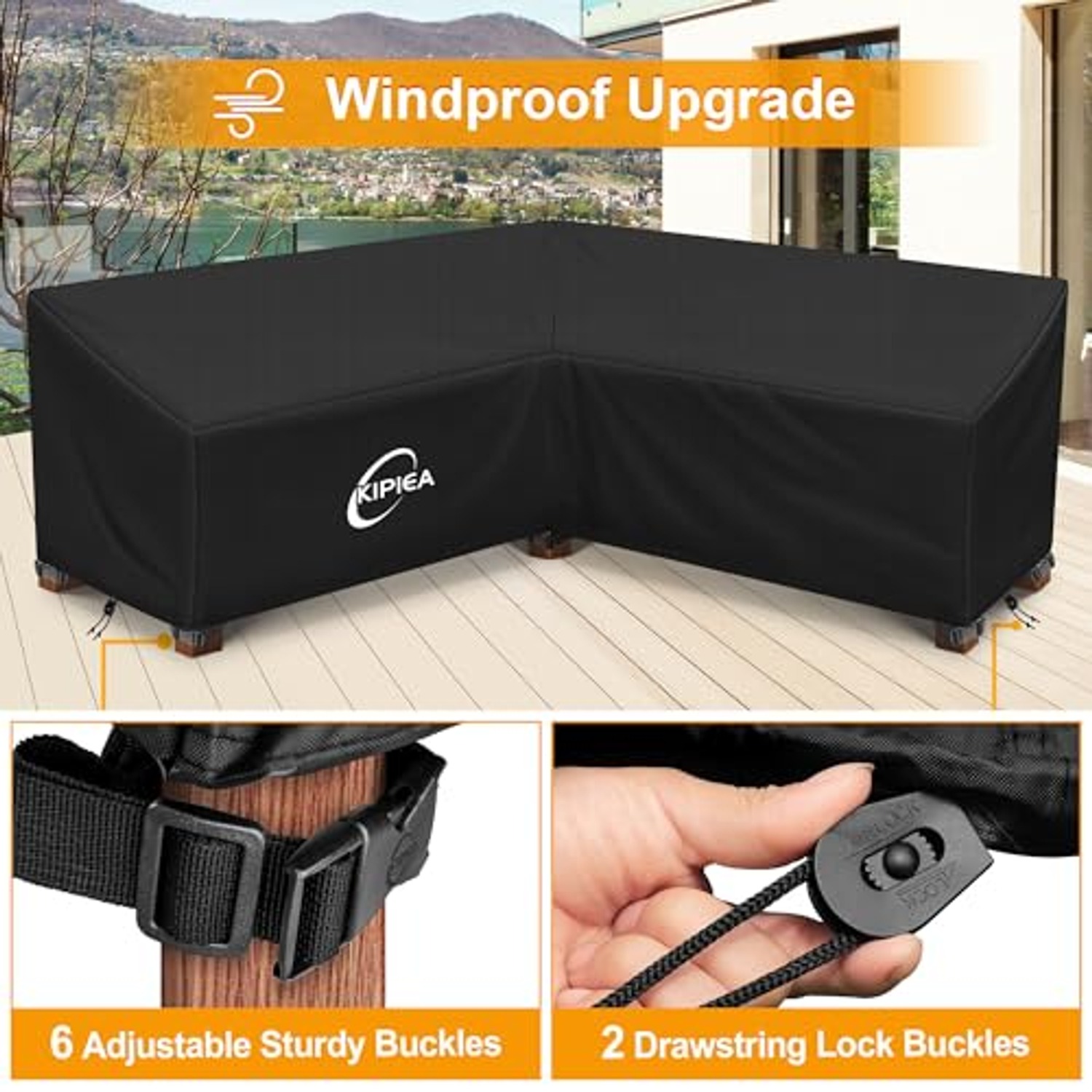
This cover handles it with six windproof buckles and two thick adjustable drawstrings. The drawstrings run through the hem, and reinforced sliding buckles let you lock them tight once they are cinched. The additional buckles clip underneath so the cover is held down at multiple points rather than relying on weight alone.
Fitting it properly takes about a minute. Drop it over the set and square it up, pull both drawstrings in until the hem sits under the lip of the frame, lock the sliders, then work around clipping the buckles. Do not skip the buckles because the drawstrings feel tight enough. They are doing different jobs.
Stop water from pooling
Even a perfectly waterproof cover will sag if there is a wide flat area in the middle with nothing underneath. Water collects in that dip, the weight stretches the fabric, and the dip deepens. Given enough time and rain, you end up with a small pond on your patio furniture.
The fix is simple. Put something under the center to create a high point so water runs off to the edges. An upturned bucket, a plant pot, or a purpose-made cover support pole all work. You only need a few inches of lift to change the drainage completely.
Check it after the first real downpour. If the cover is shedding water cleanly, you have it right.
Living with it day to day
Cleaning takes almost no effort. The PU coating means dirt sits on the surface instead of soaking in, so a hose rinse handles most of it. For anything stubborn, use a damp cloth with a little mild soap and then rinse. Let it dry before you fold.
Avoid the washing machine, the dryer, bleach and the iron. All four will damage the coating that makes the cover work, and once that layer is compromised you are left with a fabric sheet.
Clear debris off the top every so often. A pile of wet leaves holds moisture against the fabric and blocks drainage, which is the one situation where a good cover starts to struggle.
When summer comes and the lounge goes back into daily use, fold the cover dry and put it in the storage bag it came with. A damp cover shoved in a shed corner comes out smelling bad and stays that way.
Who this suits
If you have a curved or corner outdoor sectional sitting within roughly 85 by 85 inches and under 31 inches tall, this is a straightforward fit. It is aimed at people who want their furniture to still look decent in three years, not just at the end of this season.
It also suits anyone in a windy spot. Coastal houses, exposed decks, anywhere a cover without proper tie-downs would be a short-term investment. The buckle and drawstring setup is the main reason to pick this over a basic throw-over sheet.
At 1.55 kg it is easy enough to manage alone, so covering up before rain is not a chore you put off.
The short version
A curved sectional cover only works if it fits the shape, keeps water out at the seams, and holds on when the wind picks up. This one addresses all three with 420D Oxford fabric, a double-layer PU coating with taped seams, and six buckles plus two adjustable drawstrings.
Measure your lounge first and compare it to 85 by 85 by 31 inches. Prop the center so water drains. Rinse it occasionally, dry it before folding, and store it in the bag over the warm months.
Do those few things and your outdoor furniture stays ready to use rather than needing a clean every time you want to sit down.