
The complete guide
How to Choose a Winter Patio Furniture Cover That Actually Lasts
The problem with leaving furniture out
Outdoor furniture rarely fails all at once. It goes slowly. A chip in the powder coating lets water sit on bare metal, and by spring there is a rust bloom around the leg. Timber greys and lifts along the grain. Rattan that has been soaked and dried a dozen times gets brittle and starts to split at the weave. Glass table tops get a hard mineral film from rain that dries on them over and over.
None of that happens in a week. It happens across a few winters while the set sits there looking like it is coping. Then one day a chair leg goes soft, or the table top is permanently marked, and you are shopping for a new set.
A cover is the cheapest piece of equipment in the whole garden, measured against what it protects. The question is not whether to use one. It is which one is worth buying, because the market is full of thin plastic sheets that split the first time it blows hard.
What makes a cover work
Three things decide whether a cover does its job: the fabric, the seams, and how it is held down.
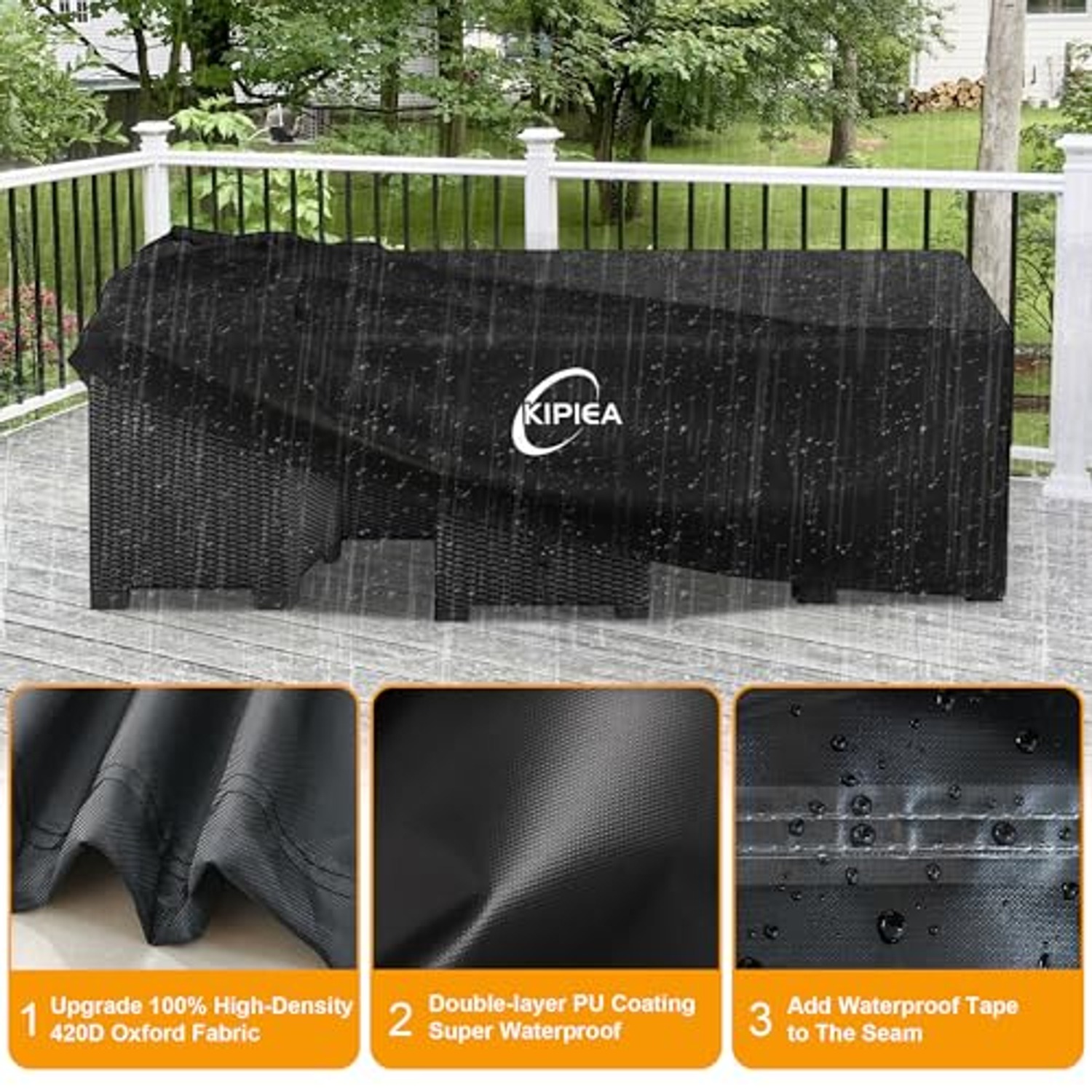
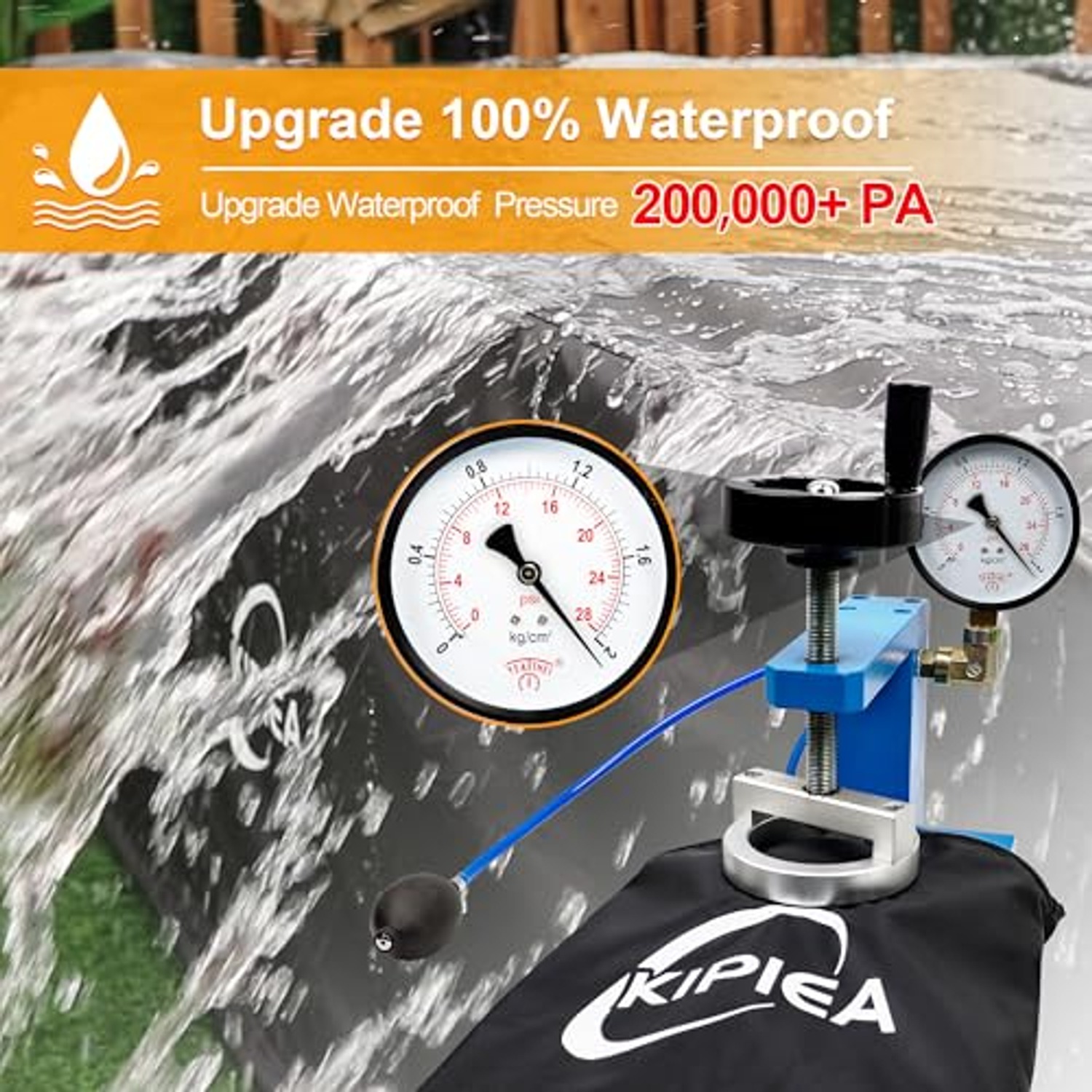
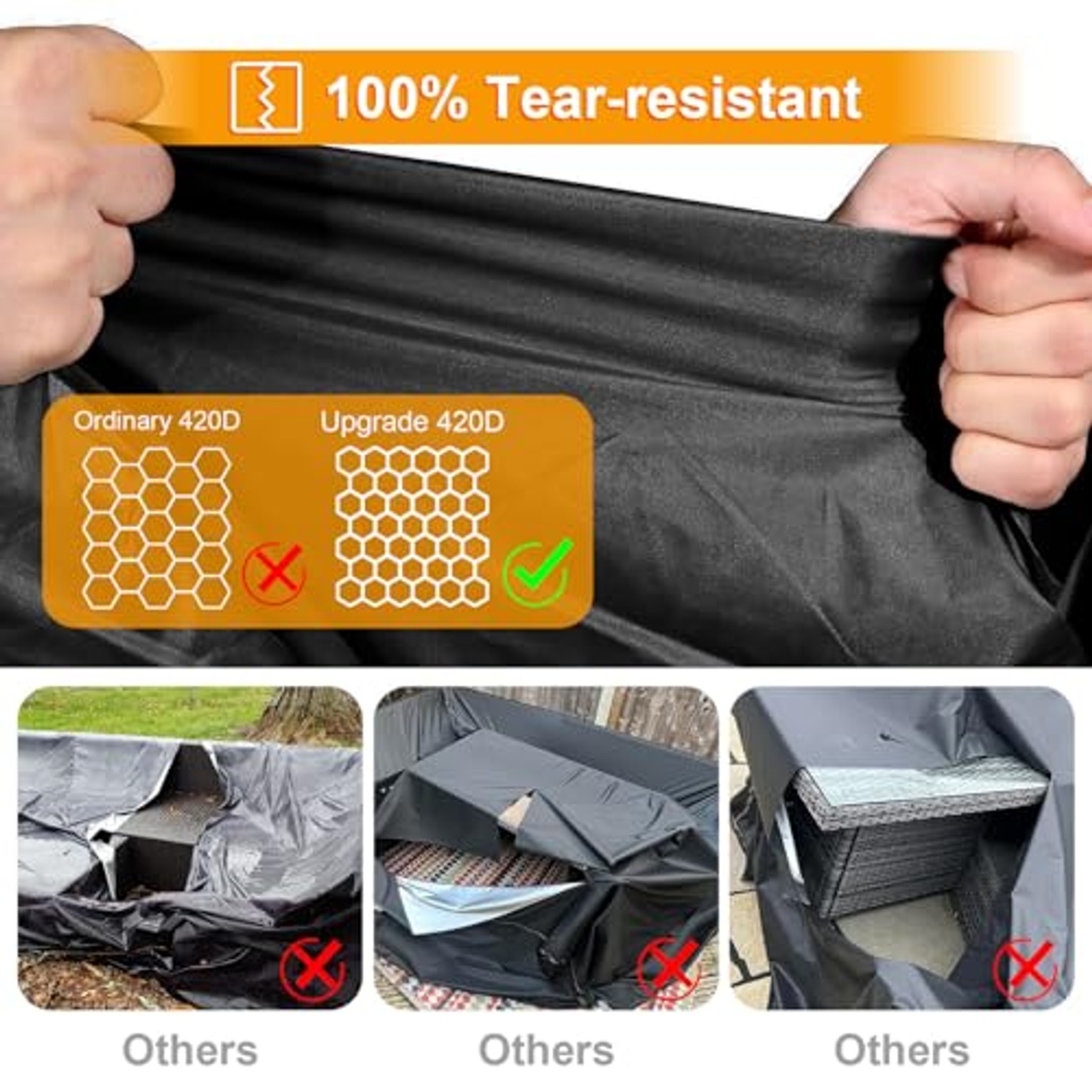
Fabric. The common measure is denier, written as a number followed by D. It describes the thickness of the yarn in the weave. Budget covers are often 210D. This one is 420D Oxford, listed at 128 GSM, which is a noticeably heavier cloth. Thicker yarn resists tearing when a branch drops on it or a chair corner pushes against it from underneath, and it does not go papery after a season in the sun. On top of the weave sits a double-layer PU waterproof coating, which is the part that actually sheds water.
Seams. This is where most covers quietly fail. Every stitch is a hole, and a line of stitching is a line of holes. A cover can have perfect fabric and still drip onto your table all night because the seams were never sealed. This cover uses waterproof tape at the seams, which closes that path.
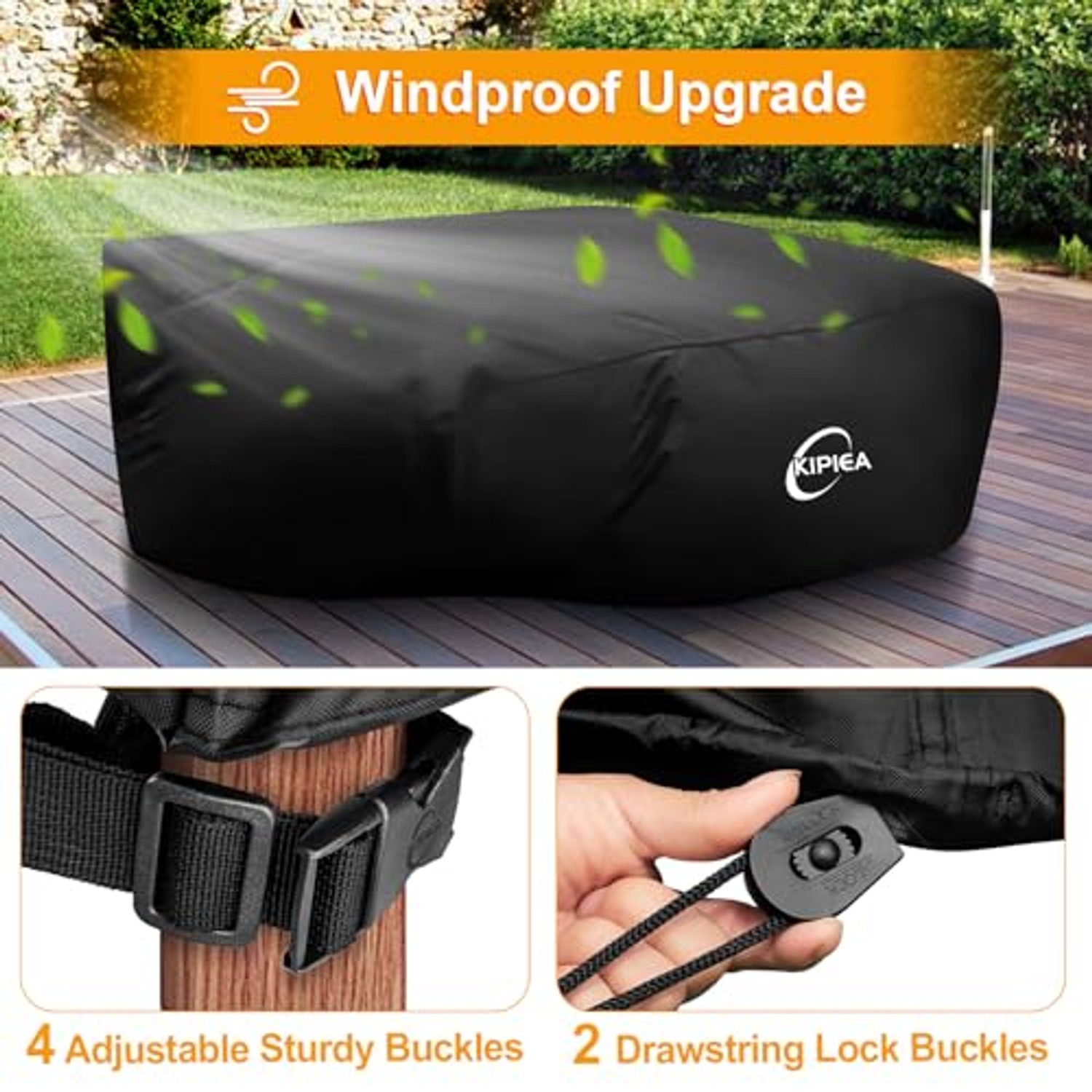
Hold-down. Wind is relentless and it works on the edges. A loose cover lifts, flaps, and either tears at a corner or ends up in the neighbor's garden. Here you get four sturdy windproof buckles and two adjustable drawstring lock buckles, so you can cinch the hem under the furniture and clip the sides tight. That turns a loose drape into something that grips the shape underneath.
Getting the size right
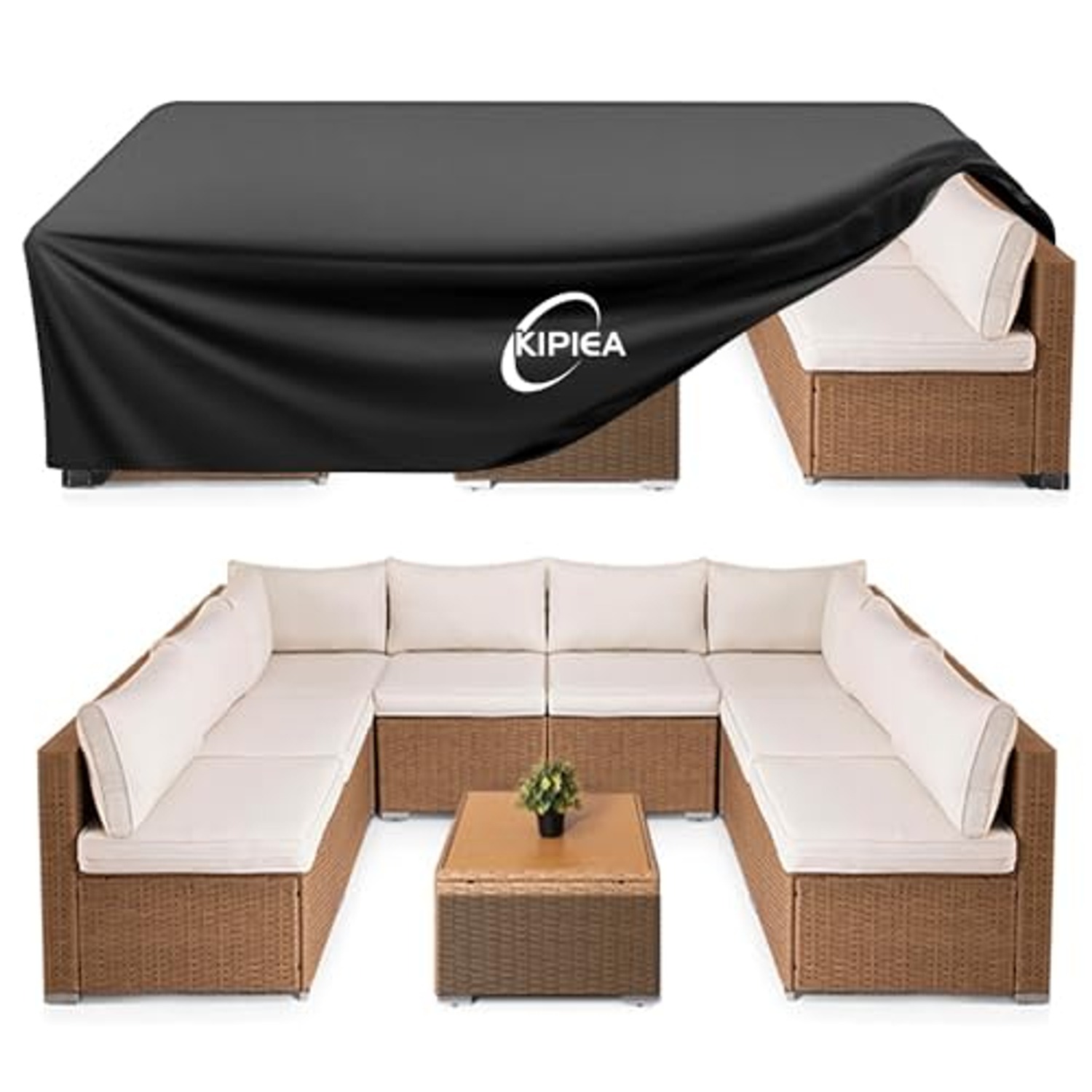
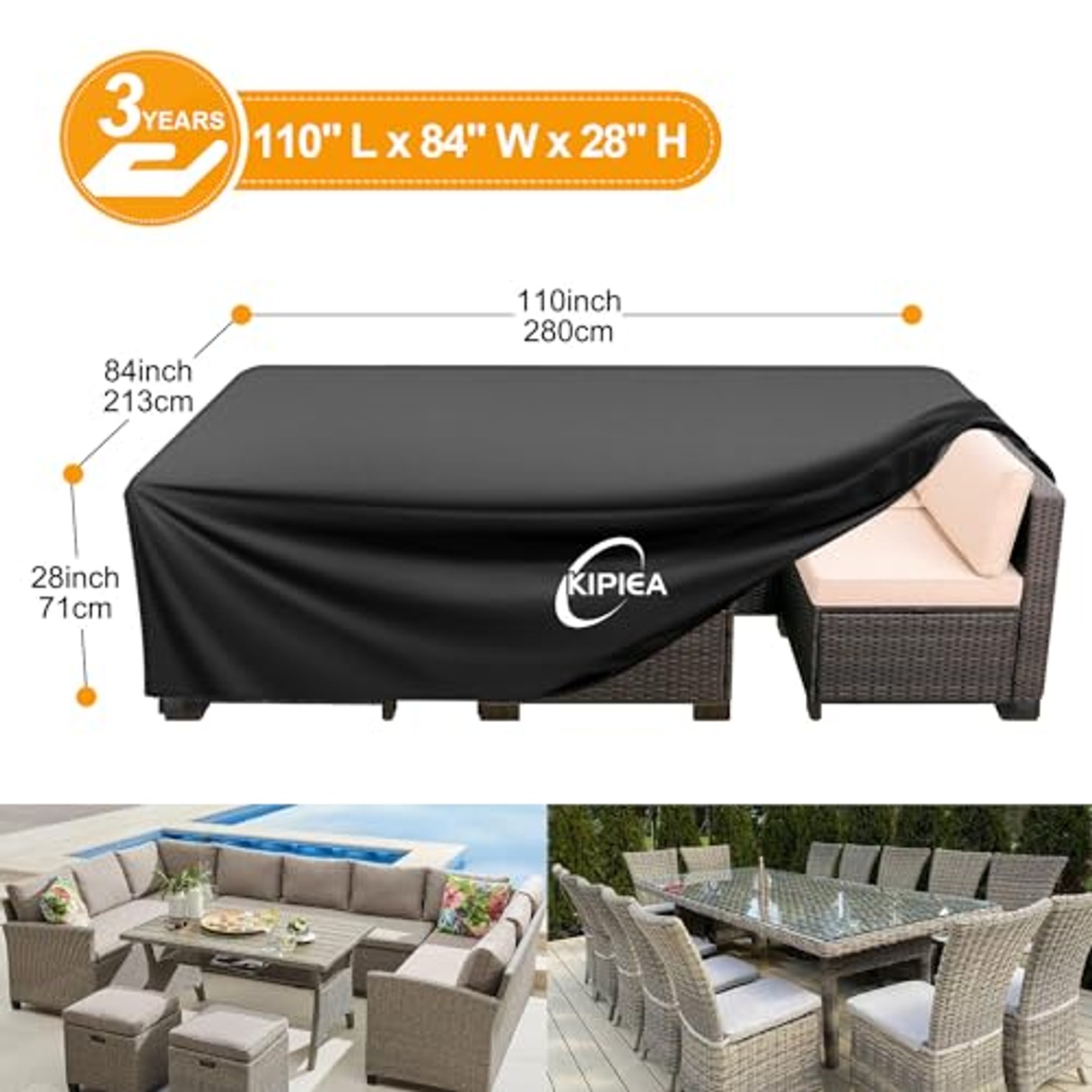
This cover is 110 inches long, 84 inches wide and 28 inches high. In metric that is 279 by 213 by 71 cm. It is shaped for a rectangular dining set, a table with chairs pushed in around it.
Measure before you order, and measure the way the furniture will actually sit. Push the chairs in. Then take the longest side, the widest side, and the height from the ground to the tallest point. If your set is a bit smaller than the cover, that is fine, the drawstrings will take up the slack. If it is bigger in any direction, the cover will not seat properly and the hem will not reach where it needs to.
People most often get the height wrong. A table with high-backed chairs can be taller than you think when the chairs are tucked under at an angle. Measure the highest point, not the table top.
Fitting it so it stays on
Start with the furniture clean and dry. A quick wipe is enough. Covering wet furniture traps moisture against the surface, which is the opposite of what you want.
Push the chairs in tight to make the shape underneath as compact as possible. Drape the cover over, center it by eye, then work down each corner. Pull the drawstrings in beneath the lower edge of the table and lock them off, then clip the side buckles.
One extra step pays for itself. Put something on the table top first, a small upturned bucket or a dome support, so the cover has a high point in the middle. Rain then runs off instead of collecting in a sag. A pool of water is heavy, it stretches the fabric, and over time it will find any weakness. A high point removes the problem entirely.
Who this suits
If you have a rectangular outdoor dining set that lives on a patio, deck or balcony year round, this is squarely aimed at you. It is also a sensible buy if you live somewhere with a long wet season, or a windy one, because the buckle and drawstring setup is the bit that cheap covers skip.
It is a reasonable choice for rattan and wicker owners too. Woven furniture holds water in the weave, and repeated soaking and drying is exactly what makes it brittle. Keeping rain off it is the single most useful thing you can do.
It is less ideal if your table is round or an unusual shape. The footprint might fit, but a rectangular cut will not hug a round set neatly, and loose corners catch wind.
Looking after the cover
Covers are low maintenance but not no maintenance.
Hose it down a few times a year and wipe it with a soft cloth. The coated surface releases dirt easily, so you do not need detergent for normal grime. Skip the pressure washer. A high-pressure jet can drive water through a coating and lift seam tape.
Clear snow off before it piles up. Wet snow is heavy, and the weight pushes down on both the fabric and whatever is underneath. A soft brush is safer than a shovel.
Never put it in a washing machine or a tumble dryer, and keep it away from bleach and irons. Those will all damage the PU coating.
When you take it off for the season, let it dry fully, then fold it into the included storage bag. Damp fabric in a sealed bag grows mildew, and mildew smell is hard to get out. Store it somewhere cool and out of direct sun.
Small habits that double the life
Check the straps after a storm. A buckle that has worked loose means the edge has been flapping, and flapping is what wears fabric.
Lift a corner now and then on mild damp days so air can move underneath. Trapped humidity is a slow problem rather than a dramatic one, but it is still a problem.
If you keep cushions outdoors, bring them in for the worst of winter even with the cover on. A cover keeps rain out. It does not dehumidify.
And watch for anything sharp pressing up from below. A chair corner or a bolt head rubbing against the inside of the cover will eventually wear a hole in it. A folded cloth over the pressure point fixes it for free.
The short version
A good cover is cheap insurance on furniture that cost a lot more. The things to look for are a heavy fabric, sealed seams and a proper way of tying it down. This one covers all three: 420D Oxford at 128 GSM, a double-layer PU waterproof coating, taped seams, a UV-resistant finish, four windproof buckles and two adjustable drawstrings. It fits a rectangular set up to 110 by 84 by 28 inches and packs into its own storage bag.
Measure your set first. Fit it with a high point in the middle so water runs off. Dry it before you store it. Do those three things and the cover will see out several seasons, and so will the furniture underneath it.