
The complete guide
How to Choose a Large Patio Set Cover That Actually Lasts
The problem with uncovered outdoor furniture
Outdoor dining sets rarely die from one dramatic event. They wear out slowly. Rain soaks into timber and raises the grain, then sun dries it and splits it. Metal frames get a rust speck at a weld, and by the third winter that speck is a hole. Rattan goes brittle and starts to shed strands. Cushions do all of this faster, since they hold water like a sponge.
The frustrating part is that almost all of it happens when nobody is using the furniture. You buy a set for the four months a year you eat outside, and it spends the other eight months being slowly ruined by weather. A large patio set cover is the simple fix. It costs a fraction of what the furniture cost and it removes most of the damage.
What a cover like this actually does
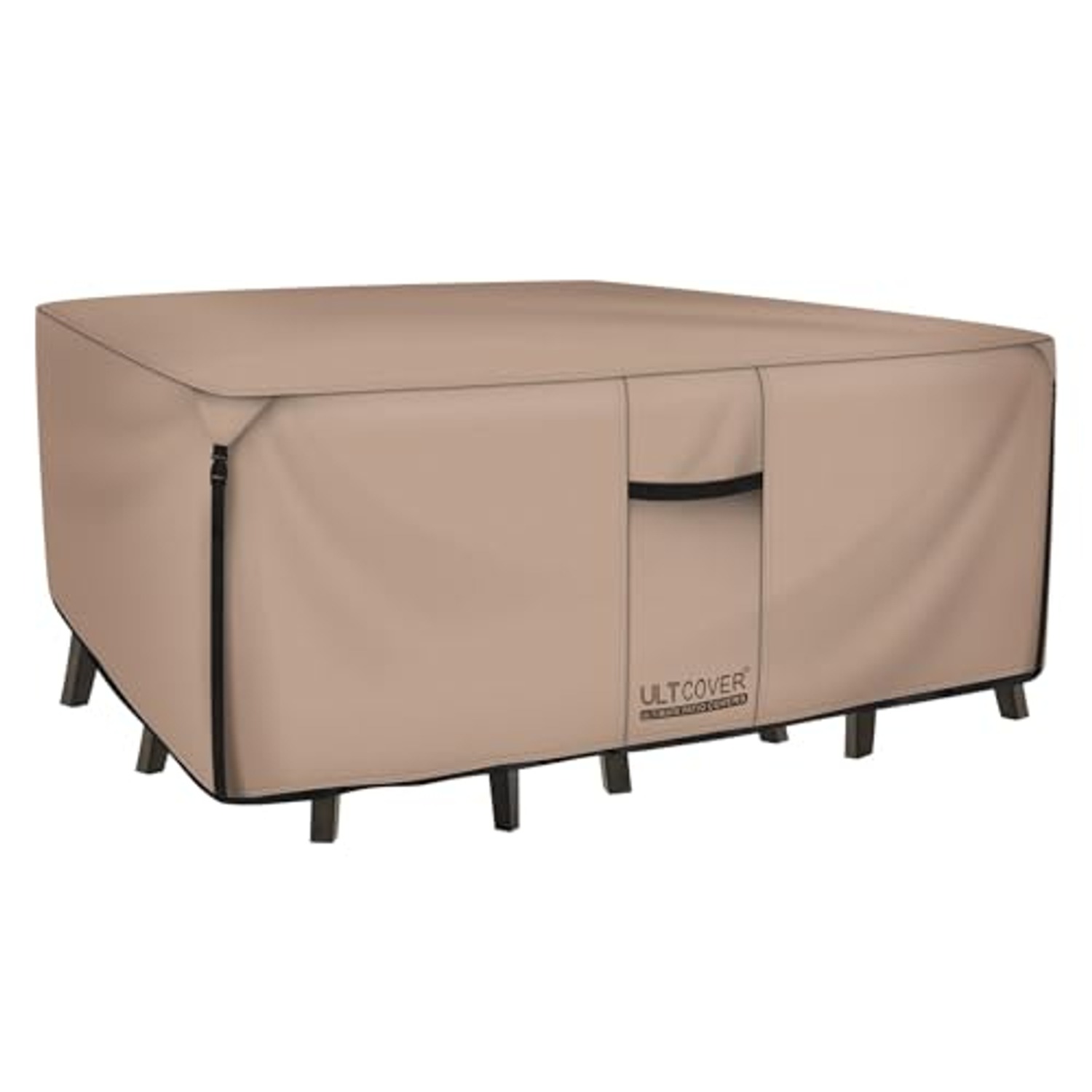
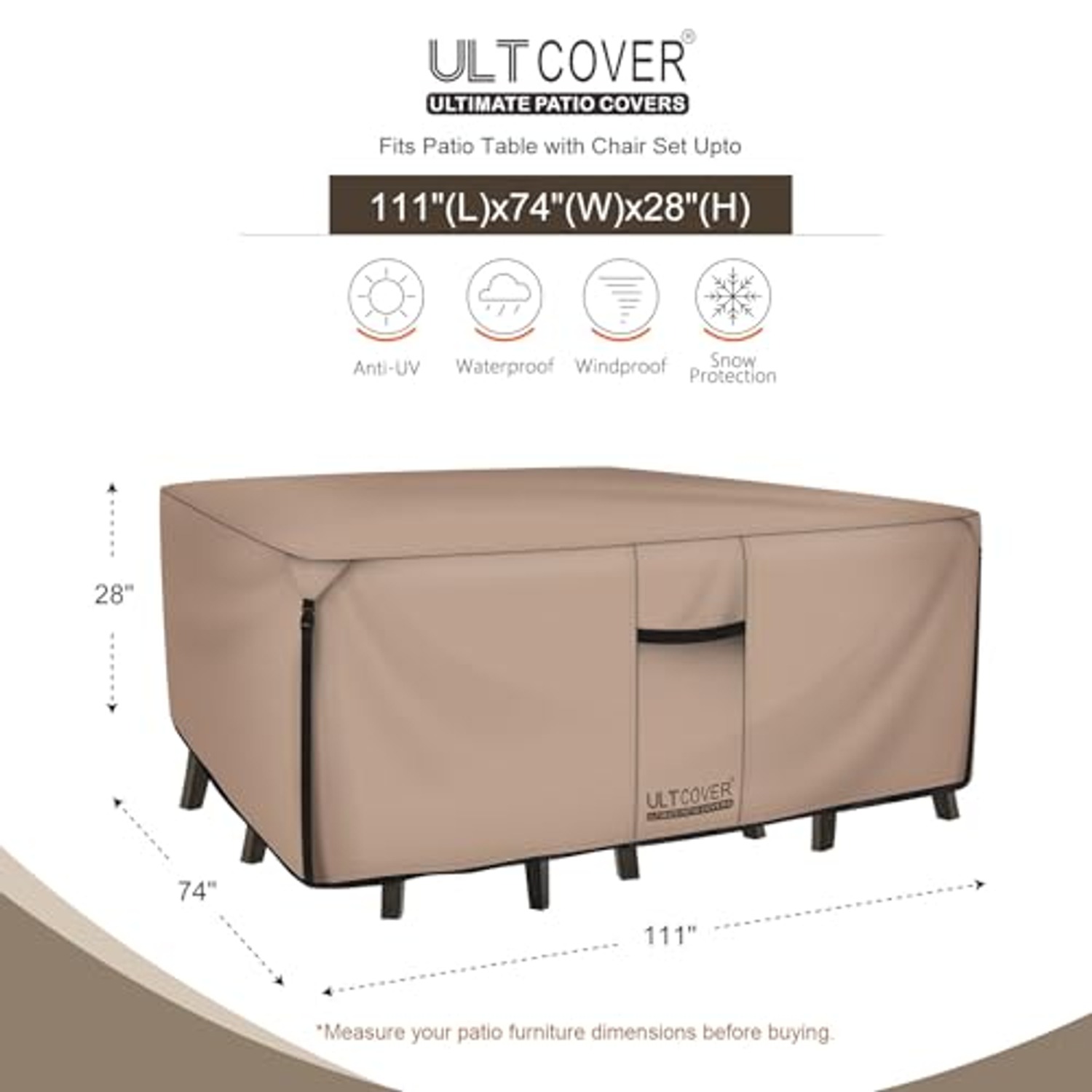
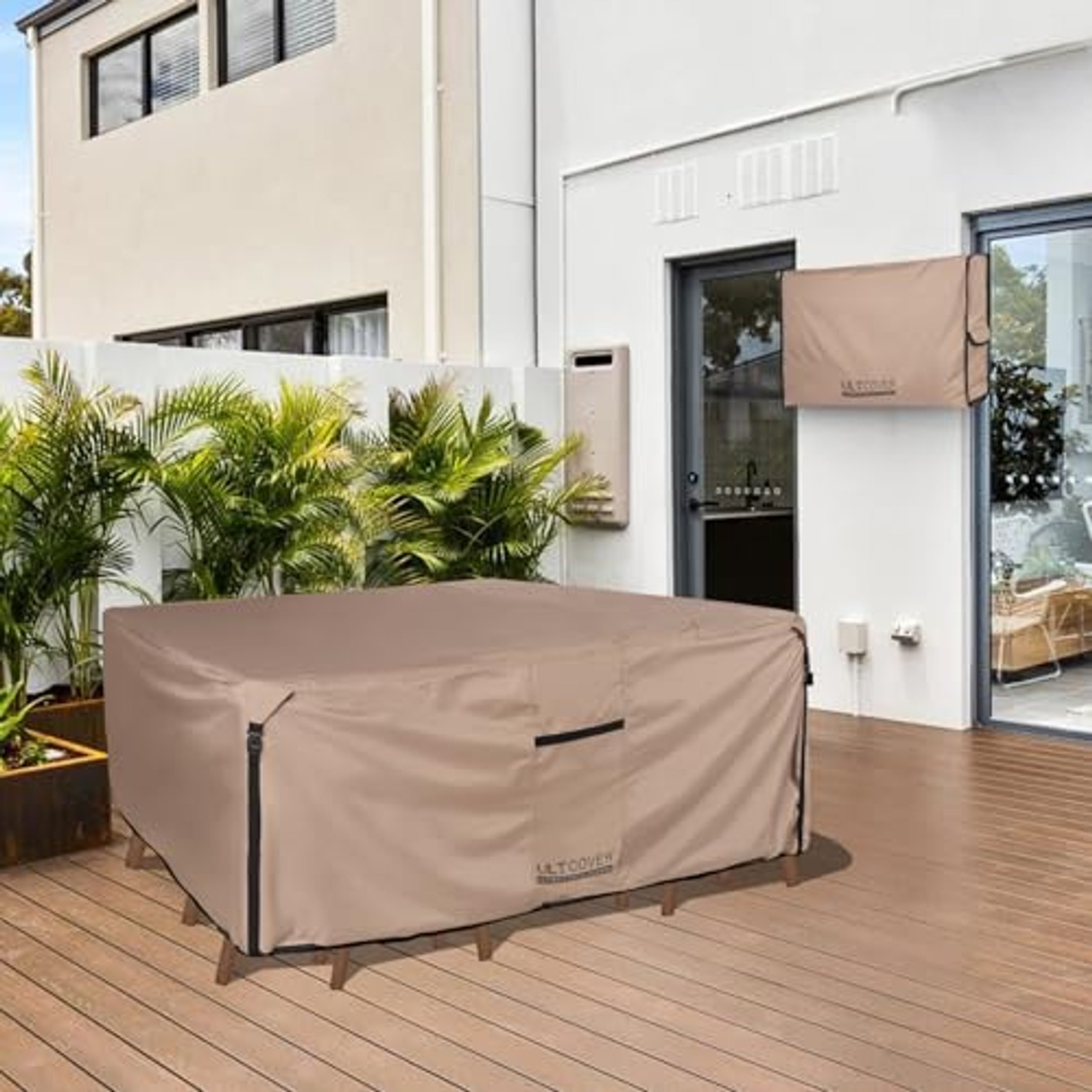
This one is cut at 111 inches wide, 74 inches deep and 28 inches high, which is sized for a rectangular or oval table with six to eight standard chairs. The important word is "set". It is not a table cap. It drops over everything, chairs included, which matters because chairs usually take more sun than the table top does.
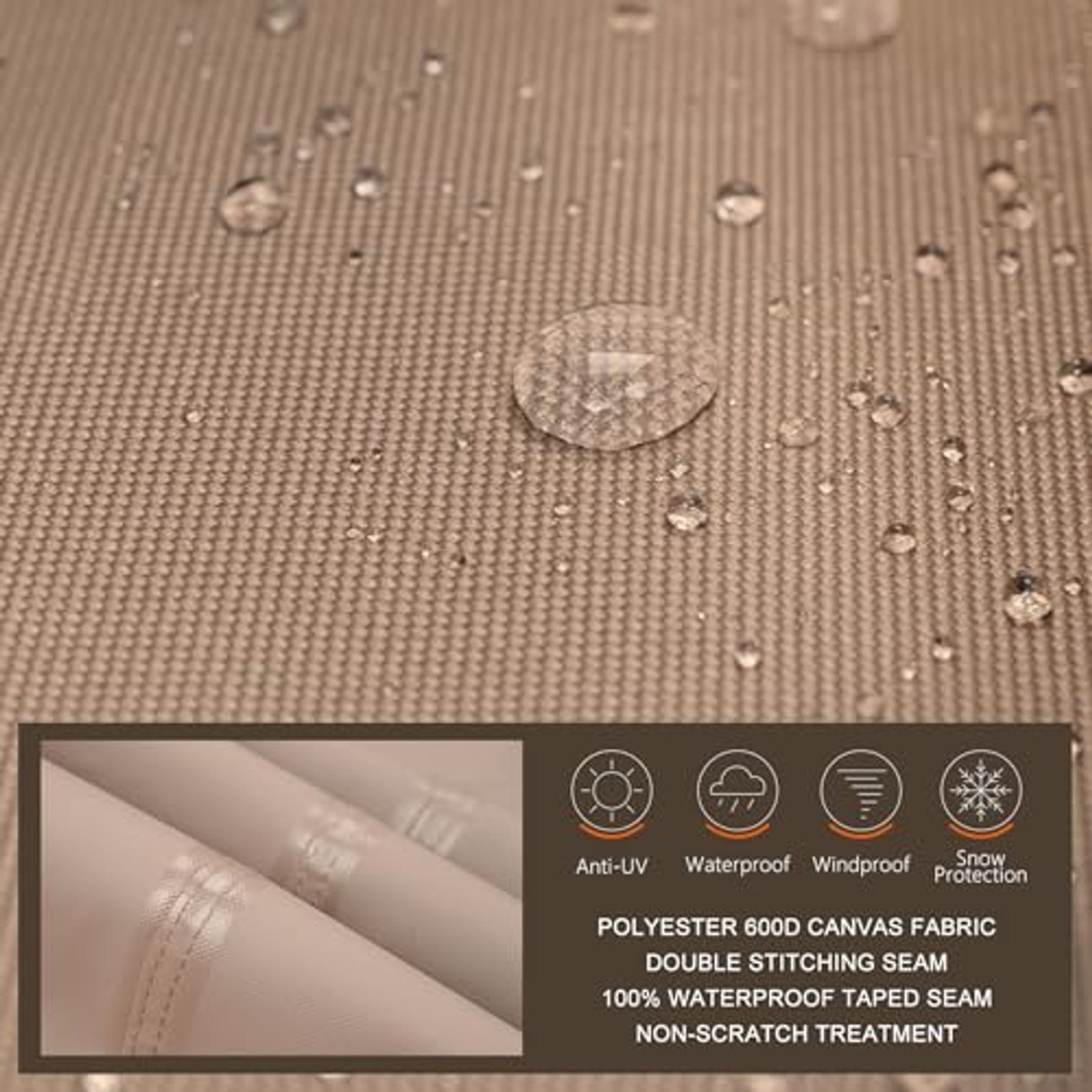
The fabric is listed as 70% polyester and 30% PVC, described as heavy duty 600D polyester canvas with a waterproof backing. The 600D figure refers to the thickness of the yarn used to weave the fabric. Higher numbers mean a heavier, tougher cloth. Thin covers tear at the corners where the table pushes against them, and they go papery in sun after a season. A heavier weave holds up to both.
The waterproof backing is the layer that stops water passing through. Without it, polyester on its own just slows rain down. With it, rain beads and runs off rather than soaking into your table.
Wind is the real test
Most covers that fail do not fail because of water. They fail because of wind. A cover is a big flat surface, and wind gets underneath it, fills it like a parachute and either tears the fabric or drags the whole thing across the garden.
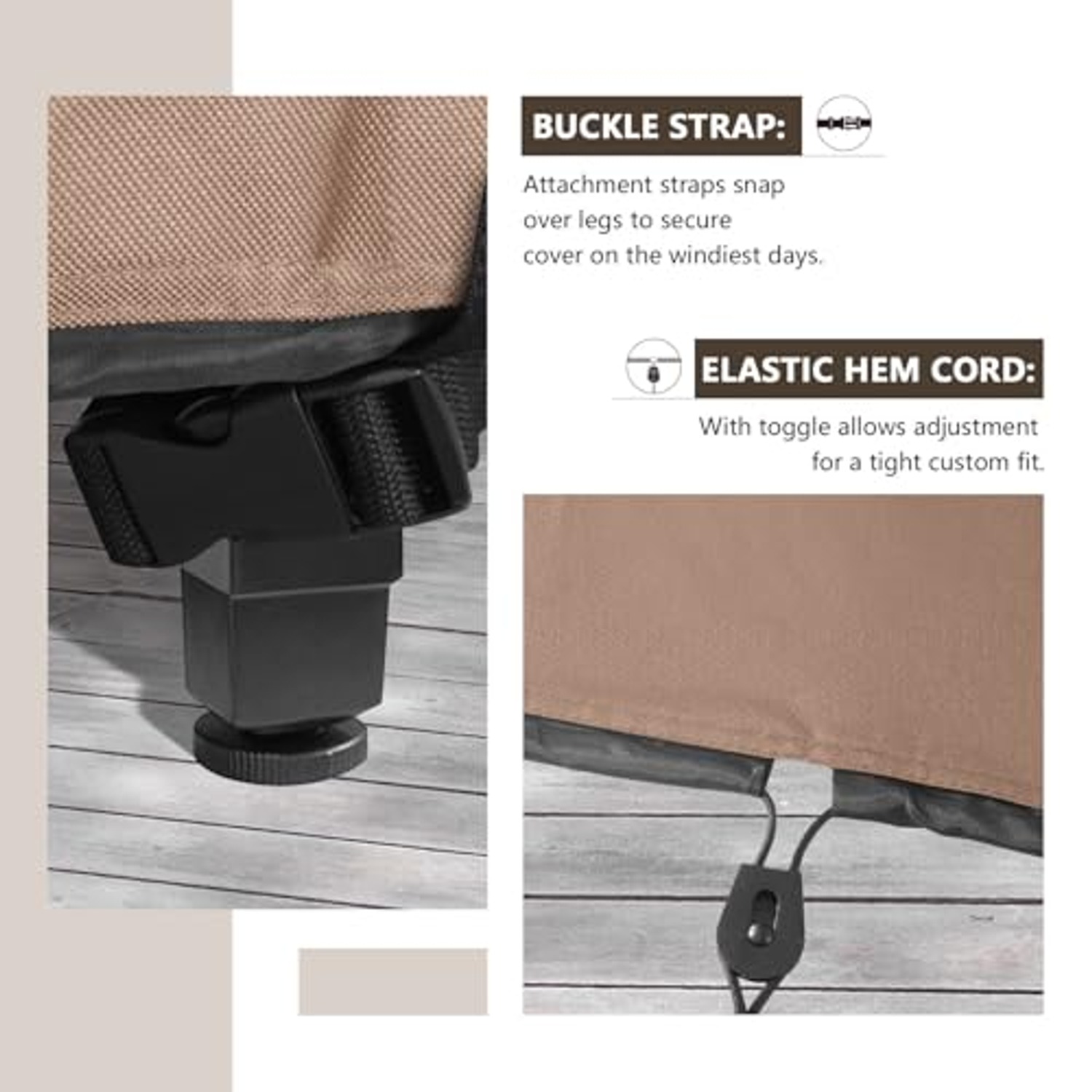
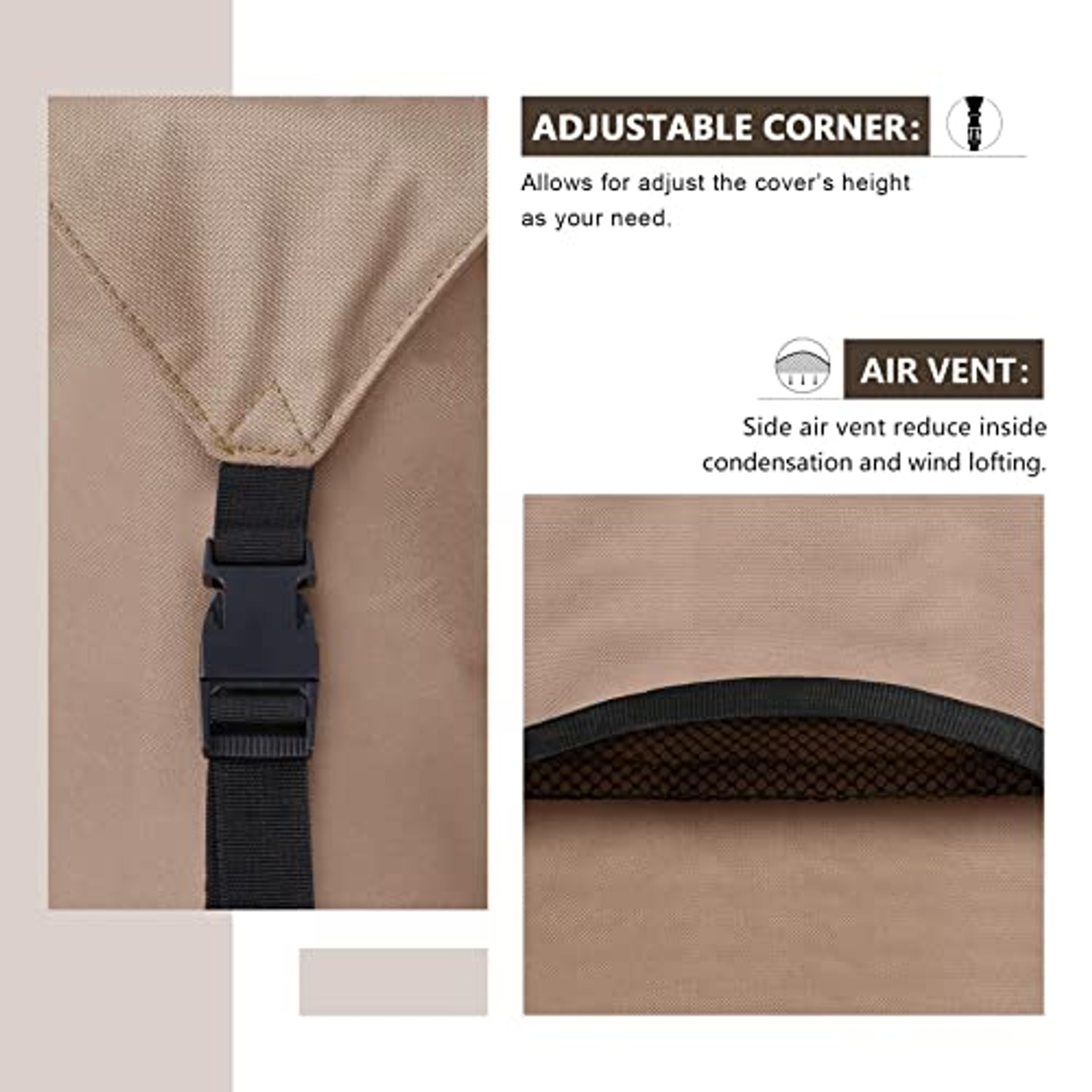
Two features here address that. First, the structured air vents on two sides. They let air pass through rather than pressurising the inside of the cover. Second, plastic clips and heavy-duty elastic draw cords, which pull in the hem and tie around the table legs. The elastic closure takes up slack and the clips give you a positive anchor point.
If you live somewhere exposed, use both properly. Pull the cords tight and clip to the legs rather than leaving the cover resting loose. It takes an extra thirty seconds and it is the difference between a cover that lasts years and one that ends up in your neighbor's hedge.
Getting the size right
This is where most people go wrong, and it is easy to avoid.
Start with the table. Measure its length and its width. Then push all the chairs in as far as they go and measure across the widest point of the whole group, corner to corner if the chairs stick out. That number, not the table number, is what has to fit inside 111 x 74 inches.
Then measure the height, from the ground to the tallest point. On most dining sets that is the back of a chair, not the table. The cover's 28 inch height needs to clear it.
Leave a few inches of clearance in each direction. A cover that is exactly the same size as your set is a fight to fit every single time, and you will stop bothering. A cover that is slightly generous slides on in seconds, and the draw cords take up the extra. A cover that is too small is the one real problem, because the hem will not reach the legs and the anchoring system cannot do its job.
Who this size suits
The 111 x 74 inch footprint is for the bigger family table. Think a six seater with arm chairs, an eight seater bench-and-chair arrangement, or a long oval table that seats the extended family at Christmas. If you have a small bistro table and two chairs, this is far more cover than you need and the loose fabric will catch wind.
It also suits people who want one cover rather than several. Individual chair covers look tidy but they take real effort to put on and take off, and in practice most people give up by August. A single drop-over cover is a ten second job, which means it actually gets used.
Climate and season
If your winters are wet, the waterproof backing is the feature doing the heavy lifting. Pair it with one habit: never cover furniture that is still wet. Trapped moisture with nowhere to go is how mildew starts, vents or no vents.
If your summers are harsh, the UV resistance matters more. Sun is what fades cushions, chalks paint and cracks plastic weave. Covering the set between meals keeps the table cool too, so you are not wiping down a surface hot enough to be uncomfortable.
If you get snow, clear it off rather than letting it pile up. Snow is heavy, and a loaded cover puts strain on both the fabric and the furniture underneath. A soft brush and a couple of minutes does it.
During long wet spells it is worth putting something small in the center of the table under the cover, a cushion or a plant pot saucer, so the fabric slopes and water runs off instead of pooling. Standing water is the one thing that will eventually find its way through any cover.
Looking after the cover itself
Care is simple. It is hand wash only. Brush off leaves and loose dirt, then sponge the fabric with cool water and a mild soap. Rinse properly so no soap residue is left, which can attract dirt. Then let it dry completely before you fold it.
That last step is the one people skip. Folding a damp cover and putting it in a shed is a guaranteed way to find a moldy cover in spring. Hang it over a line or a railing on a dry day until it is properly dry, then fold it loosely.
Do not machine wash it, do not bleach it, do not tumble dry it and do not iron it. All of those damage the waterproof backing, and once that backing is damaged the cover is just a sheet of polyester.
A quick honest note on what is listed
A few details are not given in the supplier record, and we would rather say so than guess. Country of origin is not specified. No warranty term is stated. There is no umbrella hole listed, so a parasol needs to come out before you fit the cover. What is confirmed is the fabric blend, the 600D weight, the waterproof backing, the UV resistance, the vents, the clips and cords, the brown solid color, the 5.28 kg weight and the 111 x 74 x 28 inch dimensions.
The short version
If you have a rectangular or oval dining table that seats six to eight, and it lives outdoors, this is the right class of cover. The fabric is heavy enough to survive real weather rather than one season. The vents and the clip-and-cord system deal with wind, which is what kills most covers. The full drop design protects the chairs as well as the table, which is where the fading usually shows first.
Measure your set with the chairs pushed in, allow a little clearance, and fit it properly with the cords pulled tight. Dry the furniture before you cover it and dry the cover before you fold it. Do those few things and you will get years out of it, and your dining set will still look like something you want to sit at.