
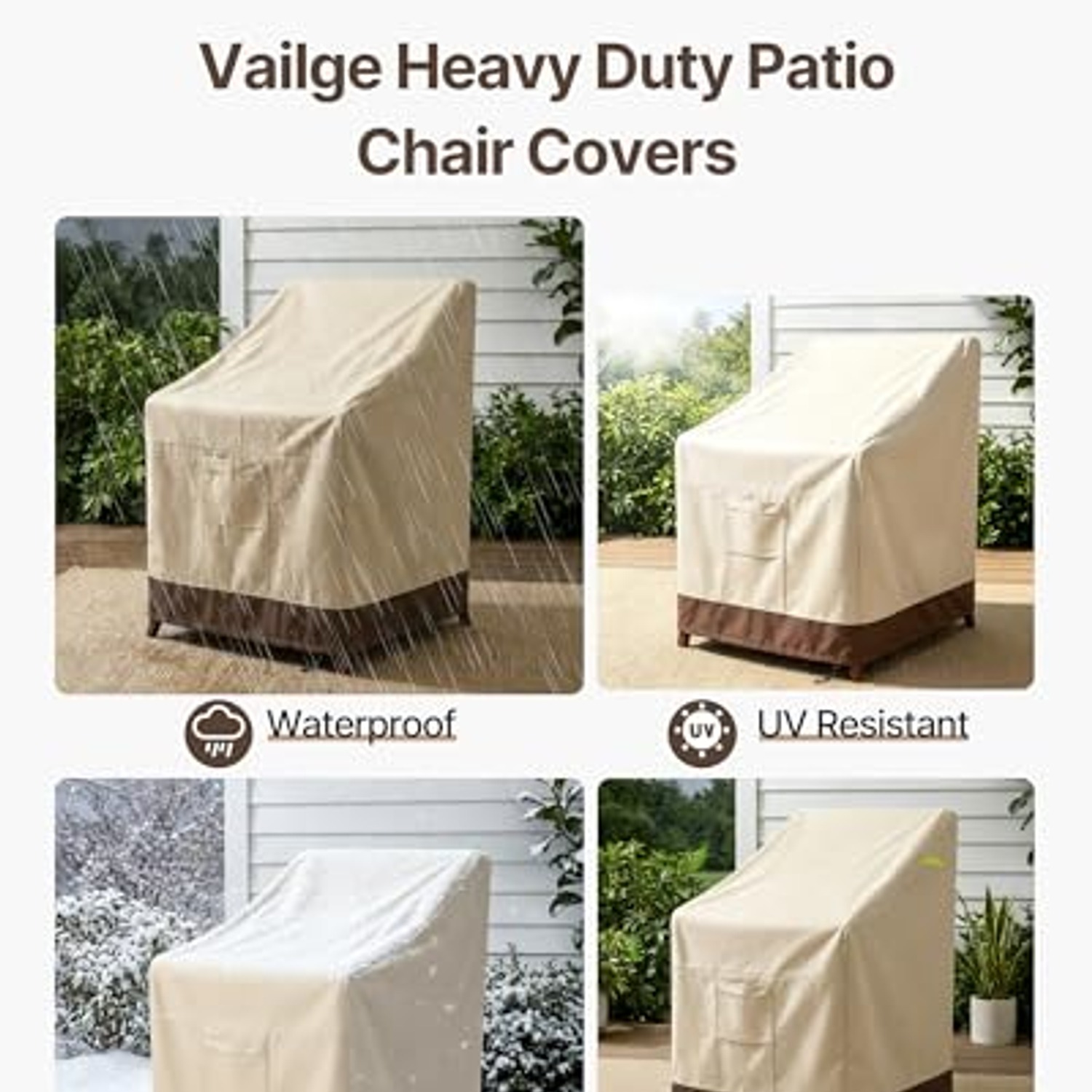
The complete guide
How To Choose A Stackable Patio Chair Cover That Lasts
The problem with leaving chairs out
Outdoor dining chairs rarely die all at once. They go slowly. A season of rain gets into the joints and the screws start to rust. Sun bleaches the color out of the seat straps. Dust and pollen settle into every corner until wiping them down becomes a job you keep putting off. Then one spring you pull the set out, look at it properly, and realize it looks tired.
Stacking is the obvious first move. It saves space, keeps the chairs together, and gets the seats off the wet ground. But a bare stack sitting in the corner of a deck is still fully exposed, and because the chairs are nested, water that lands on the top seat runs down and sits between every layer. In some ways a stack holds damp longer than chairs left apart.
That is the gap a stackable chair cover fills. One piece of fabric, one stack, done in under a minute.
How a stack cover actually works
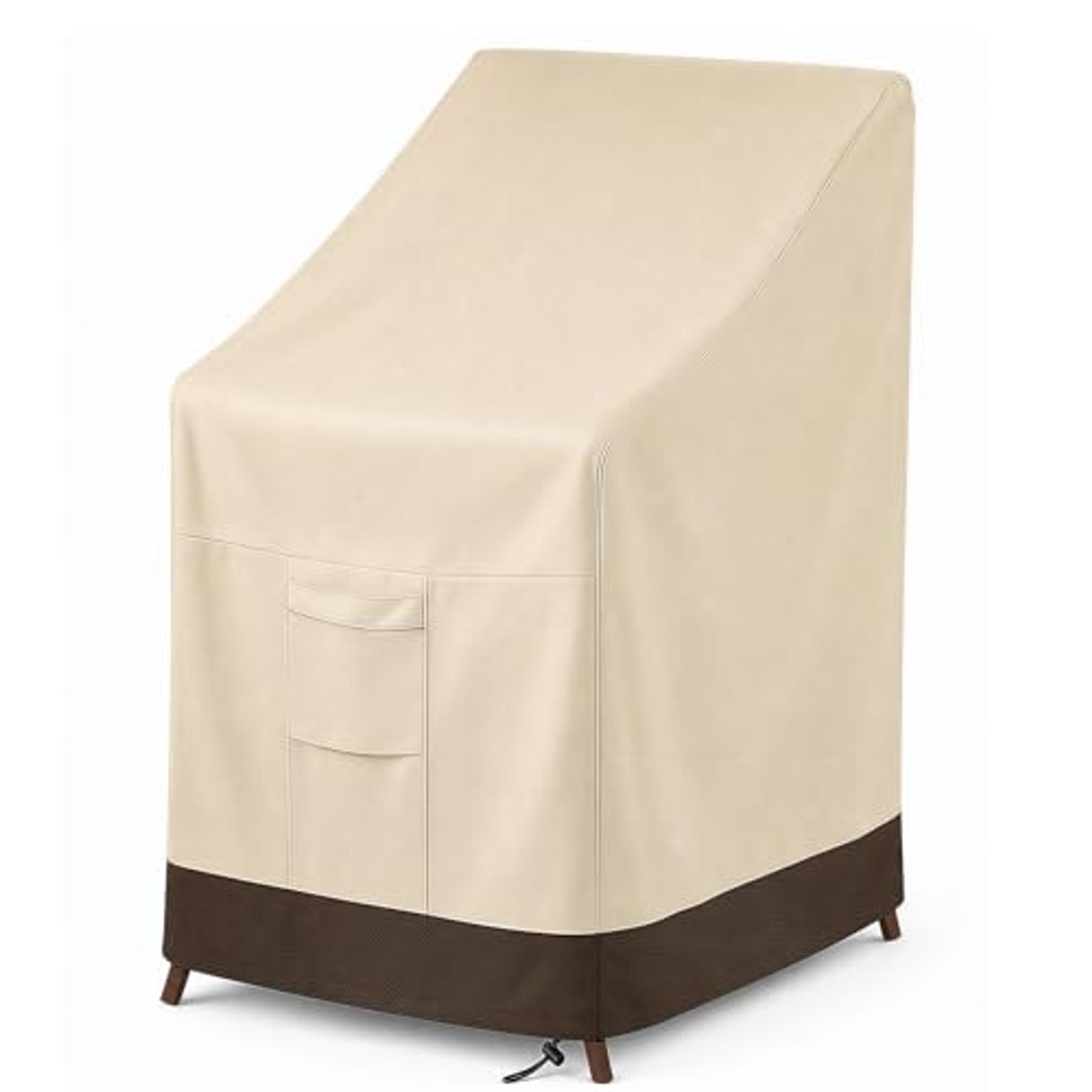
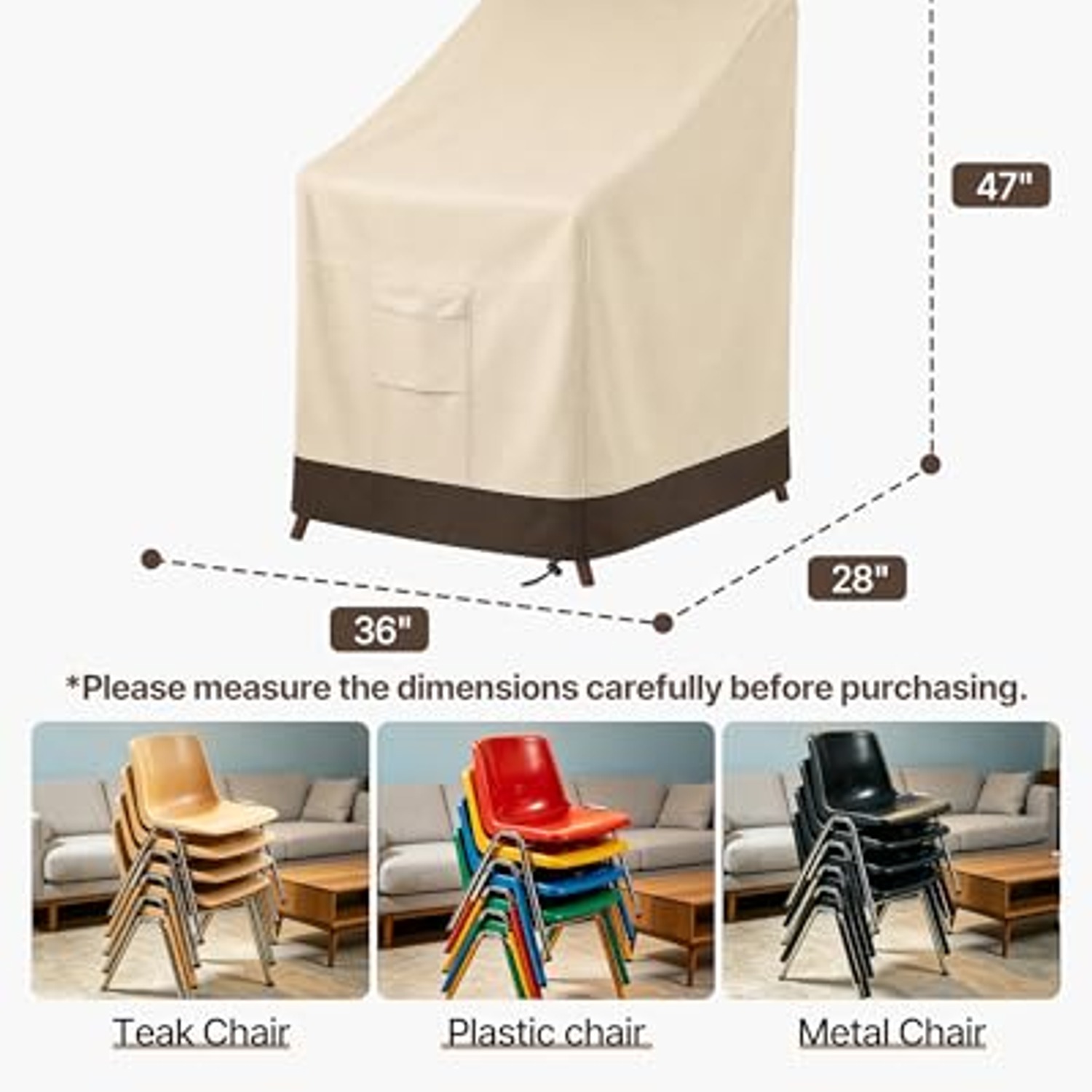
A cover for a stack is a different shape from a cover for a single chair. It is tall and roughly column-shaped, which is why this one measures 36 inches long, 28 inches wide and 47 inches high. The height matters most. Chairs nest into each other when stacked, so six chairs are nowhere near six chair-heights tall, but they do add up fast if the seats sit high.
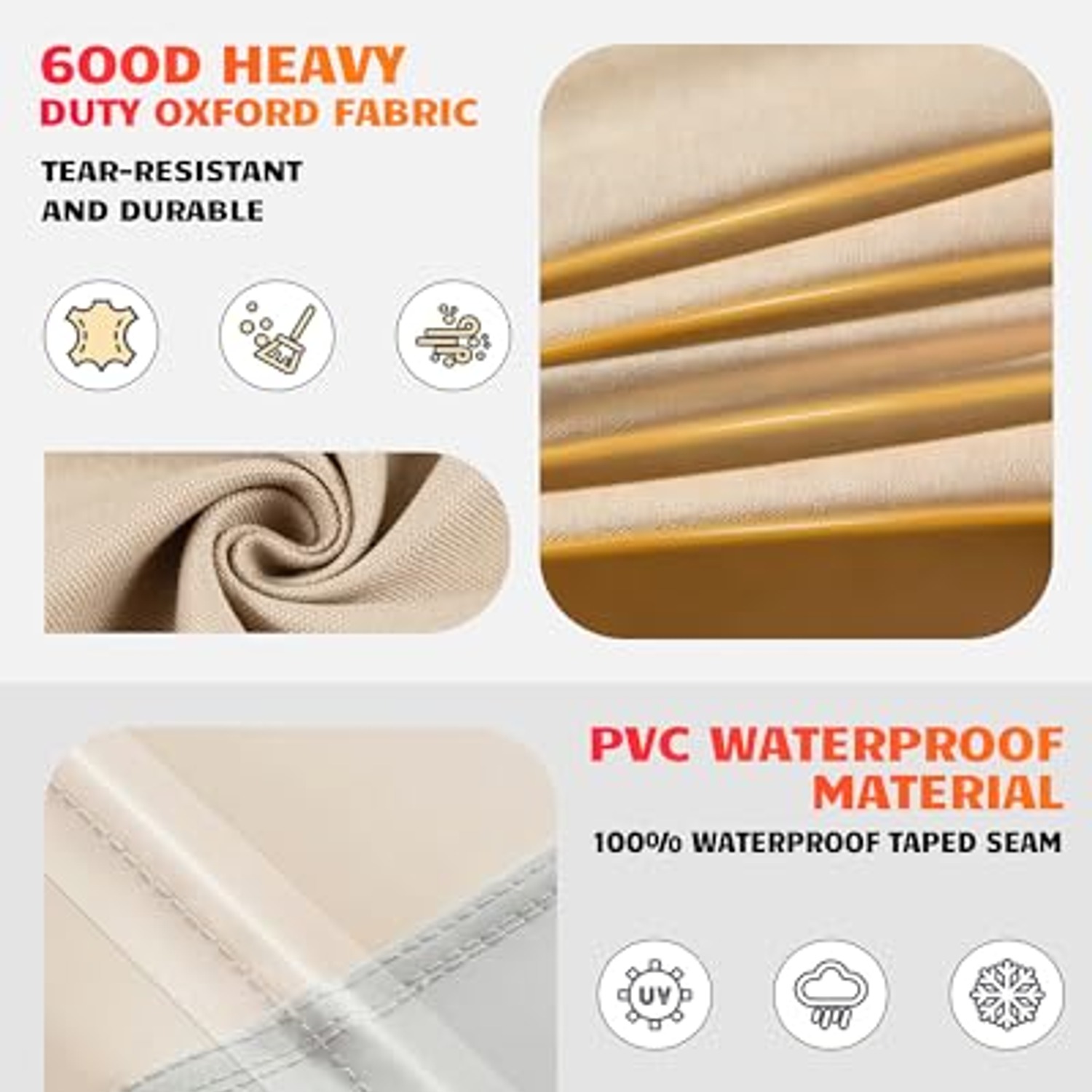
The fabric here is 600D Oxford polyester with a water-resistant coating. The "600D" number refers to denier, which is a measure of how thick the yarn is. Higher denier means a heavier, tougher weave. You can feel the difference between a 300D cover and a 600D one the moment you pick them up. The lighter one feels like a tarp off a market stall. The heavier one has body and holds its shape.
Coating alone is not the whole story though. Most covers leak at the seams, not through the fabric. Every stitch is a needle hole, and in sustained rain water tracks straight through. This cover has taped interior seams, which means a strip is bonded over the stitch line on the inside to seal those holes. If you are comparing a waterproof stacking chair cover against a cheaper alternative, seam taping is the single spec worth checking.
Wind is the real test
Rain is predictable. Wind is what destroys covers and sends them over fences.
Two things are going on when wind hits a cover. First, it pushes sideways and tries to drag the whole thing off. Second, and more damaging, it gets underneath and inflates the cover from below. That upward lift is what rips grommets out and tears hems.
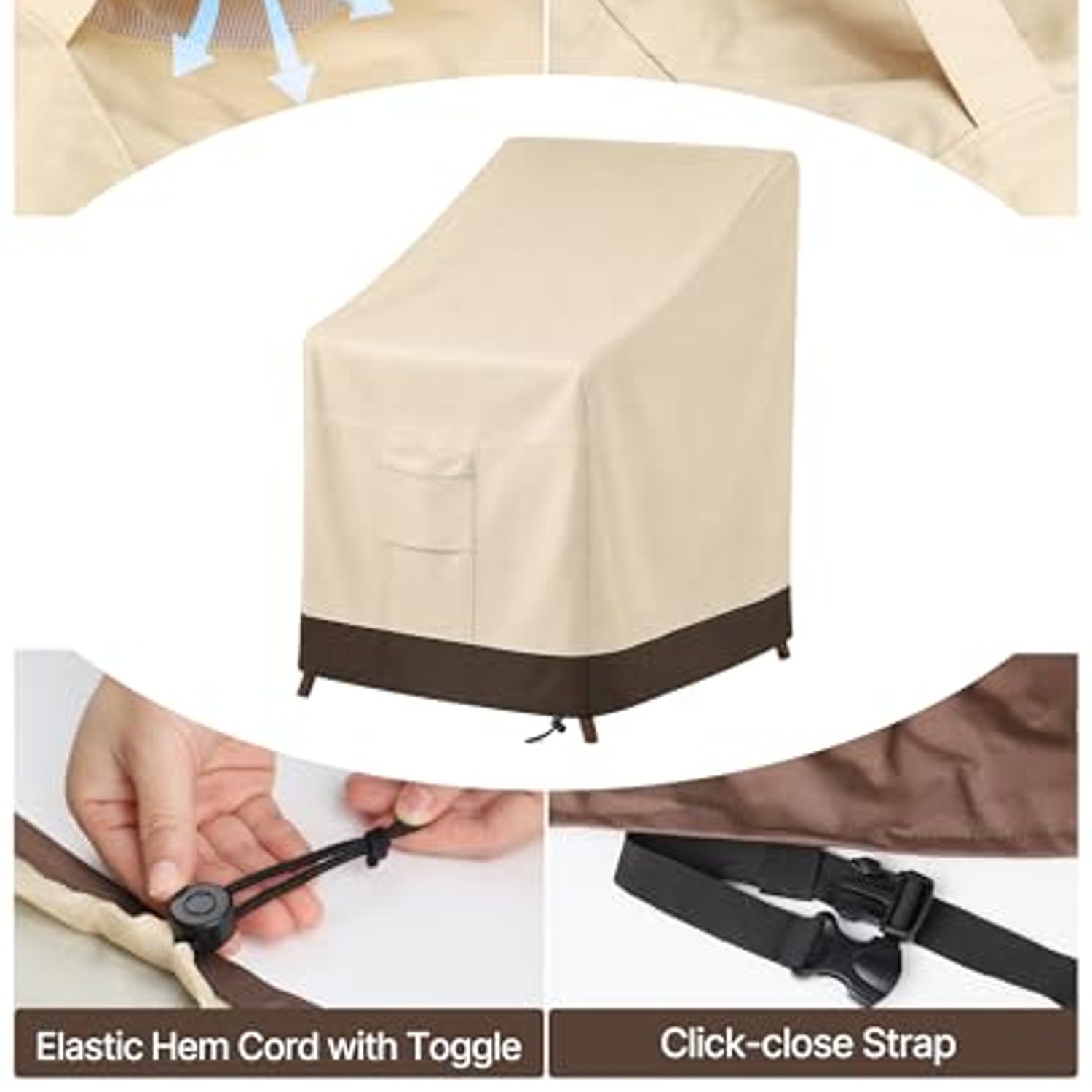
This cover handles both. Adjustable click-close straps wrap around the stack and clip tight, dealing with the sideways push. An elastic hem cord with toggles cinches the bottom edge in under the chair legs, which closes off the gap wind would otherwise get into. And built-in air vents give pressure somewhere to escape instead of building up under the fabric.
Use all three. People often clip the straps and skip the hem cord because the cover looks fine, then wonder why it ended up in the garden. The hem cord is doing the quiet work.
Who this suits
This is for anyone with four or more matching outdoor chairs that stack. That covers most patio dining sets, a lot of cafe-style metal chairs, and plastic or resin stacking lawn seats. It also works for high-back outdoor dining chairs, as long as the stacked height stays under 47 inches.
It suits small spaces particularly well. On a courtyard, deck or balcony, stacking and covering is the tidiest way to clear floor space without hauling furniture into a shed. One cover on a column of chairs looks far better than four or five individual covers lined up.
It is less suited to a single chair or two. A stack cover on one chair leaves a lot of slack fabric, and slack fabric catches wind. If that is your situation, an individual outdoor dining chair cover will fit tighter and last longer.
How to get the size right
Do the measuring before you order. It takes two minutes and saves a return.
Stack the chairs the way you normally would. Measure from the floor to the very top of the highest point, usually the back rail of the top chair. That number needs to come in under 47 inches. Then measure the widest point of the stack, which is often the front edge of the seats or the arms if the chairs have them. You want that under 28 inches on the narrow side and under 36 inches on the wide side.
If you are close to the limits, leave a little room. A cover stretched drum-tight over a stack has no give, and the stress ends up on the seams. A cover with a small amount of slack that is then cinched down with the hem cord is in much better shape.
One more tip. If your stack is slightly short, add a plant pot or a folded chair at the bottom rather than letting the excess fabric pool on the ground. Fabric sitting in a puddle wicks water upward.
Care and getting a long life out of it
Cleaning is easy. A wipe with a damp cloth handles light dust. For a real clean, hose it down and let it dry in the sun. Skip the washing machine, bleach, tumble dryer and iron, because all of those attack the coating and the seam tape that make it waterproof in the first place.
Through winter, knock snow off rather than letting it pile up. Wet snow is heavy and the weight will stretch any cover out of shape. After storms, check for pooled water on the top surface and push it off.
The biggest single thing you can do for your furniture, more than the cover itself, is to put the chairs away dry. Covering soaking wet chairs traps that moisture against the frames. The vents help air move through, but they cannot dry out a stack that went under the cover dripping. Give the chairs an hour in the breeze first if you can.
Every month or two on a dry day, pull the cover off and let everything breathe. It takes a minute and it stops musty smells before they start.
What to expect over time
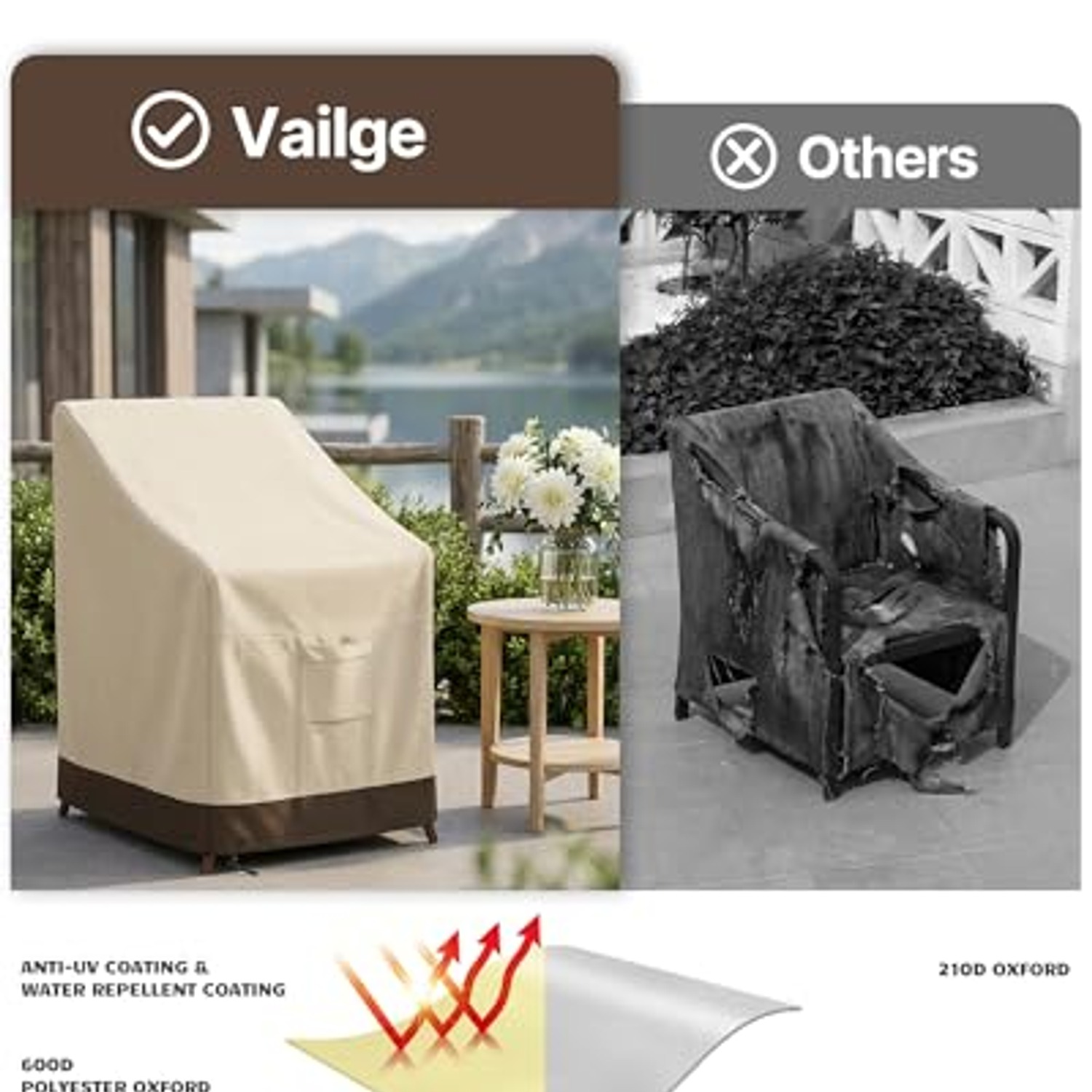
No outdoor cover lasts forever. UV light slowly breaks down synthetic fabric, and a cover that sits in direct all-day sun will age faster than one in a shaded corner. What a heavy 600D Oxford shell buys you is time. It does not tear when a branch scrapes it, it does not go brittle after one summer, and the coating keeps shedding water long after a thin cover has given up.
Store it dry over summer if you stop using it, folded loosely in a shed or box. Scrunching a damp cover into a bag is how mildew spots appear on the inside face.
The short version
If you stack your outdoor chairs, a stack-shaped cover is the right tool. This one fits four to six chairs at 36 by 28 by 47 inches, uses 600D Oxford polyester with taped seams for real rain protection, and anchors with both straps and an elastic hem cord so wind has nothing to grab. Vents cut condensation, padded handles make it quick to fit, and cleaning is a hose and a sunny afternoon.
Measure your stack, check it fits inside those numbers, and put the chairs away dry. Do those two things and the cover will do the rest.