
The complete guide
How To Choose A Square Hot Tub Cover That Lasts
The problem nobody mentions when you buy a spa
A hot tub is a lovely thing to own and a mildly annoying thing to maintain. The soaking part is easy. The part people underestimate is how much weather lands on the lid between soaks.
Your spa came with an insulated hard cover. That lid is a foam core wrapped in vinyl, and its job is to hold heat in the water. It does that job well when it is new. What it is not built for is sitting out in rain, hail, frost and summer sun for years on end with nothing over the top.
Here is what happens. Rain works its way into the vinyl seams. The foam core slowly soaks it up. The lid gets heavier, then it gets harder to lift, then it starts to sag in the middle so water pools there instead of running off, which makes the whole thing worse. Meanwhile the sun is drying out the vinyl on top until it cracks. Leaves rot in the corner where the lid meets the cabinet. Birds use it as a target.
Replacing a hard lid is not cheap. A fabric outer cover is the simple fix, and it is why a good square hot tub cover is one of the better small purchases a spa owner makes.
What this cover actually does
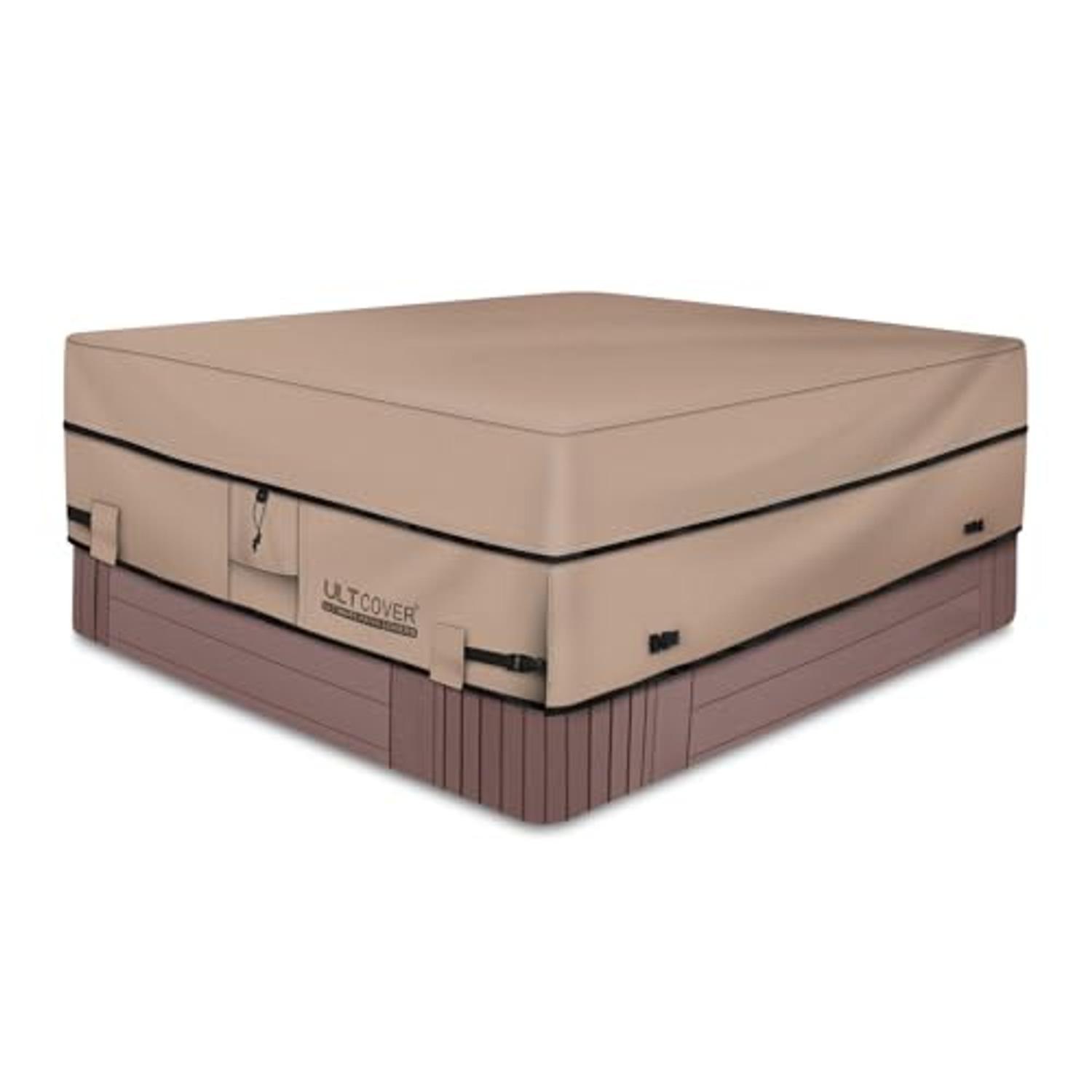
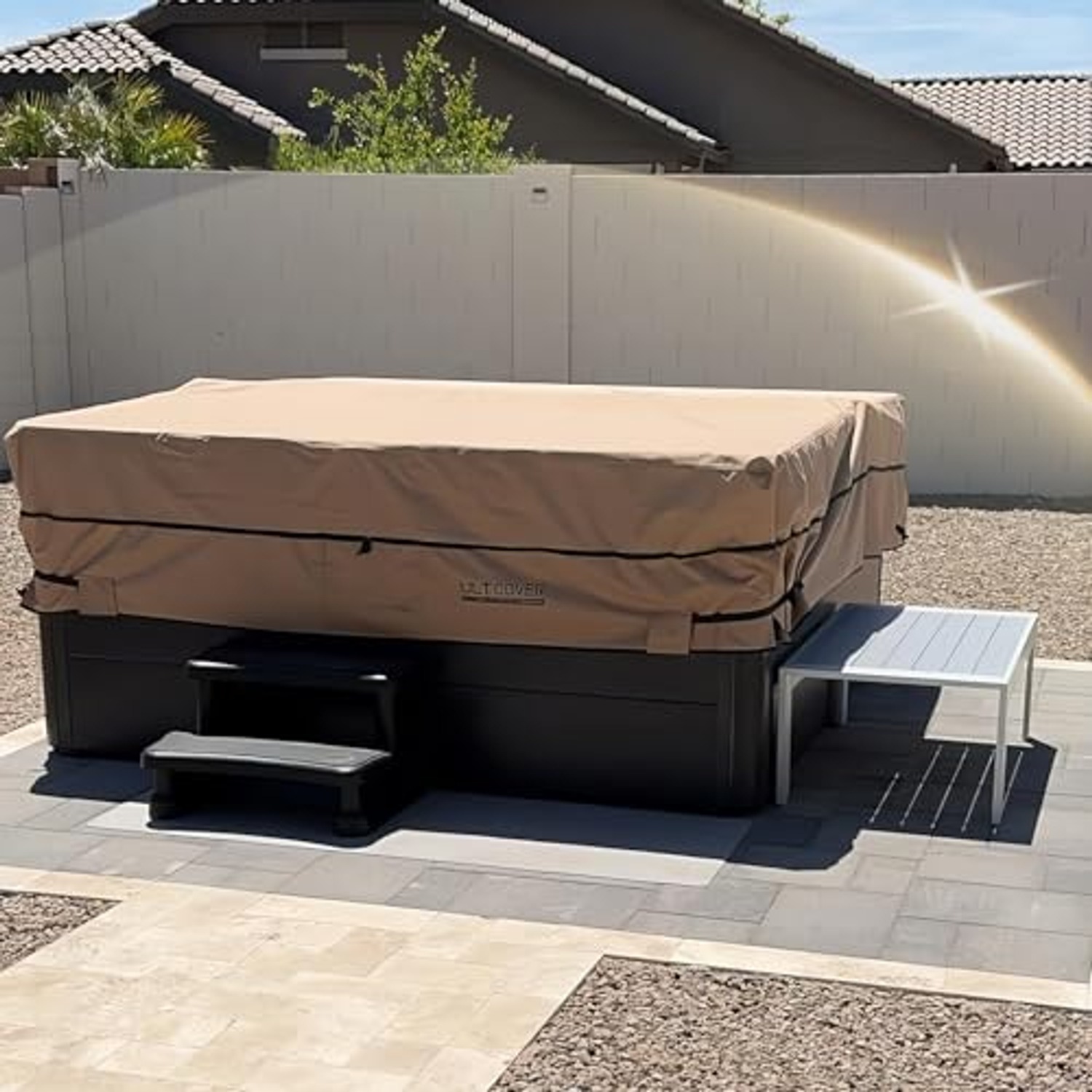
Think of it as a raincoat for your lid. It goes on over the closed hard cover and takes the weather so the lid does not have to.
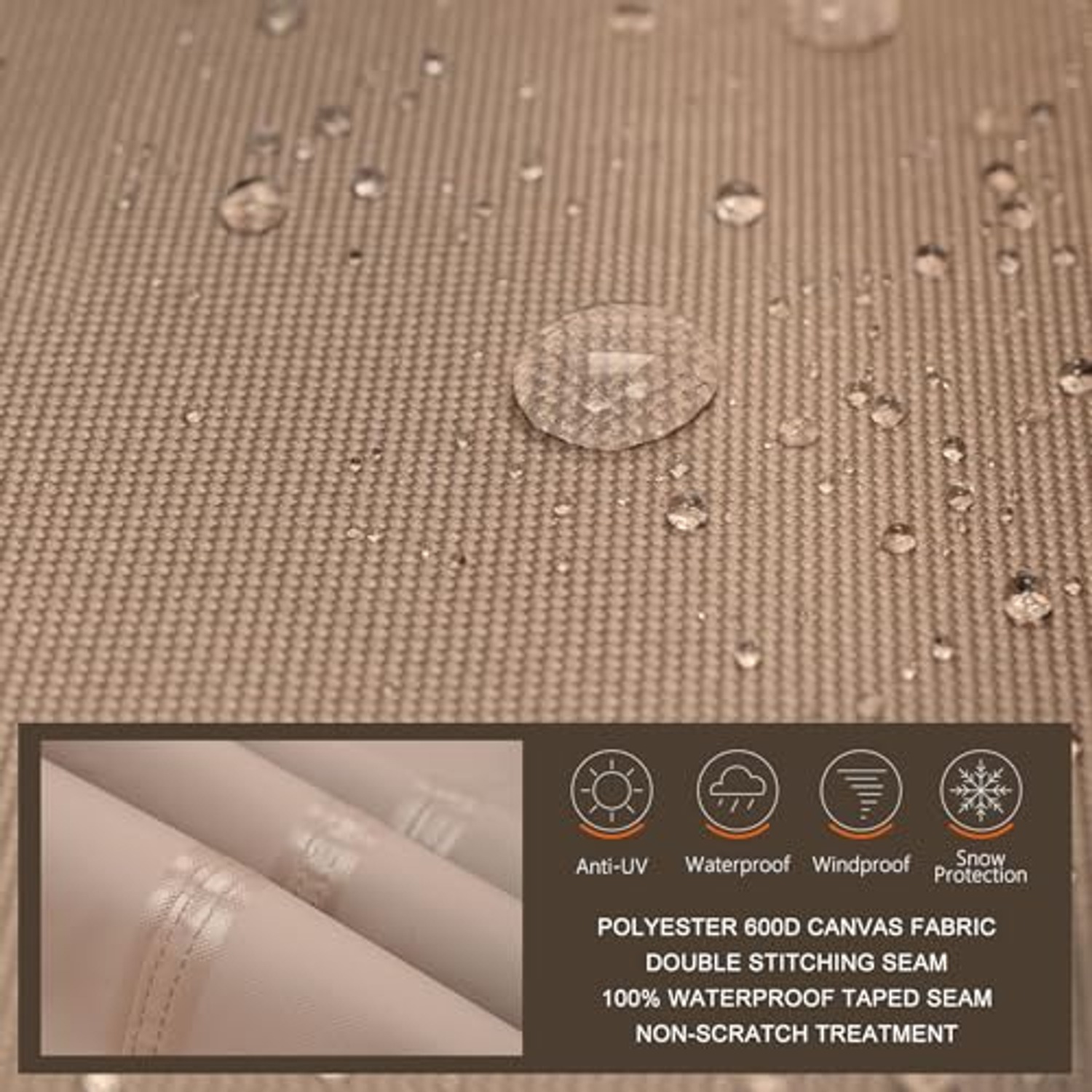
The fabric here is 70% polyester and 30% PVC. Polyester gives the cover its structure and tear resistance. PVC is the waterproofing. Water hits the surface and runs off instead of soaking in, which is the single most important thing an outdoor spa cover does.
The surface is also UV resistant. Sunlight is what turns cheap outdoor fabric chalky and brittle, usually by the end of the second summer. A UV treated finish slows that process considerably, and because the cover is shading your vinyl lid, it slows the ageing of that too.
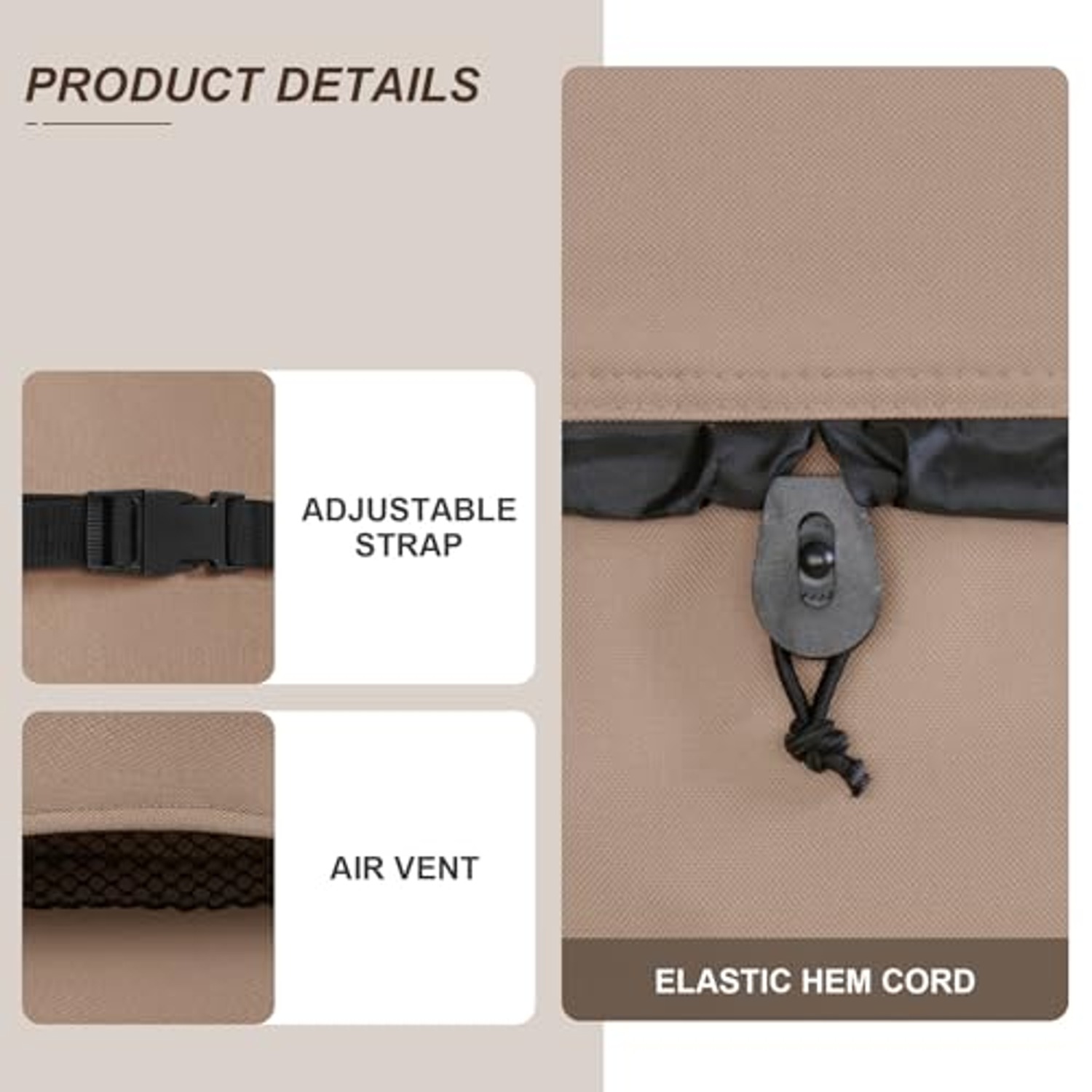
Two structured vents sit in the sides. People sometimes assume vents are a weakness in a waterproof cover, but they do real work. Damp air builds up in the gap between the cover and the lid, especially after a soak when the water is still warm. Without vents that moisture has nowhere to go and sits against the vinyl. The vents let it out. They also give wind a path through the cover rather than under it, which is how covers get thrown into the neighbor's garden.
Finally there are elastic drawcords in the hem. You pull them in, the cover tucks under the lip of the spa and stays there. Simple, and far more reliable than straps that need buckling.
Getting the size right
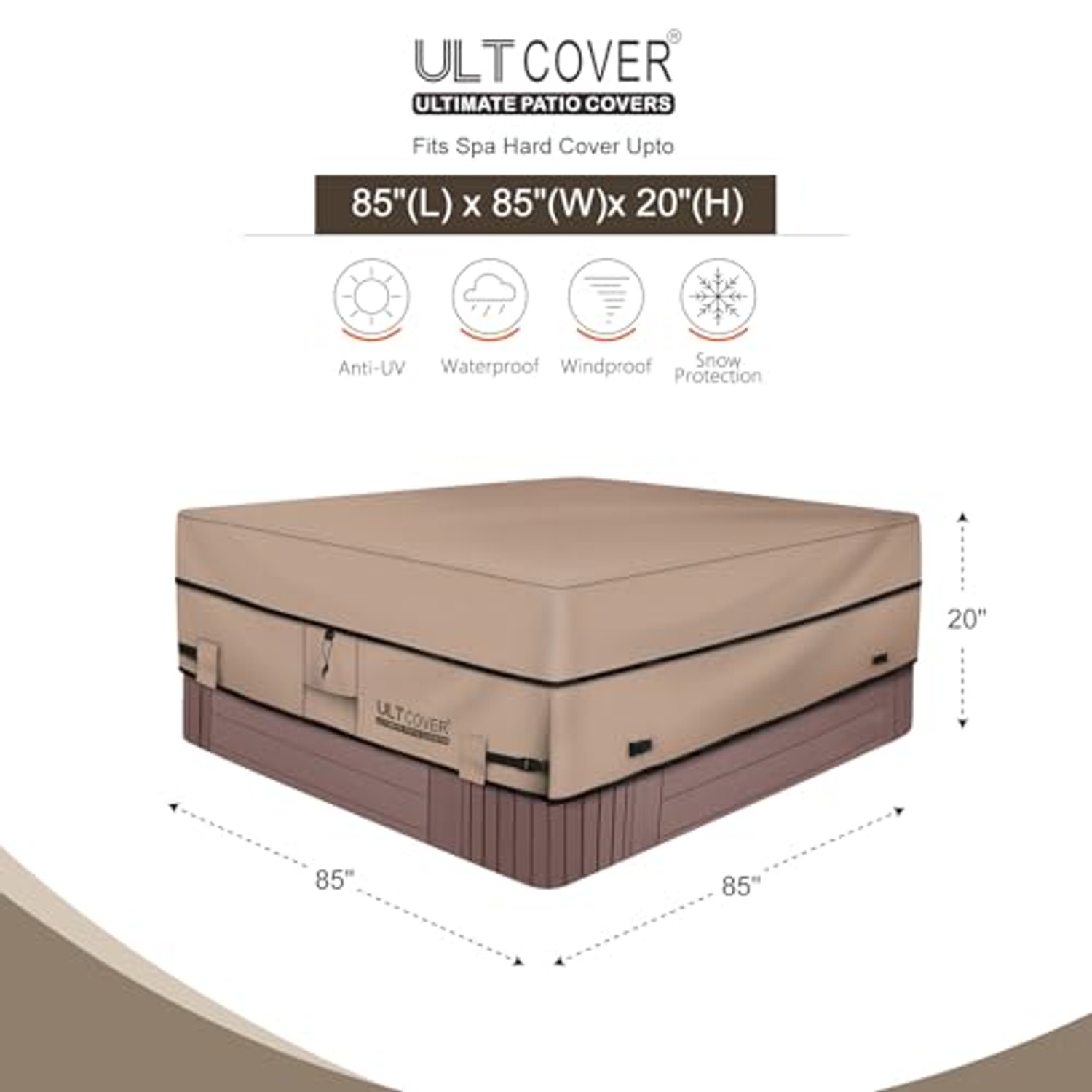
This one is square, 85 inches by 85 inches, which is 7 feet 1 inch on each side. It suits square hot tubs up to that footprint.
Measure before you order, and measure the cabinet, not the water. Run a tape across the widest point of the spa including any lip, trim or skirt that sticks out. Do it in both directions, because some tubs that look square are a little off.
If your tub comes in slightly under 85 inches, you are fine. The drawcords pull the extra fabric in. If your tub measures over 85 inches in either direction, this is the wrong size and forcing it will strain the seams.
Round tubs are a separate problem. A square cover on a round spa leaves loose fabric at four corners, and loose fabric is exactly what wind grabs. If your spa is round, buy round.
Who this suits
It suits anyone whose spa lives outside without a roof or pergola over it. That is most people.
It is especially worth it if you have trees nearby. Leaf litter is relentless, and leaves that sit damp on a vinyl lid leave tannin stains that do not fully come out.
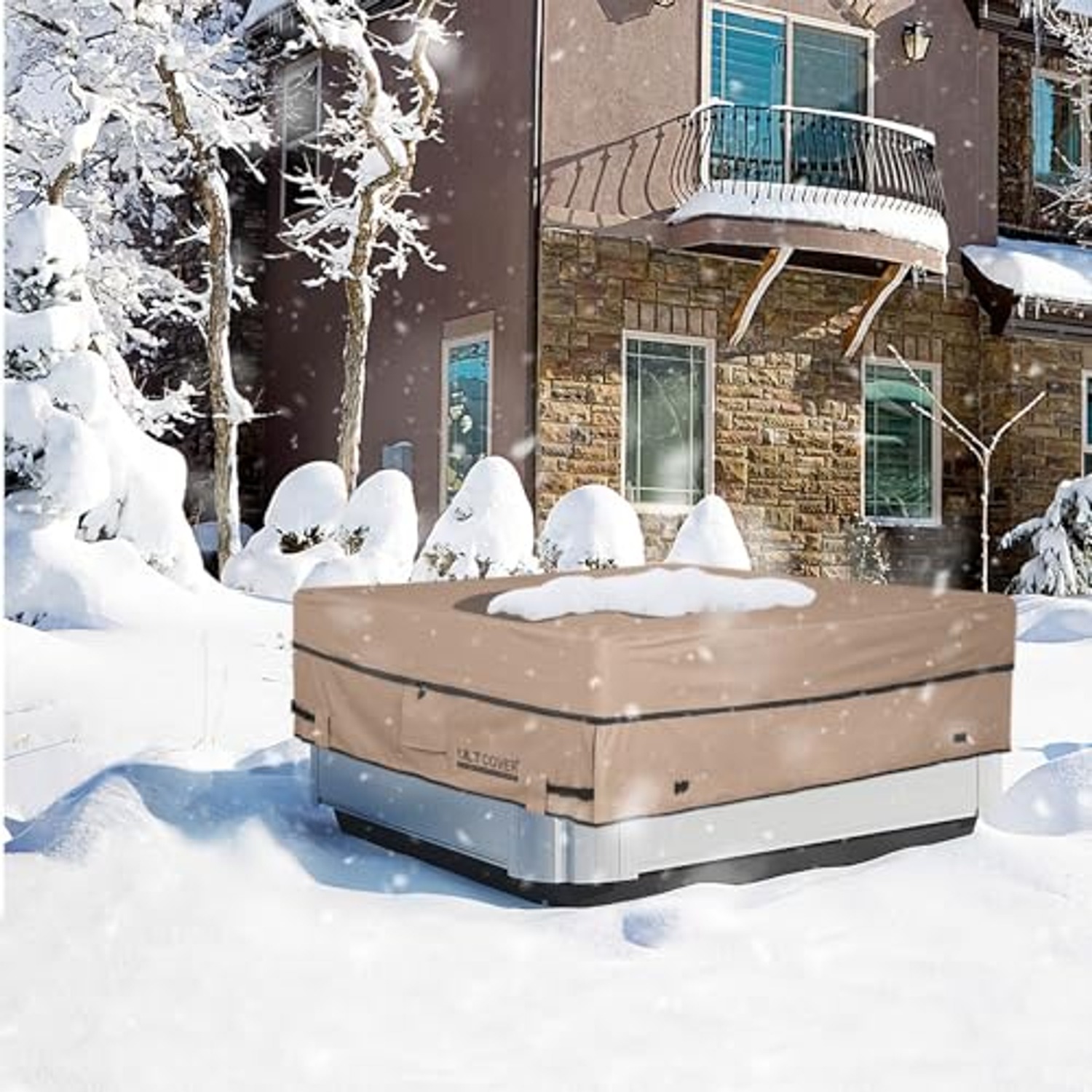
It suits coastal homes, where salt air is quietly corrosive. It suits properties that get real winters, because a lid that has soaked up water and then frozen is a lid on borrowed time. And it suits anyone who uses their spa less in the cold months, since that is exactly when an uncovered lid takes the most damage.
It does not suit someone looking to replace a missing hard lid. This is a layer over the top, not a substitute. If your thermal cover is gone or waterlogged beyond saving, replace that first, then put this over it.
How to fit it without a fight
Pick a calm day for the first fit. Close the hard lid, lay the cover flat across it, and line up the corners before you do anything else. Getting the corners square first saves a lot of tugging later.
Work the hem down over the edge of the lid all the way around. Then pull the drawcords until the fabric sits snug against the spa. Snug, not strangled. Overtightening puts all the load on a few points of the hem.
Two people make this quicker, mainly because a 7 foot square of fabric is awkward for one pair of arms. One person can absolutely do it alone, it just involves more walking.
Once it is on, check it after the first windy night. If a corner has lifted, take up a little more cord on that side.
Looking after it
Care is undemanding. Hose it down when it looks dirty. If something has actually stuck to it, use mild soap and water with a sponge or soft brush, then rinse properly so no soap film is left behind.
Let it dry fully before you fold it. This is the one rule people break, and damp folded fabric grows mildew faster than you would expect.
Do not machine wash it, do not put it in a dryer, do not bleach it and do not iron it. The PVC layer does not survive that kind of treatment.
Through winter, brush snow off rather than letting it pile up. Any fabric cover will sag under enough weight, and once there is a dip in the middle, water collects there and the sag gets worse. A soft broom and thirty seconds sorts it.
If you pack the cover away for a season, clean it, dry it completely in open air, fold it loosely and store it somewhere dry and out of the sun. Never store it in a sealed bag while it is still damp.
Small things that make a difference
Lift the cover off on a dry sunny day every few weeks and let the hard lid underneath breathe. It takes five minutes and keeps everything beneath fresher.
Check the drawcords for grit before you pull them tight. Sand and dirt in the channel wear the cord down over time.
Rinse the cover with fresh water if you live near the ocean. Salt crystals are abrasive and they do not wash off in rain alone.
And give the hard lid a wipe with a vinyl protectant occasionally. The outer cover is doing most of the protecting now, but a bit of upkeep on the lid itself extends its life further.
The short version
Your insulated hard lid is the expensive part of your spa's weather protection, and it was never designed to face the sky unaided. A waterproof outer cover takes that punishment instead.
This one is square, 85 by 85 inches, made from polyester and PVC, vented on two sides and held down by elastic drawcords. It is brown, it is rated waterproof and UV resistant, and it carries a 3 year warranty.
Measure your spa cabinet first. If it comes in at or under 85 inches each way and it is square, this cover will do the job, and your hard lid will thank you for it.