
The complete guide
How to Choose a Pyramid Patio Heater Cover That Lasts
The problem with leaving a pyramid heater uncovered
A pyramid patio heater earns its keep about six months of the year. The rest of the time it stands in the garden doing nothing, slowly collecting everything the weather throws at it. Rain runs into the control panel. Dust settles on the glass tube until the flame looks dull and orange rather than clean. Leaves pile in the top of the housing. Birds do what birds do.
None of that stops the heater working straight away. It just makes it look tired, and then one autumn you go to light it and the ignition clicks without catching, or the paint around the base has started to bubble. Corrosion happens quietly. By the time you notice, the cheap fix has passed.
That is the whole argument for a cover. It is a small purchase that protects a much bigger one, and the job it does is entirely preventative. A good pyramid patio heater cover does not need to be clever. It needs to fit, it needs to stay put in wind, and it needs to still be in one piece after a couple of winters.
What makes one cover better than another
Three things separate a cover that lasts from one that does not.
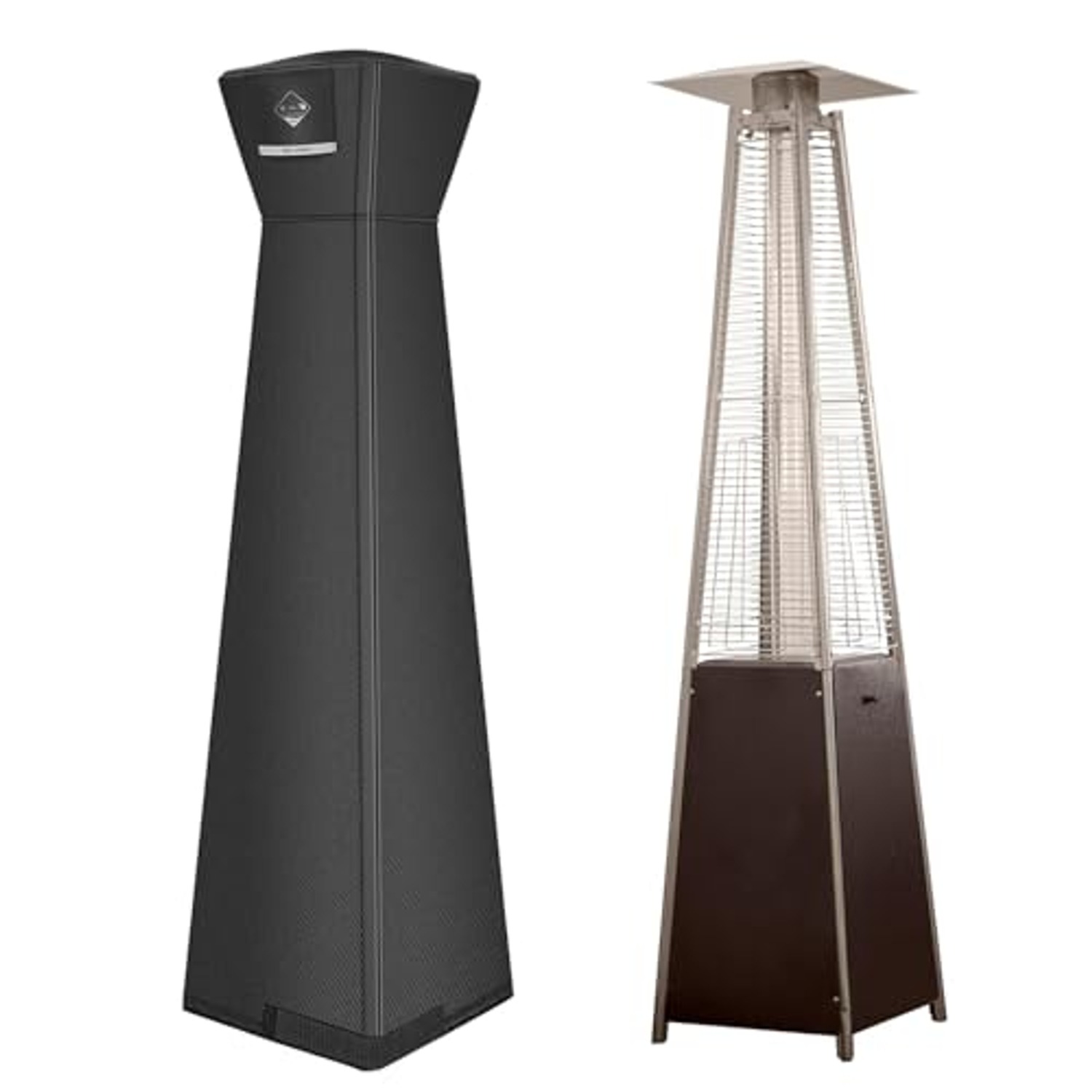
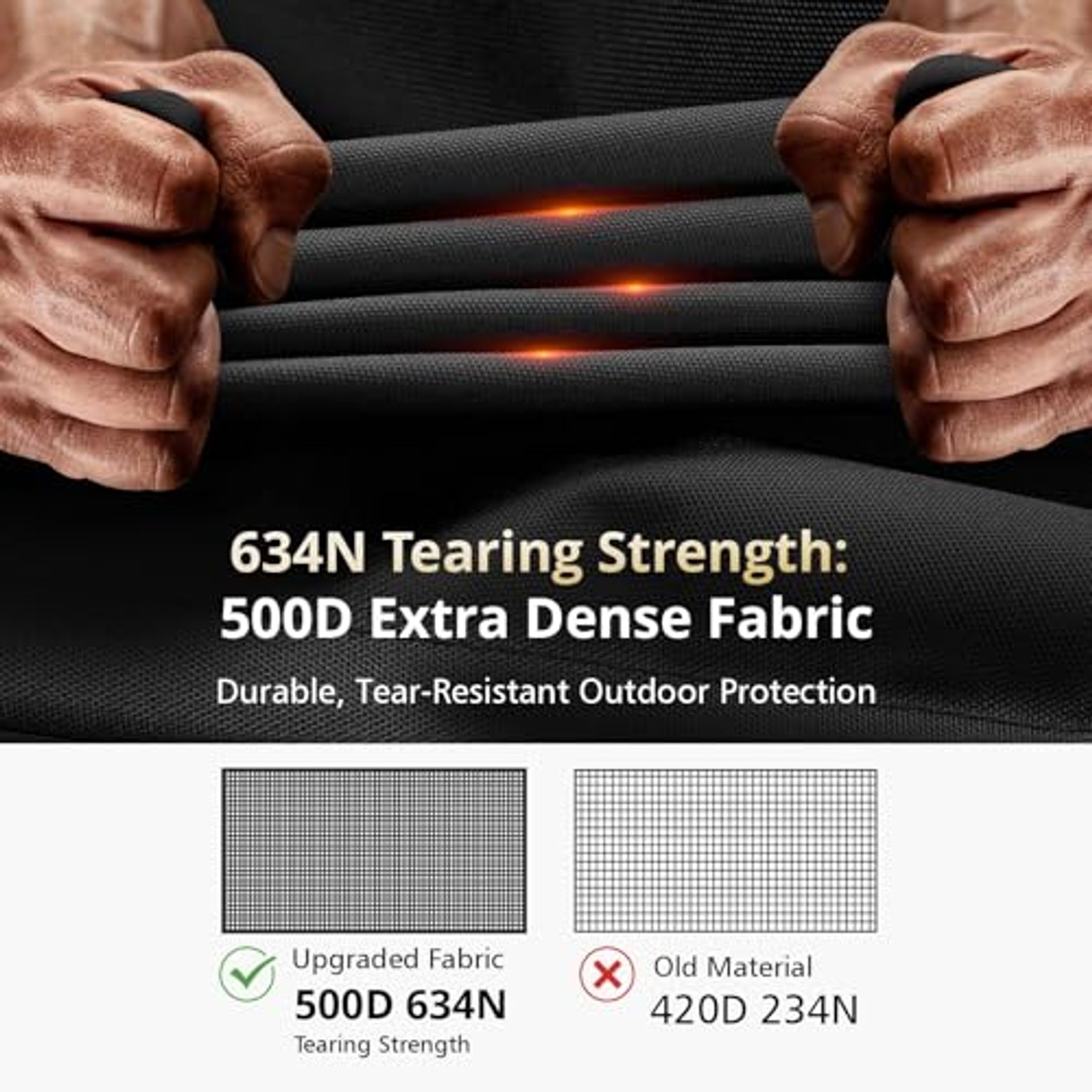
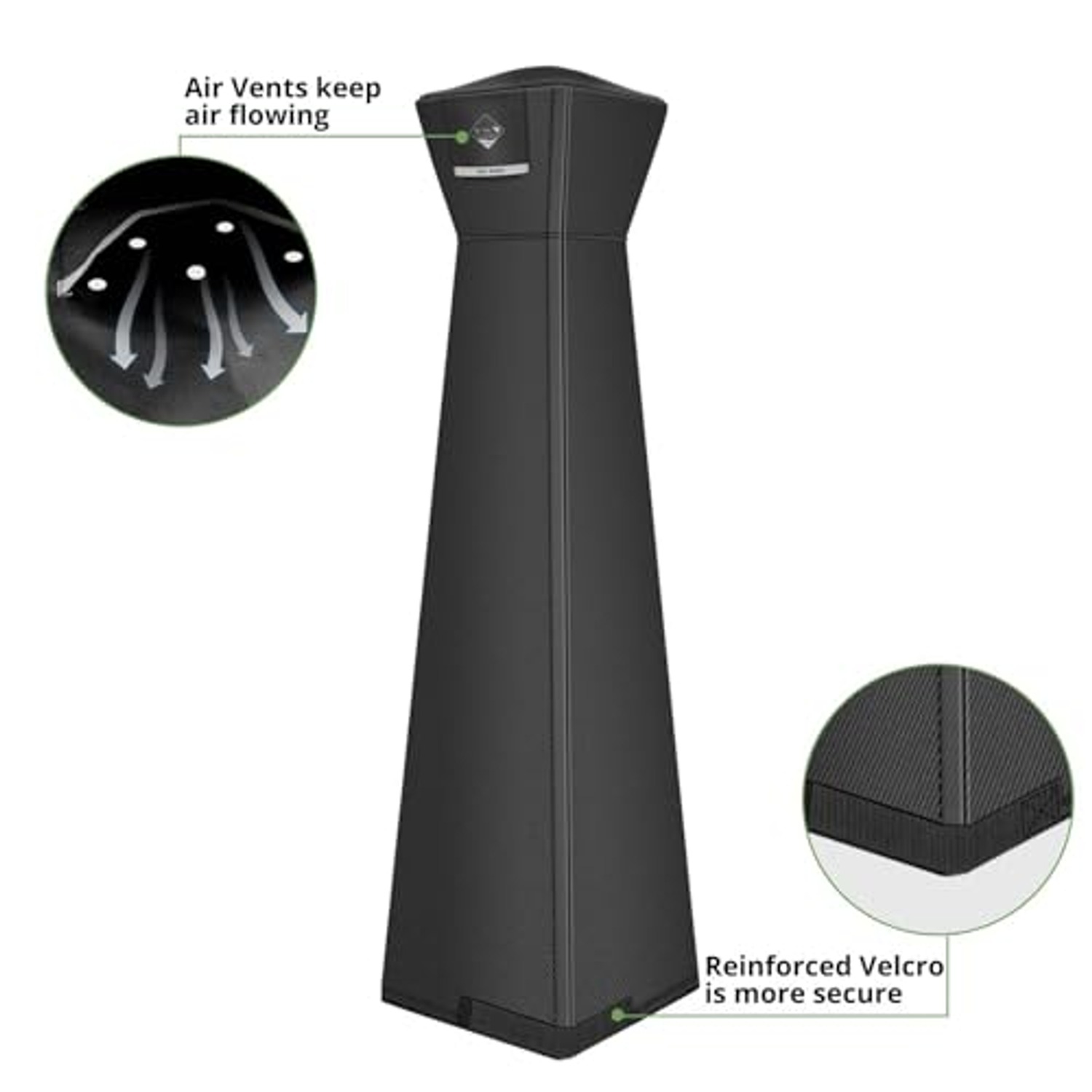
The first is fabric weight. You will see a D number on most outdoor covers, usually 210D, 420D or 500D. That number describes the thickness of the yarn used in the weave. Higher means thicker thread and a denser fabric. A 500D Oxford cover like this one has noticeably more body in the hand than a 210D one, and that shows up in how it handles stress points. Zippers pull on fabric. Wind flaps it. Hems rub against concrete. Thin fabric gives up at those points first.
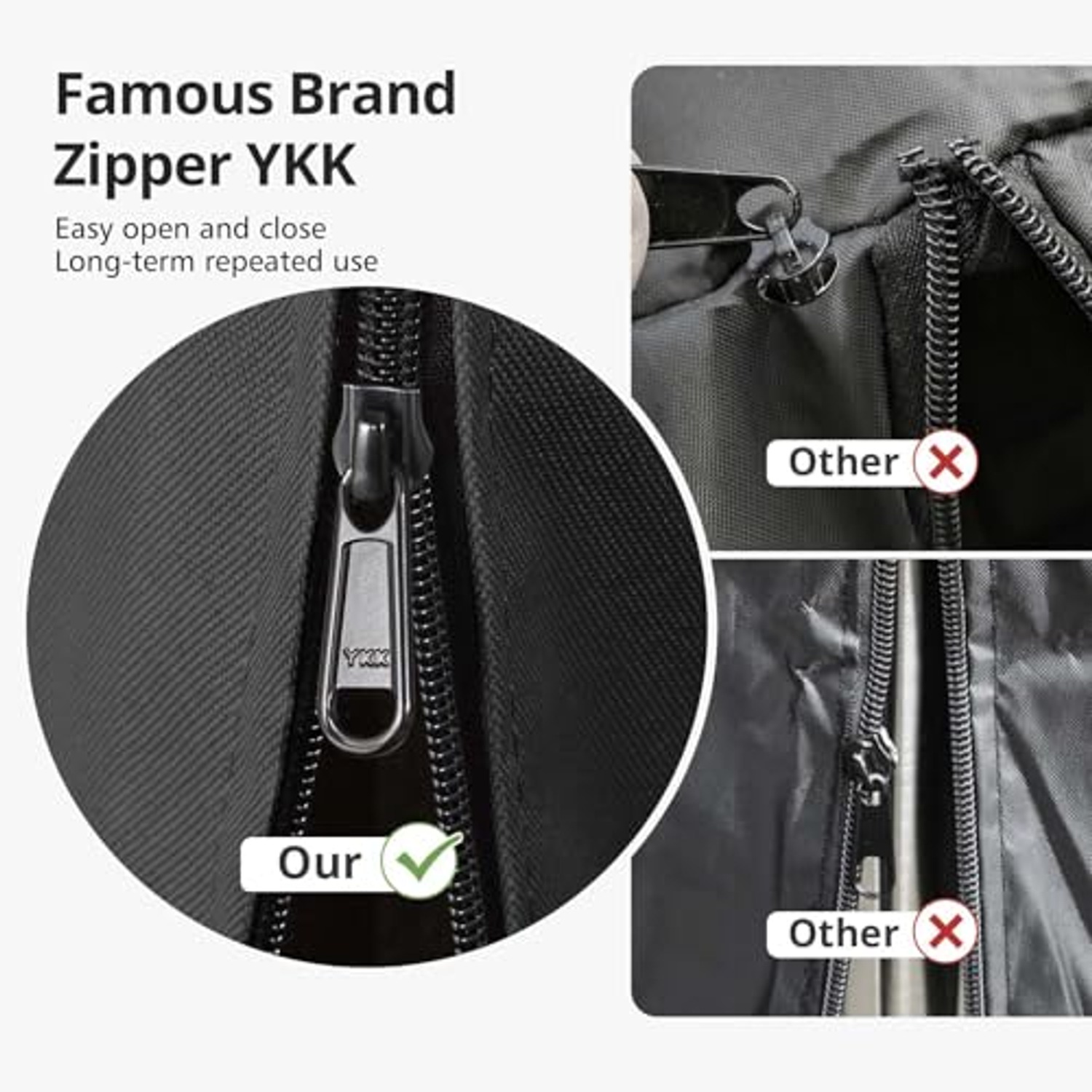
The second is the closure. Covers that are sewn into a sealed tube are a nightmare on a nine foot heater, because you have to lift the whole thing above head height and drop it down. A full-length zipper changes that completely. You wrap, you zip, you are done. It also means you can get the cover off quickly when you want to light the heater, which matters more than you think. If a cover is annoying to remove, people stop using it.
The third is the bottom closure. This is where most covers fail in the real world. Wind does not usually tear a cover from the top. It gets underneath the hem, fills the cover like a balloon and lifts it off the heater entirely, sometimes dragging it across the garden. A tight bottom closure solves that. This cover uses Velcro rather than a drawstring, which is quicker to adjust and has nothing to snap or tangle.
Getting the size right
The listed dimensions here are 90 inches tall by 23 inches long by 23 inches wide. That is the common standard for pyramid flame heaters, which is why most of them fit.
Still, measure yours. Take a tape from the ground to the highest point of the heater, including any cap or finial on top. Then measure the widest part of the base, corner to corner if it is square. If your height is under 90 inches and your base is under 23 inches across, you are fine. If your heater is taller, the cover will ride up and leave the base exposed, which defeats the purpose.
A little slack is good. A cover that is skin tight puts constant tension on the seams and makes fitting awkward. A cover that is far too big catches wind. Somewhere in between is where you want to be, and a standard size cover on a standard size heater usually lands there naturally.
Who this suits
If you own a pyramid or flame tower heater and keep it outdoors, this is the straightforward answer. It suits people with a patio, a deck, a courtyard or a restaurant terrace. It is particularly worth having if your heater sits somewhere exposed, under trees, or near the coast where salt air speeds everything up.
It is less relevant if you store your heater in a garage or shed between uses, although even then a cover keeps workshop dust and spiders off it. And it is simply the wrong shape if you have a mushroom style heater with a wide round reflector up top. Those need a different cut.
Fitting it without a fight
Switch the heater off, close the gas valve and let it cool completely. This is not optional. Fabric against a hot burner housing is a fire risk, and a heater stays warm longer than it feels.
Unzip the cover fully. Stand on a step stool if you need the height. Drape the top of the cover over the apex of the heater, then work your way down, pulling the fabric around the body as you go. Zip it closed from the top down or the bottom up, whichever is easier from where you are standing.
Last, pull the bottom hem in and press the Velcro closed so it hugs the base. Give the cover a tug to check it does not slide up. That final step is the one people skip, and it is the one that keeps the cover on your heater rather than in your neighbor's garden.
Looking after the cover
Covers need almost nothing, but the little they need makes a real difference.
Brush leaves and debris off the top now and then, especially in autumn. Wet leaves hold moisture against the fabric and leave tannin stains. After a heavy storm, lift the bottom hem and let any trapped air and moisture out so the heater underneath can breathe.
Clean it with a damp cloth and mild soapy water when it looks grubby, then rinse and let it air dry outside. Skip the washing machine, the bleach and the tumble dryer. All three attack the waterproof finish, and once that goes the fabric starts to wet through.
If you take the cover off for the summer, make sure it is bone dry before you fold it. A damp folded cover in a dark box is how mold starts. Store it somewhere with a bit of airflow and it will be fine for next season.
A word on expectations
A cover is weather protection, not a sealed vault. Over a long wet winter, a small amount of condensation can form underneath any cover, because the air trapped inside warms and cools with the day. That is normal. It is why airing the heater out on a dry day once in a while is a good habit, and why a snug but not airtight bottom closure actually works in your favour.
Likewise, no fabric lasts forever outdoors. Sun, frost and wind wear everything down eventually. What heavier 500D fabric buys you is years rather than seasons, and a cover that still zips properly at the end of that time instead of splitting along the seam.
The short version
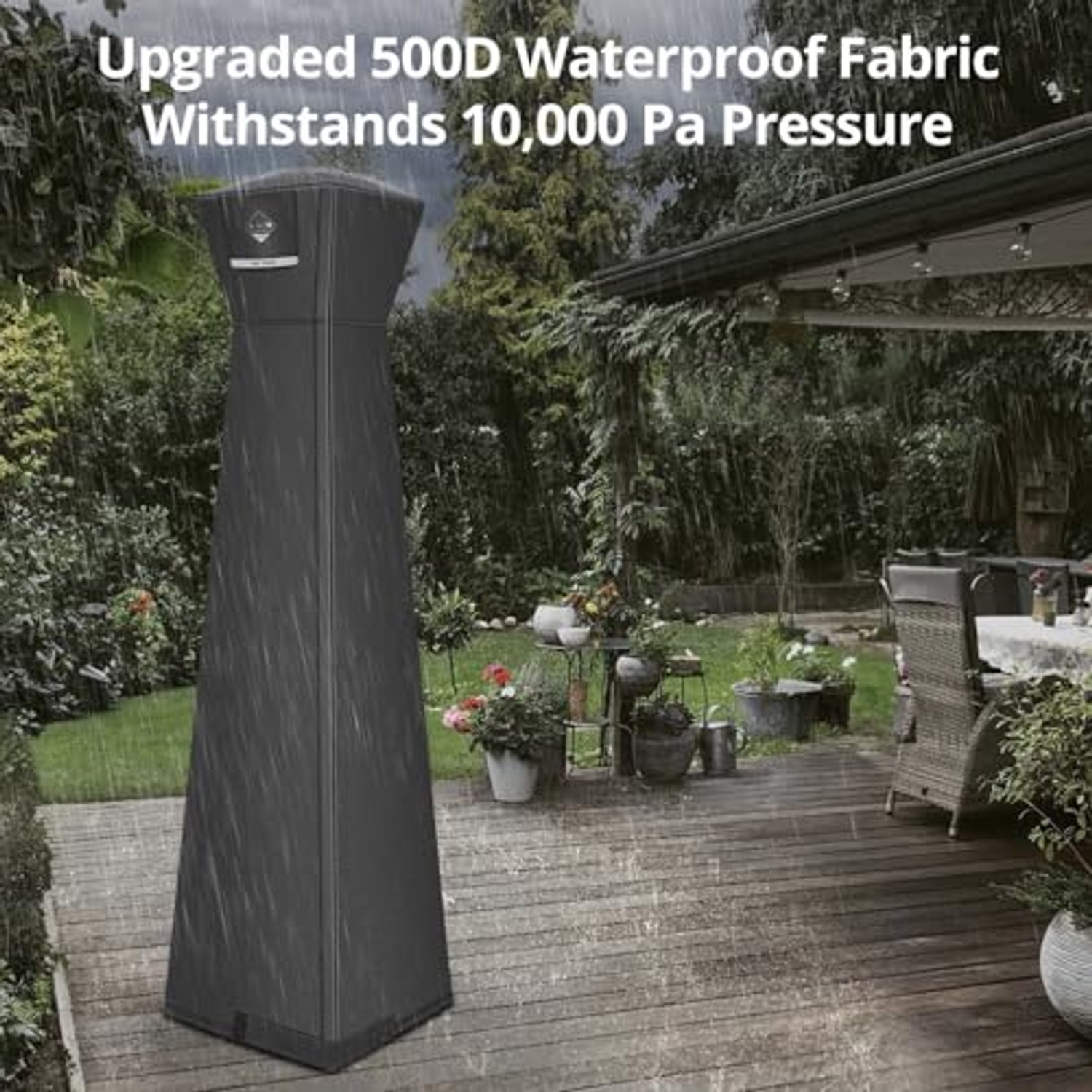
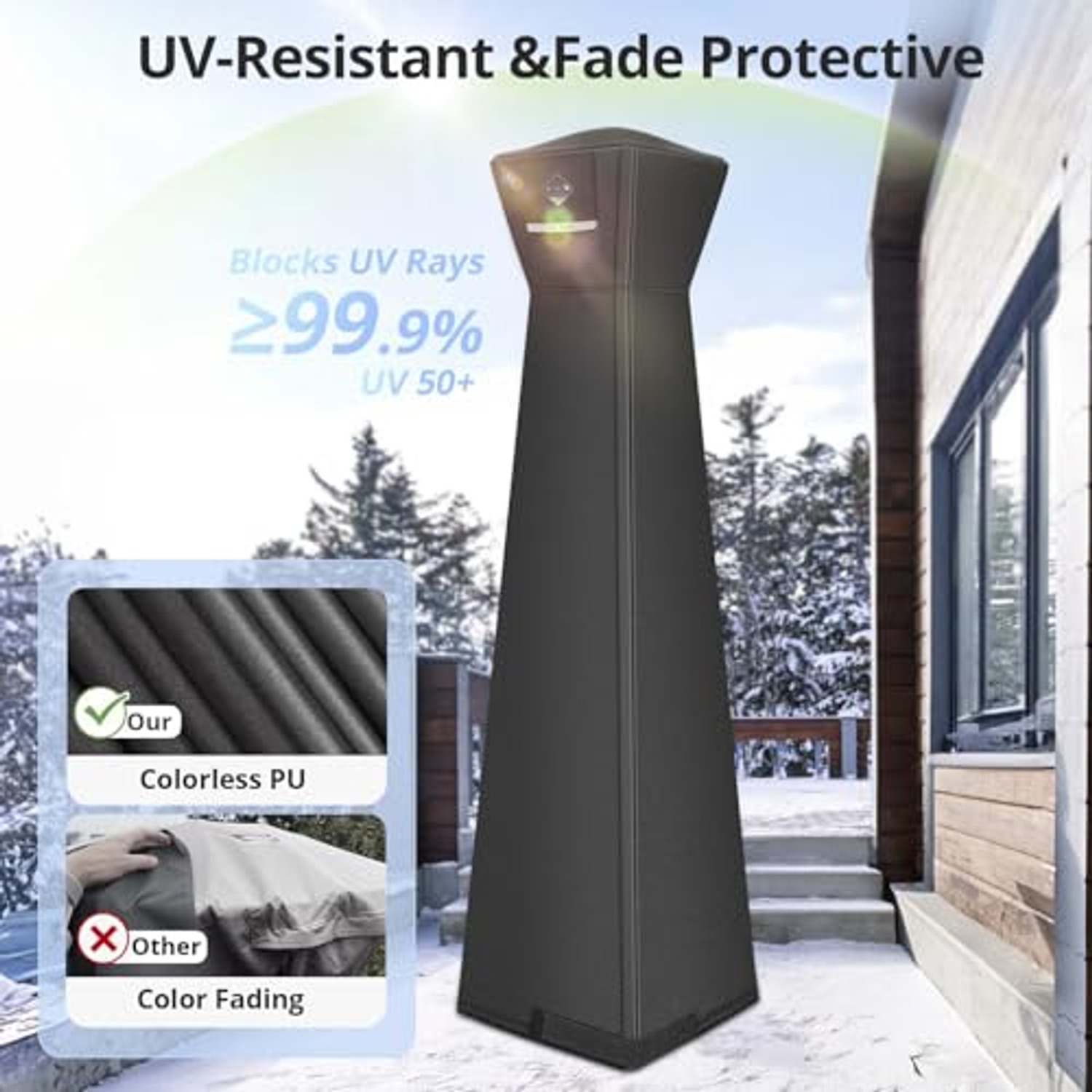
If you have a pyramid heater sitting out in the weather, cover it. This one is cut to the standard 90 by 23 by 23 inch profile, made from 500D Oxford fabric, closes with a full-length zipper and tightens at the bottom with Velcro so wind cannot get underneath. It is waterproof, dustproof and listed as resistant to wind, sun and snow.
Measure your heater first, fit the cover only when the unit is fully cool, pull the bottom closure tight, and brush the top clear after storms. Do those four things and your heater will look and light the same way in five years as it does today.