
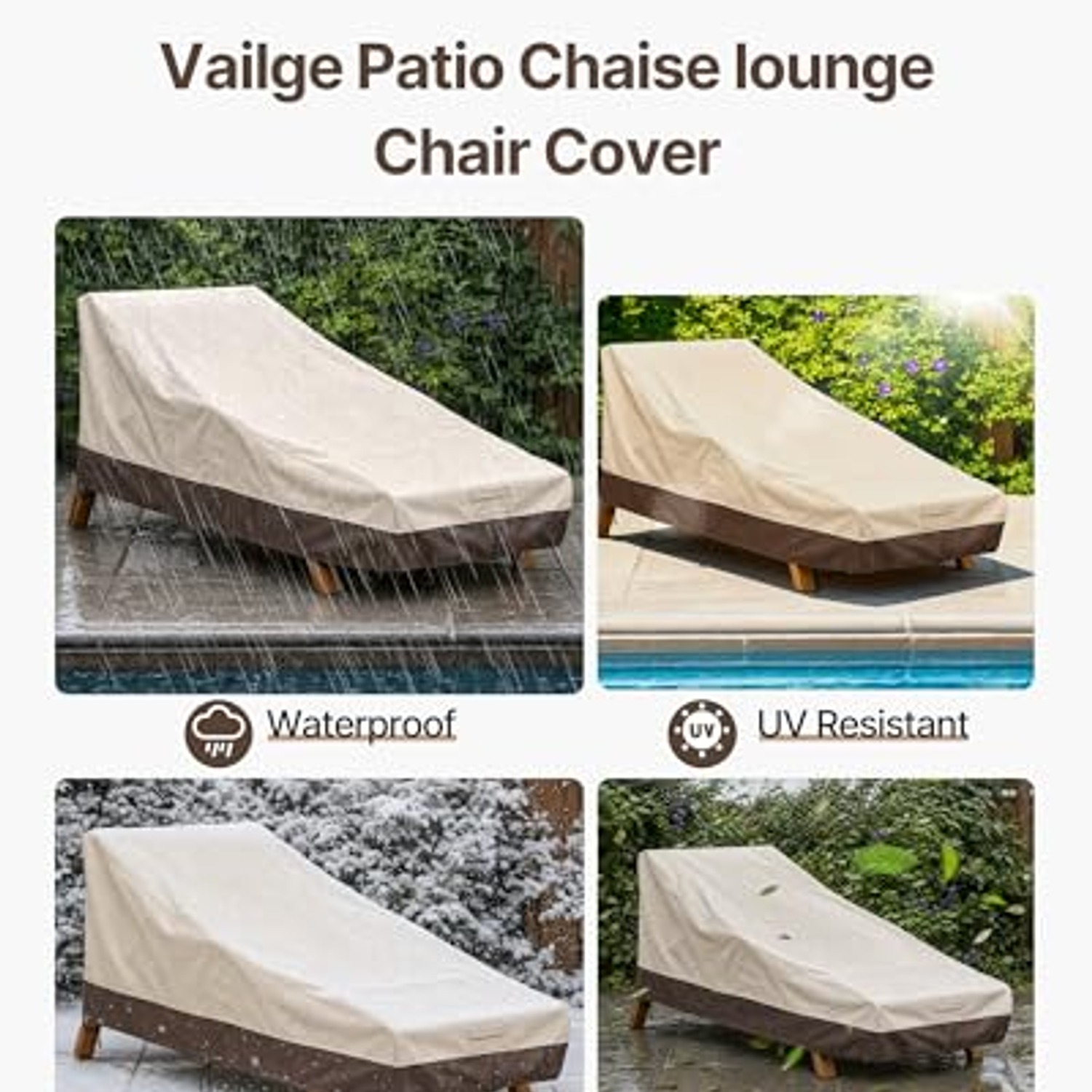
The complete guide
How to Choose a Waterproof Chaise Lounge Cover That Actually Stays On
The problem with uncovered loungers
A chaise lounge lives a hard life. It sits outside all year, soaks up every rain shower, bakes in summer, and collects whatever the trees drop on it. Within two seasons, the cushions smell musty, the frame has water marks, and the webbing or sling fabric has faded unevenly where the sun hit hardest.
Most people respond by dragging the loungers into a shed every time clouds gather. That works for a while, then it stops happening. The furniture stays out, and the slow damage begins.
A cover solves the problem by removing the effort. You pull it over, clip two straps, and walk away. When you want to sit down, you pull it off in about twenty seconds. The furniture underneath stays dry and clean, and you stop thinking about the weather forecast.
How a waterproof cover actually works
There are three parts to it, and all three need to be right.
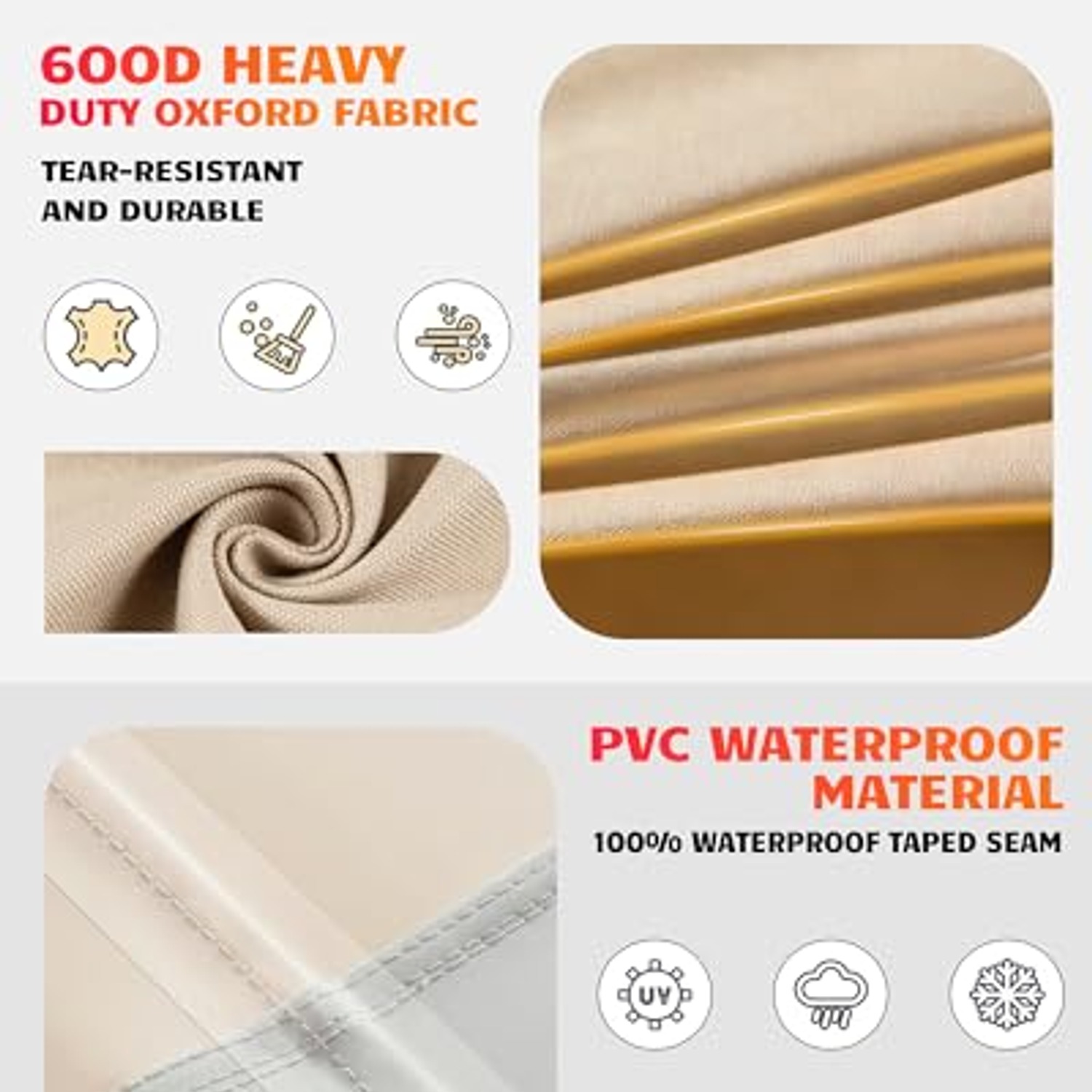
The first is the fabric. This cover uses 600D Oxford polyester with a water-resistant coating. Oxford refers to the basket-style weave, and the denier figure describes yarn thickness. Higher denier means thicker yarn and a denser cloth, which resists tearing and punctures better. At 600D you are in solid territory for furniture covers, noticeably heavier than the thin plastic-feeling sheets sold at garden centers.
The second part is the seams, and this is where cheap covers fail. Sewing a cover means pushing a needle through waterproof fabric thousands of times. Every one of those holes is a potential leak. Taped interior seams cover the stitch lines on the inside, so rain running down the fabric cannot find a way through the thread. If you compare covers and one mentions taped seams while the other does not, that difference shows up the first time you get a long, heavy downpour.
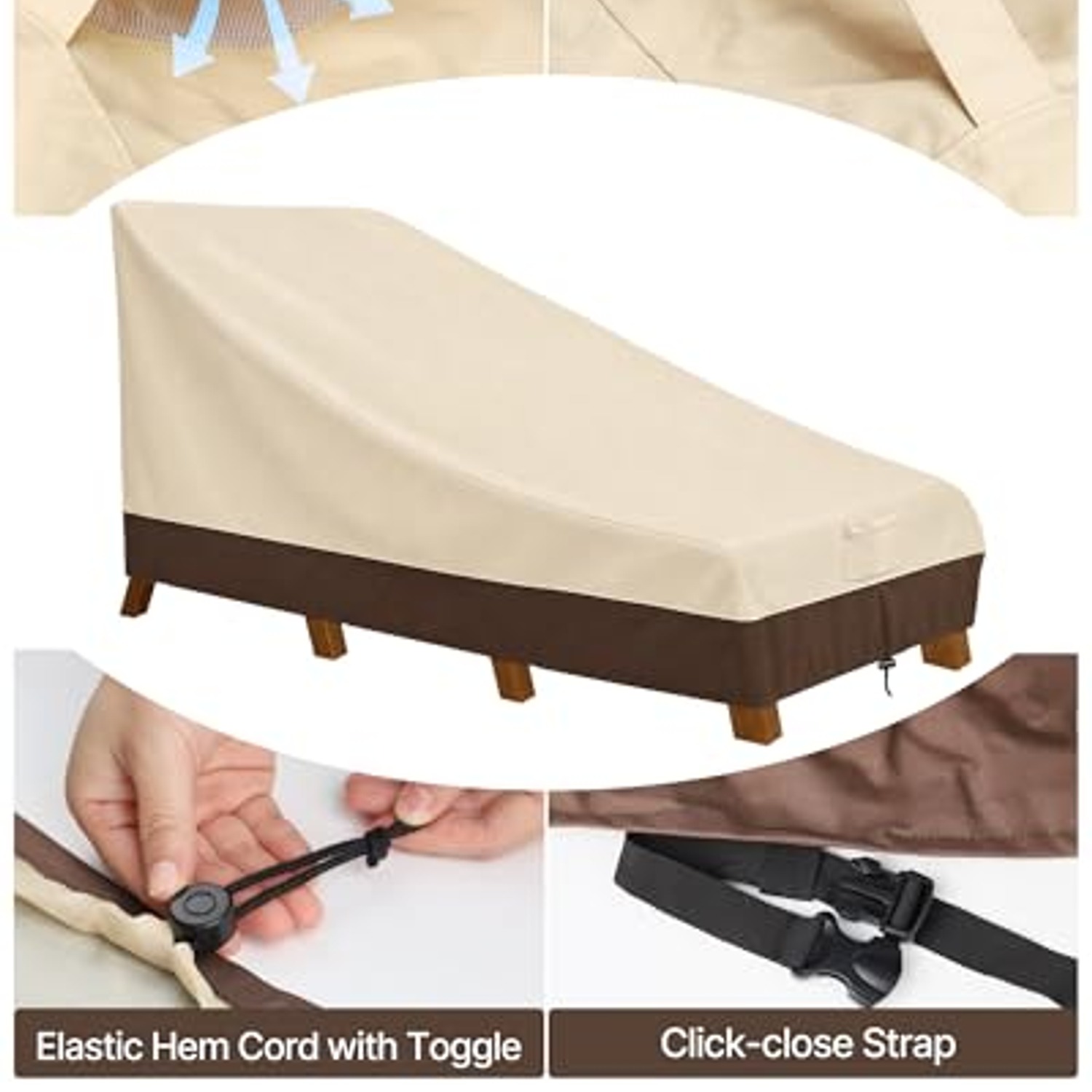
The third part is ventilation, which sounds like it contradicts waterproofing but does not. Air vents let warm, moist air escape from under the cover. Without them, every warm day after rain turns the space under the cover into a small greenhouse, and that condensation lands straight back on your cushions. Vents also let wind pass through instead of pushing up underneath. A sealed cover in a gust behaves like a parachute.
Fit matters more than people expect
A loose cover is a liability. It flaps, it chafes against the frame, and sooner or later it ends up in the neighbor's garden.
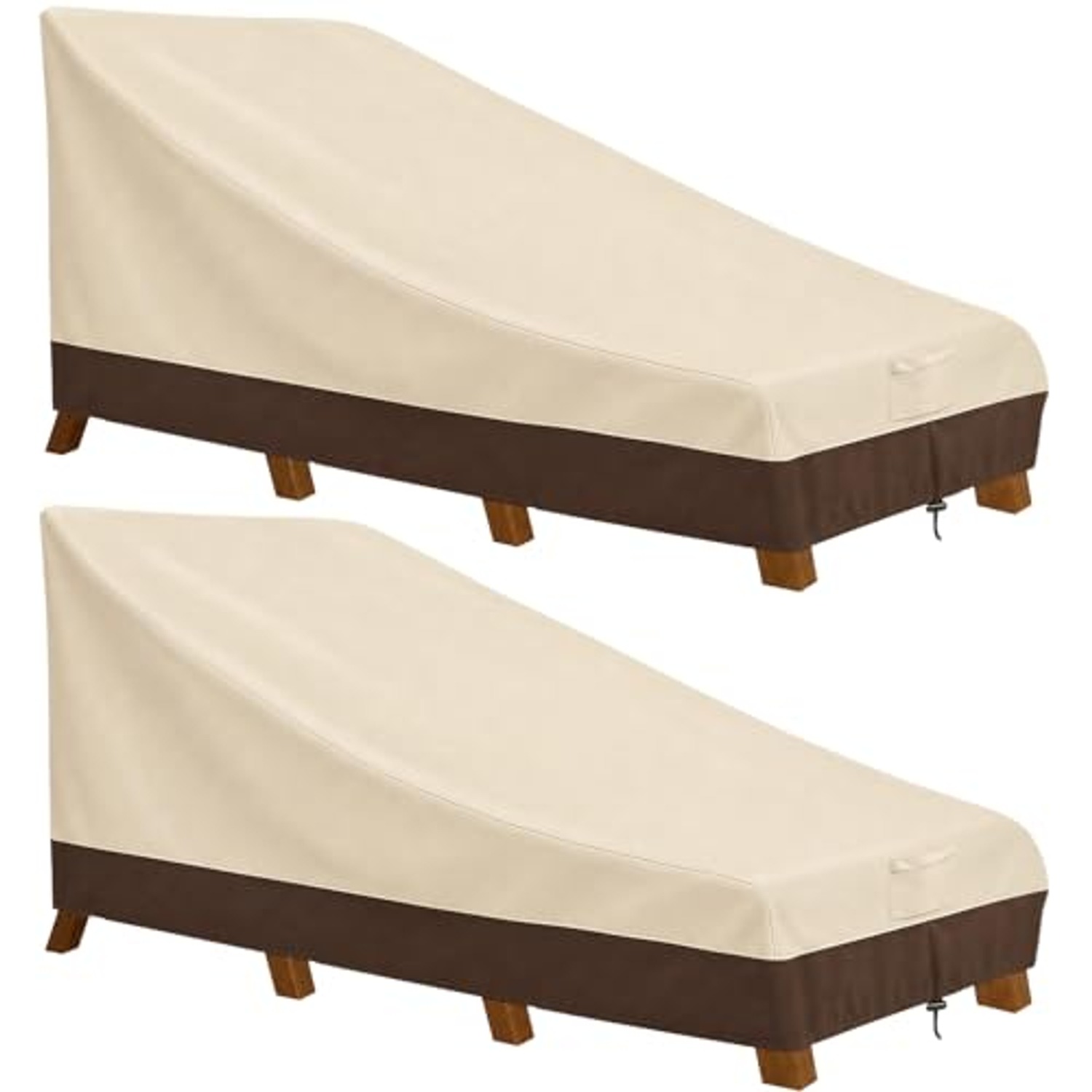
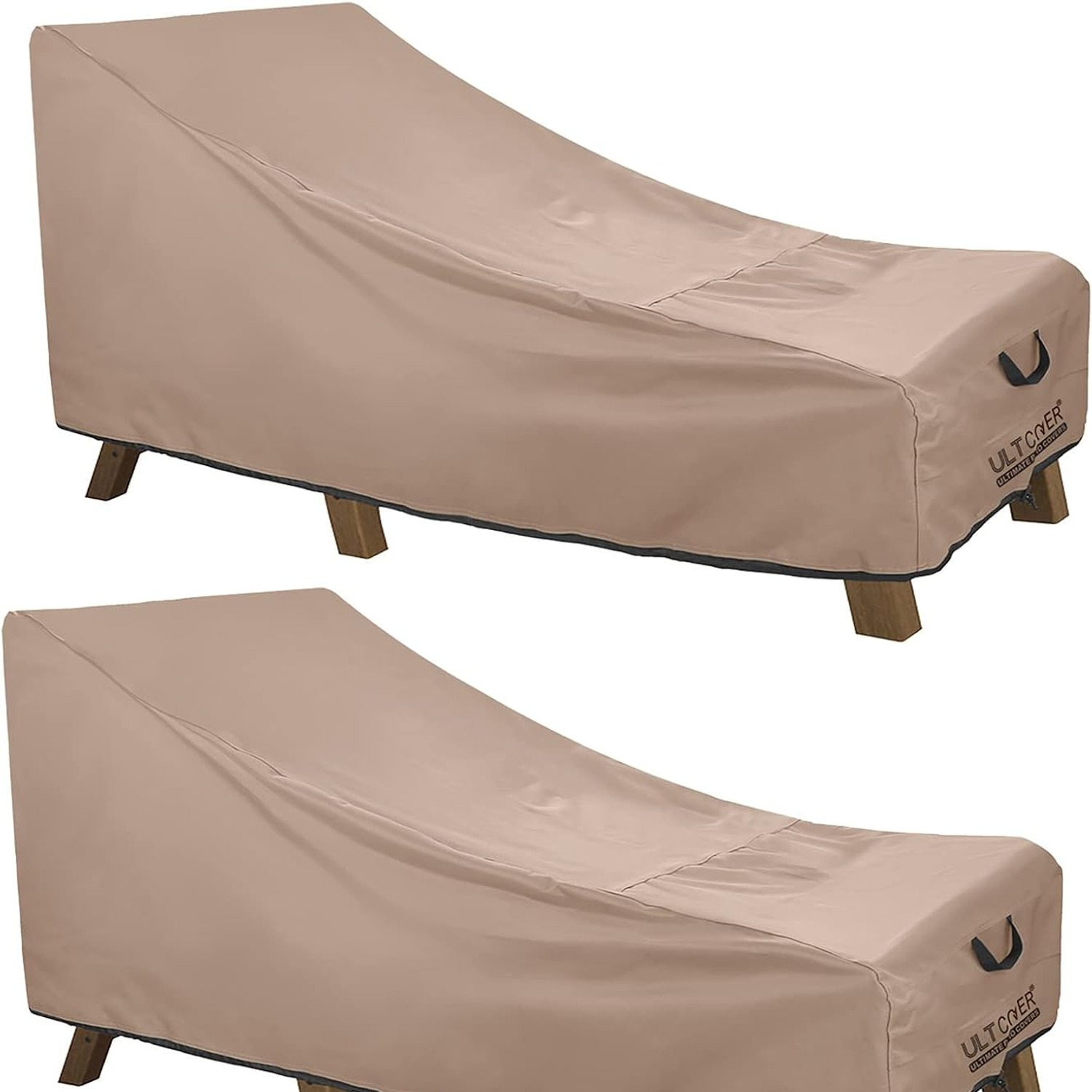
This set uses two systems at once. Adjustable click-close straps buckle underneath the lounger and pull the body of the cover in tight. An elastic hem cord with toggles draws the bottom edge closed around the legs. Used together, there is very little loose fabric for wind to catch.
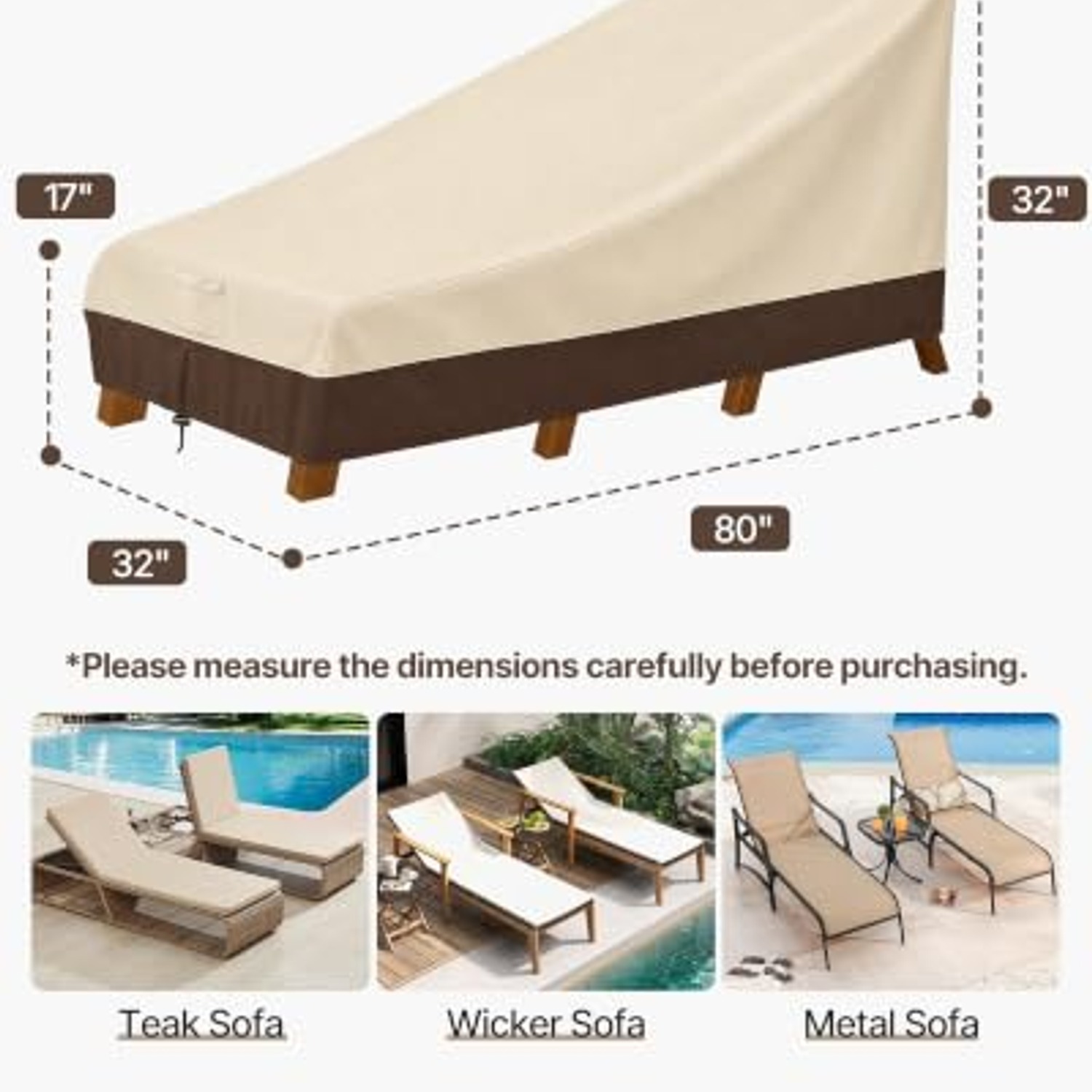
The size here is 80 inches long, 32 inches wide and 32 inches high for each cover, designed for chaise lounges up to 78 inches long and 30 inches wide. That small gap between furniture size and cover size is deliberate. A cover cut exactly to the furniture dimensions is a nightmare to fit, especially in cold weather when fabric stiffens. A couple of inches of slack means you can drop it on and pull it down without wrestling.
Before you order, measure your own lounger. Take the longest point, usually the end of the foot section to the top of the backrest when it is laid flat or in its usual stored position. Take the widest point, which is often the armrests rather than the seat. Then take the height at the tallest point. Compare those three figures against the maximums. If you are under, you are fine.
Who this suits
This is a two-pack, so it makes most sense if you have a matching pair of loungers. Plenty of patios do, since loungers are usually bought in twos. Getting both from one order means the colors match and you are not left with an odd cover from a different brand.
It suits anyone whose furniture lives outside permanently. If you have a garage with space and the discipline to use it every week, you may not need a cover at all. Most people do not have either.
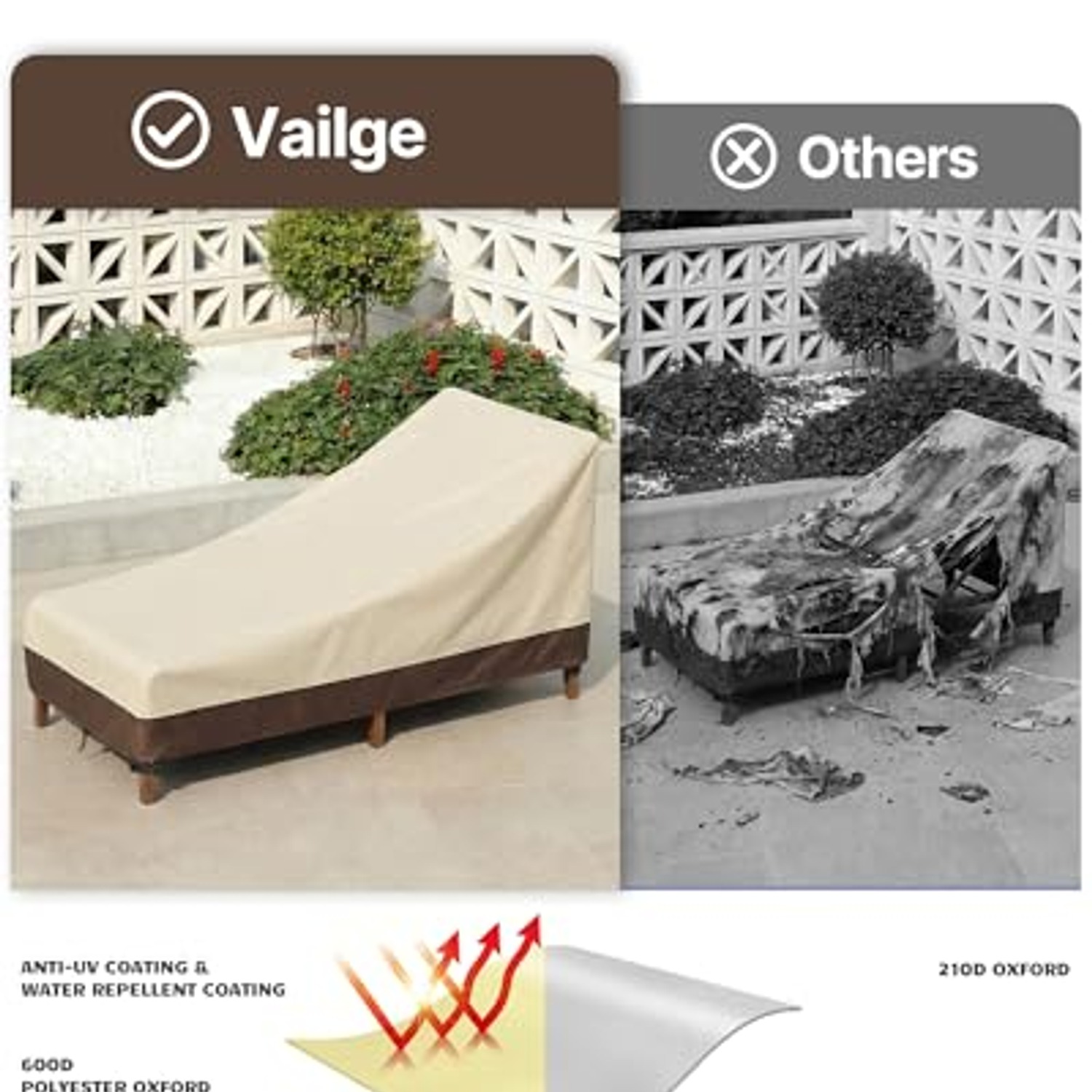
It also suits poolside setups where splash and chlorine spray hit the furniture constantly, and coastal gardens where salt air is a factor. In those spots, something tear-resistant and heavy is a better long-term bet than a budget cover you replace every year.
If your loungers are oversized, wide double sunbeds, or unusually tall, check your measurements carefully. The best garden lounger cover is the one sized to your furniture, and no amount of quality fabric fixes a cover that does not fit.
What to look for when comparing covers
A few things separate a cover that lasts from one that frustrates you.
Check the fabric weight. Anything described vaguely as waterproof fabric with no denier figure is usually light. Look for a specific number.
Check how it fastens. Elastic hem alone is better than nothing, but straps that buckle underneath are what hold a cover down in real wind. Both together is the standard to aim for.
Check whether vents are mentioned. A cover without them traps damp, and trapped damp is how cushions end up moldy even though the cover technically kept rain out.
Check the handles. This sounds minor until you have done it fifty times. Reinforced padded handles give you a grip point so you are not pulling on seams every time you take the cover off. Over a season, that is the difference between a cover that still looks right and one with stretched, stressed corners.
Looking after it
Care here is simple, which is part of the appeal. Wipe the cover with a damp cloth, or if it has been a muddy few weeks, rinse it with a hose. Let it air dry fully in the sun before you fold it or put it back on.
Avoid the washing machine. Mechanical agitation and detergent can break down the water-resistant coating, and once that goes, the fabric starts wetting through instead of shedding. Skip bleach, tumble drying and ironing for the same reason.
Shake off leaves and standing water when you notice them. A pool of water sitting on a cover for weeks adds weight, stretches fabric and gives algae a chance to take hold. Same with snow, which is much heavier than it looks once it compacts.
Every few weeks, check the straps. Wind works buckles loose over time. Thirty seconds of tightening prevents a cover going missing in the next storm.
If you store the covers over summer, make sure they are bone dry first and fold them loosely in a cool, dry place. Packing a damp cover away tightly is the fastest way to create a smell you cannot get rid of.
A word on expectations
A cover is protection, not a sealed container. In sideways rain, some moisture can find its way in around the hem or through the vents. That is normal and it is also why vents exist, since any small amount of moisture that enters needs a way back out.
What a good cover does is keep the bulk of the water off, stop UV from hammering the fabric and frame, and keep dust, pollen, sap and leaves away. That is enough to add years to the life of outdoor furniture.
The short version
If you have two chaise lounges living outside, this set covers both. The fabric is 600D Oxford polyester with a waterproof coating and taped interior seams, so rain does not sneak through the stitching. Click-close straps and a toggled hem cord keep it tight in wind, air vents cut condensation, and padded handles make daily use painless.
Each cover is 80 by 32 by 32 inches and fits loungers up to 78 by 30 inches. Measure yours first, order if you are under those numbers, and spend the rest of the season not worrying about the forecast.